Práctica de shadowing: Utilitarianism: Crash Course Philosophy #36
 Escucha la frase y luego dila en voz alta
Frase 1
Transcripción completa
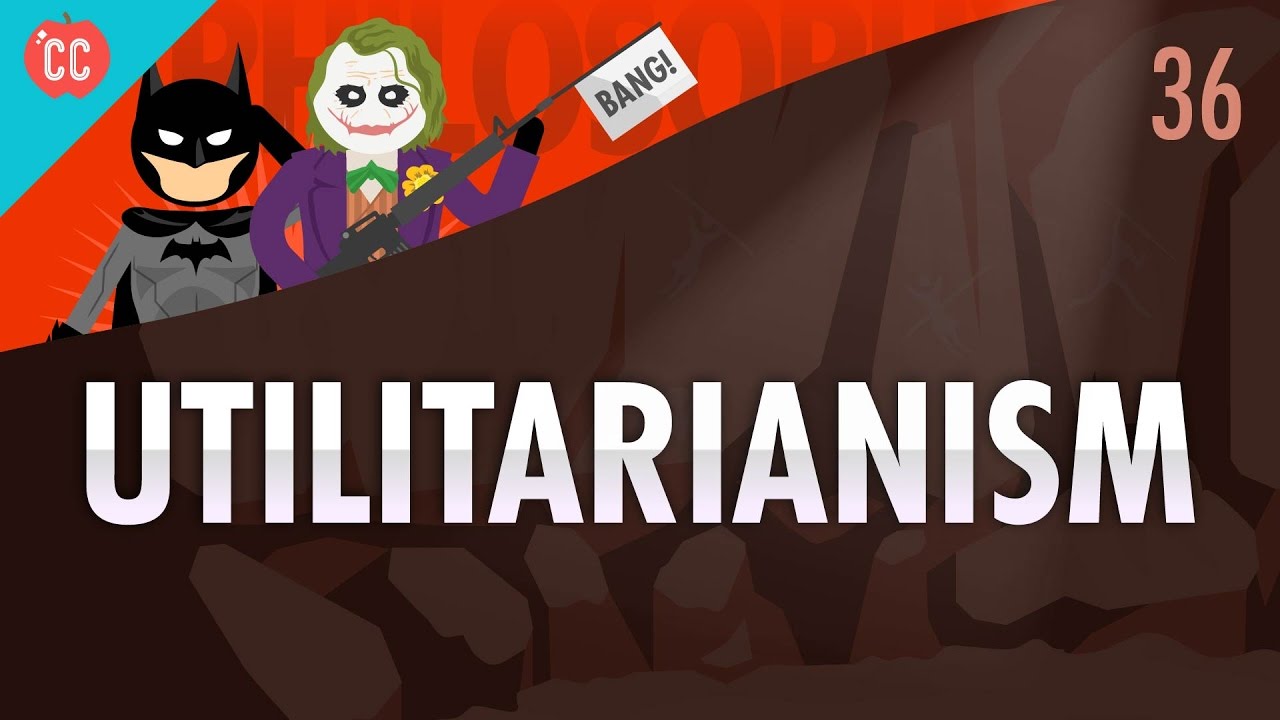
- INTRO Should Batman kill the Joker?INTRODUCCIÓN ¿Debería Batman matar al Joker?0:00
- If you were to ask the Dark Knight himself, with his hard and fast no -killing rule, he'd say absolutely not.Si le preguntaras al Caballero Oscuro en persona, con su firme regla de no matar, diría definitivamente que no.0:04
- Actually, in fact, he would say absolutely not.Bueno, de hecho, diría absolutamente que no.0:10
- When you think about it, dude is pretty Kantian in his ethics.Si lo piensas, es bastante kantiano en su ética.0:13
- Regardless of what Joker does, there are some lines that good people do not cross.Sin importar lo que haga el Joker, hay algunas líneas que la gente buena no cruza.0:16
- And for Batman, killing definitely falls on the wrong side of that line.Y para Batman, matar definitivamente cae del lado equivocado de esa línea.0:21
- But let's be real here.Pero seamos honestos aquí.0:25
- Joker is never gonna stop killing.El Joker nunca va a dejar de matar.0:26
- Sure, Batman will have him thrown back in Arkham, but we all know that he's gonna get out.Claro, Batman lo volverá a meter en Arkham, pero todos sabemos que va a escapar.0:28
- He always gets out, and once he's free, he will kill again, and maim, and terrorize.Siempre escapa, y una vez que es libre, matará de nuevo, mutilará y aterrorizará.0:33
- And when he does, won't a little bit of that be Batman's fault?¿Y cuando lo haga, no será un poco culpa de Batman?0:40
- Batman has been in a position to kill the Joker hundreds of times.Batman ha estado en posición de matar al Joker cientos de veces.0:44
Mostrar las 133 frases Mostrar menos frases
- He has had the power to save anyone from ever being a victim of the Joker again.Ha tenido el poder de salvar a cualquiera de ser víctima del Joker nuevamente.0:47
- If you have the ability to stop a killer and you don't, are you morally pure because you didn't kill?Si tienes la capacidad de detener a un asesino y no lo haces, ¿eres moralmente puro porque no mataste?0:53
- Or are you morally dirty because you refused to do what needs to be done?¿O eres moralmente impuro porque te negaste a hacer lo que debía hacerse?0:59
- So, why do I describe Batman as Kantian?Entonces, ¿por qué describo a Batman como kantiano?1:14
- Well, the school of thought laid out by 18th century German philosopher Emanuel Kant, now known as Kantianism, is pretty straightforward.Bueno, la escuela de pensamiento delineada por el filósofo alemán del siglo XVIII Emanuel Kant, ahora conocida como kantianismo, es bastante directa.1:18
- More precisely, it's absolute.Más precisamente, es absoluta.1:24
- Kantianism is all about sticking to the moral rule book.El kantianismo se trata de seguir el código de reglas morales.1:26
- There are never any exceptions or any excuses for violating moral rules.Nunca hay excepciones ni excusas para violar las reglas morales.1:29
- And our man Batman tries his hardest to stick to his code, no matter what.Y nuestro Batman hace su mayor esfuerzo para adherirse a su código, sin importar qué.1:33
- But there are other ways of looking at ethics.Pero hay otras formas de ver la ética.1:38
- Like instead of focusing on the intent behind our behavior, what if we paid more attention to the consequences?Por ejemplo, en lugar de enfocarse en la intención detrás de nuestro comportamiento, ¿qué pasaría si prestáramos más atención a las consecuencias?1:40
- One moral theory that does this is utilitarianism.Una teoría moral que hace esto es el utilitarismo.1:45
- It focuses on the results, or consequences, of our actions, and treats intentions as irrelevant.Se enfoca en los resultados, o consecuencias, de nuestras acciones, y trata las intenciones como irrelevantes.1:47
- Good consequences equal good actions in this field.Las buenas consecuencias equivalen a buenas acciones en este campo.1:53
- So what's a good consequence?¿Entonces qué es una buena consecuencia?1:56
- Modern utilitarianism was founded in the 18th century by British philosophers Jeremy Bentham and John Stuart Mill, but the theory has philosophical ancestors in ancient Greek thinkers such as Epicurus.El utilitarismo moderno fue fundado en el siglo XVIII por los filósofos británicos Jeremy Bentham y John Stuart Mill, pero la teoría tiene antecesores filosóficos en pensadores griegos antiguos como Epicuro.1:58
- All of these guys agreed that actions should be measured in terms of the happiness or pleasure that they produce.Todos estos filósofos estuvieron de acuerdo en que las acciones deben medirse en términos de la felicidad o placer que producen.2:08
- After all, they argued happiness is our final end.Después de todo, argumentaron que la felicidad es nuestro fin final.2:14
- It's what we do everything else for.Es por lo que hacemos todo lo demás.2:17
- Think about it like this.Piénsalo así.2:19
- Many things that you do, you do for the sake of something else.Muchas cosas que haces, las haces por el bien de otra cosa.2:20
- You study to get a good grade, you work to get money.Estudias para obtener una buena calificación, trabajas para obtener dinero.2:23
- But why do you want good grades or money?Pero ¿por qué quieres buenas calificaciones o dinero?2:26
- There are different answers we could give, like maybe we're seeking affirmation for our intelligence or the approval of our parents or a degree that will give us a careerHay diferentes respuestas que podríamos dar, como quizás estamos buscando confirmación de nuestra inteligencia o la aprobación de nuestros padres o un título que nos dé una carrera2:29
- that we want.que queremos.2:36
- But why do we want that particular career?Pero ¿por qué queremos esa carrera en particular?2:37
- Why do we want approval?¿Por qué queremos aprobación?2:39
- We can keep asking these questions, but ultimately our answer will bottom out in, I want what I want because I think it will make me happy.Podemos seguir haciendo estas preguntas, pero en última instancia nuestra respuesta se reducirá a: quiero lo que quiero porque creo que me hará feliz.2:40
- That's what we all want.Eso es lo que todos queremos.2:47
- It's one of the few things everyone has in common.Es una de las pocas cosas que todos tienen en común.2:49
- And utilitarians believe that's what should drive our morality.Y los utilitaristas creen que eso es lo que debería impulsar nuestra moralidad.2:51
- Like Kant, utilitarians agree that a moral theory should apply equally to everyone, but they thought the way to do that was to ground it in something that's really intuitive,Como Kant, los utilitaristas están de acuerdo en que una teoría moral debe aplicarse por igual a todos, pero pensaban que la forma de hacerlo era basarla en algo que es realmente intuitivo,2:55
- and there's really nothing more basic than the primal desire to seek pleasure and avoid pain.y realmente no hay nada más básico que el deseo primario de buscar placer y evitar el dolor.3:04
- So it's often said that utilitarianism is a hedonistic moral theory.Así que a menudo se dice que el utilitarismo es una teoría moral hedonista.3:08
- This means the good is equal to the pleasant, and we ought morally to pursue pleasure and happiness and work to avoid pain.Esto significa que lo bueno es igual a lo agradable, y debemos moralmente buscar el placer y la felicidad y trabajar para evitar el dolor.3:12
- But utilitarianism is not what you'd call an egoistic theory.Pero el utilitarismo no es lo que llamarías una teoría egoísta.3:20
- Egoism says that everyone ought morally to pursue their own good.El egoísmo dice que todos deben moralmente buscar su propio bien.3:24
- In contrast to that, utilitarianism is other regarding.En contraste con eso, el utilitarismo se enfoca en los demás.3:28
- It says that we should pursue pleasure or happiness, not just for ourselves, but for as many sentient beings as possible.Dice que debemos buscar el placer o la felicidad, no solo para nosotros, sino para tantos seres conscientes como sea posible.3:31
- To put it formally, we should act always so as to produce the greatest good for the greatest number.Para decirlo formalmente, siempre debemos actuar para producir el mayor bien para el mayor número.3:38
- This is known as the principle of utility.Esto se conoce como el principio de utilidad.3:43
- Okay, so no one's gonna argue with a philosophy that tells them to seek pleasure.Está bien, entonces nadie va a discutir con una filosofía que les dice que busquen placer.3:46
- But sometimes doing what provides the most pleasure to the most people can mean that you have to take one for the team.Pero a veces hacer lo que proporciona más placer a la mayoría puede significar que tienes que sacrificarte por el equipo.3:50
- It can mean sacrificing your pleasure in order to produce more good overall.Puede significar sacrificar tu placer para producir más bien en general.3:57
- Like when it's your birthday and your family says you can choose any restaurant you want.Como cuando es tu cumpleaños y tu familia dice que puedes elegir cualquier restaurante que quieras.4:01
- The thing that would make you happiest is Thai food, but you know that that would make the rest of your family miserable.Lo que te haría más feliz es comida tailandesa, pero sabes que eso haría miserable al resto de tu familia.4:04
- So when you choose Chinese, which is nobody's favorite, but everybody can make do, then you've thought like a utilitarian.Entonces cuando eliges comida china, que no es favorita de nadie, pero todos pueden arreglárselas, entonces has pensado como un utilitarista.4:09
- You've chosen the action that would produce the most overall happiness for the group, even though it produced less happiness for you than other alternatives would have.Has elegido la acción que produciría la mayor felicidad general para el grupo, aunque haya producido menos felicidad para ti que lo que otras alternativas habrían producido.4:15
- The problem is, for the most part, we're all our own biggest fans.El problema es que, en su mayoría, todos nos consideramos nuestros mayores admiradores.4:22
- We each come preloaded with a bias in favor of our own interests.Cada uno de nosotros viene precargado con un sesgo a favor de nuestros propios intereses.4:26
- This isn't necessarily a bad thing.Esto no es necesariamente algo malo.4:29
- Caring about yourself is a good way to promote survival.Cuidar de ti mismo es una buena manera de promover la supervivencia.4:31
- But where morality is concerned, utilitarians argue as special as you are, you are no more special than anybody else.Pero cuando se trata de moralidad, los utilitaristas argumentan que por especial que seas, no eres más especial que nadie más.4:34
- So your interests count, but no more than anyone else's.Entonces tus intereses cuentan, pero no más que los de cualquier otra persona.4:40
- Now, you might say you agree with that.Ahora, podrías decir que estás de acuerdo con eso.4:43
- I mean, we all like to think of ourselves as being generous and selfless.Es decir, a todos nos gusta pensar que somos generosos y desinteresados.4:45
- But even though I'm sure you are a totally nice person, you have to admit that things seem way more important.Pero aunque estoy seguro de que eres una persona totalmente agradable, tienes que admitir que las cosas parecen mucho más importantes.4:48
- Way to your higher stakes when they apply to you rather than to some stranger.Mucho más en juego cuando te afectan a ti que a algún extraño.4:54
- So utilitarians suggest that we make our moral decisions from the position of a benevolent, disinterested spectator.Entonces los utilitaristas sugieren que tomemos nuestras decisiones morales desde la posición de un espectador benévolo y desinteresado.4:59
- Rather than thinking about what I should do, they suggest that I consider what I would think if I were advising a group of strangers about what they should do.En lugar de pensar en qué debo hacer, sugieren que considere qué pensaría si estuviera aconsejando a un grupo de extraños sobre qué deberían hacer.5:05
- That way, I have a disposition of goodwill, but I'm not emotionally invested, and I'm a spectator rather than a participant.De esa manera, tengo una disposición de buena voluntad, pero no estoy emocionalmente involucrado, y soy un espectador en lugar de un participante.5:13
- This approach is far more likely to yield a fair and unbiased judgment about what's really best for the group.Este enfoque tiene muchas más probabilidades de producir un juicio justo e imparcial sobre qué es realmente lo mejor para el grupo.5:19
- Now, to see utilitarianism put to the test, let's pop over to the Thought Bubble for some flash philosophy.Ahora, para ver el utilitarismo puesto a prueba, pasemos al Thought Bubble para un poco de filosofía rápida.5:25
- 20th century British philosopher Bernard Williams offered this thought experiment.El filósofo británico del siglo XX Bernard Williams ofreció este experimento mental.5:30
- Jim is on a botanical expedition in South America when he happens upon a group of 20 indigenous people and the group of soldiers.Jim está en una expedición botánica en América del Sur cuando se encuentra con un grupo de 20 personas indígenas y un grupo de soldados.5:35
- The whole group of indigenous people is about to be executed for protesting their oppressive regime.Todo el grupo de personas indígenas está a punto de ser ejecutado por protestar contra su régimen opresivo.5:42
- For some reason, the leader of the soldiers offers Jim the chance to shoot one of the prisoners since he's a guest in their land.Por alguna razón, el líder de los soldados le ofrece a Jim la oportunidad de disparar a uno de los prisioneros ya que es un invitado en su tierra.5:48
- He says that if Jim shoots one of the prisoners, he'll let the other 19 go.Dice que si Jim dispara a uno de los prisioneros, dejará ir a los otros 19.5:54
- But if Jim refuses, then the soldiers will shoot all 20 protesters.Pero si Jim se niega, entonces los soldados dispararán a los 20 manifestantes.5:59
- What should Jim do?¿Qué debería hacer Jim?6:03
- More importantly, what would you do?Más importante, ¿qué harías tú?6:04
- Williams actually presents this case as a critique of utilitarianism.Williams en realidad presenta este caso como una crítica del utilitarismo.6:07
- The theory clearly demands that Jim shoot one man so that 19 will be saved.La teoría claramente exige que Jim dispare a un hombre para que 19 sean salvados.6:10
- But Williams argues no moral theory ought to demand the taking of an innocent life.Pero Williams argumenta que ninguna teoría moral debería exigir la toma de una vida inocente.6:15
- Thinking like a Kantian, Williams argues that it's not Jim's fault that the head soldier is a total dirtbag, and Jim shouldn't have to get literal blood on his handsPensando como un kantiano, Williams argumenta que no es culpa de Jim que el jefe de los soldados sea un tipo totalmente despicable, y Jim no debería tener que ensuciarse literalmente las manos con sangre6:20
- to try and rectify the situation.para intentar rectificar la situación.6:28
- So although it sounds pretty simple, utilitarianism is a really demanding moral theory.Así que aunque suena bastante simple, el utilitarismo es una teoría moral realmente exigente.6:30
- It says we live in a world where sometimes people do terrible things, and if we're the ones who happen to be there and we can do something to makeDice que vivimos en un mundo donde a veces la gente hace cosas terribles, y si somos nosotros quienes estamos allí y podemos hacer algo para mejorar6:34
- things better, we must, even if that means getting our hands dirty.las cosas, debemos hacerlo, incluso si eso significa ensuciarnos las manos.6:41
- And if I sit by and watch something bad happen when I could have prevented it, my hands are dirty anyway.Y si me siento a un lado y miro cómo sucede algo malo cuando podría haberlo prevenido, mis manos están sucias de todas formas.6:45
- So Jim shouldn't think about it as killing one man.Así que Jim no debería pensar en ello como matar a un hombre.6:51
- That man was dead already because they were all about to be killed.Ese hombre ya estaba muerto porque todos estaban a punto de ser asesinados.6:53
- Instead, Jim should think of his decision as doing what it takes to save 19.En su lugar, Jim debería pensar en su decisión como haciendo lo que sea necesario para salvar a 19.6:56
- And Batman needs to kill the Joker already.Y Batman ya necesita matar al Joker.7:01
- Thanks, Thought Bubble.Gracias, Thought Bubble.7:04
- Now, if you decide you want to follow utilitarian moral theory, you have options.Ahora, si decides que quieres seguir la teoría moral utilitaria, tienes opciones.7:05
- Specifically, two of them.Específicamente, dos de ellas.7:10
- When Bentham and Mill first proposed their moral theory, it was in a form now known as act utilitarianism, sometimes called classical utilitarianism.Cuando Bentham y Mill propusieron por primera vez su teoría moral, fue en una forma ahora conocida como utilitarismo de acto, a veces llamado utilitarismo clásico.7:11
- And it says that in any given situation, you should choose the action that produces the greatest good for the greatest number, period.Y dice que en cualquier situación dada, debes elegir la acción que produce el mayor bien para la mayor cantidad de personas, punto.7:19
- But sometimes the act that will produce the greatest good for the greatest number can seem just wrong.Pero a veces el acto que producirá el mayor bien para la mayor cantidad de personas puede parecer simplemente incorrecto.7:25
- For instance, suppose a surgeon has five patients all waiting for transplants.Por ejemplo, supongamos que un cirujano tiene cinco pacientes esperando trasplantes.7:30
- One needs a heart, another a lung, two are waiting for kidneys, and the last needs a liver.Uno necesita un corazón, otro un pulmón, dos están esperando riñones, y el último necesita un hígado.7:34
- The doctor is pretty sure that these patients will all die before their names come up on the transplant list, and he just so happens to have a neighbor whoEl doctor está bastante seguro de que estos pacientes todos morirán antes de que sus nombres aparezcan en la lista de trasplantes, y casualmente tiene un vecino que7:38
- has no family, total recluse, not even a very nice guy.no tiene familia, es un recluido total, ni siquiera es una persona muy agradable.7:45
- The doctor knows that no one would miss the guy if he were to disappear, and by some miracle, the neighbor is a match for all five of the transplantEl doctor sabe que nadie echaría de menos al tipo si desapareciera, y por algún milagro, el vecino es compatible con los cinco trasplantes7:49
- patients.pacientes.7:56
- So it seems like, even though this would be a bad day for the neighbor, an act utilitarian should kill the neighbor and give his organs to the five patients.Así que parece que, aunque sería un mal día para el vecino, un utilitarista de acto debería matar al vecino y dar sus órganos a los cinco pacientes.7:56
- It's the greatest good for the greatest number.Es el mayor bien para la mayor cantidad de personas.8:04
- Yes, one innocent person dies, but five innocent people are saved.Sí, una persona inocente muere, pero cinco personas inocentes son salvadas.8:06
- This might seem harsh, but remember that pain is pain regardless of who's experiencing it.Esto puede parecer duro, pero recuerda que el dolor es dolor sin importar quién lo experimente.8:10
- So the death of the neighbor would be no worse than the death of any of those patients dying on the transplant list.Entonces la muerte del vecino no sería peor que la muerte de cualquiera de esos pacientes muriendo en la lista de trasplantes.8:15
- In fact, it's five times less bad than all five of their deaths.De hecho, es cinco veces menos malo que la muerte de los cinco.8:20
- So thought experiments like this one led some utilitarians to come up with another framework for their theory.Así que experimentos mentales como este llevaron a algunos utilitaristas a idear otro marco para su teoría.8:24
- This one is called rule utilitarianism.Este se llama utilitarismo de reglas.8:29
- This version of the theory says that we ought to live by rules that, in general, are likely to lead to the greatest good for the greatest number.Esta versión de la teoría dice que deberíamos vivir según reglas que, en general, probablemente conduzcan al mayor bien para la mayor cantidad de personas.8:32
- So yes, there are going to be situations where killing an innocent person will lead to the greatest good for the greatest number.Entonces sí, habrá situaciones donde matar a una persona inocente conducirá al mayor bien para la mayor cantidad de personas.8:39
- But rule utilitarians want us to think long -term and on a larger scale.Pero los utilitaristas de reglas quieren que pensemos a largo plazo y en una escala mayor.8:45
- And overall, a whole society where innocent people are taken off the streets to be harvested for their organs is going to have a lot less utility than one whereY en general, una sociedad completa donde personas inocentes son sacadas de las calles para ser cosechadas por sus órganos va a tener mucha menos utilidad que una donde8:49
- you don't have to live in constant fear of that happening to you.no tienes que vivir con el miedo constante de que eso te suceda.8:57
- So rule utilitarianism allows us to refrain from acts that might maximize utility in the short run, and instead follow rules that will maximize utility for the majority of theEntonces el utilitarismo de reglas nos permite abstenernos de actos que podrían maximizar la utilidad en el corto plazo, y en cambio seguir reglas que maximizarán la utilidad para la mayoría del9:00
- time.tiempo.9:09
- As an owner of human organs, this approach might make sense to you.Como dueño de órganos humanos, este enfoque podría tener sentido para ti.9:10
- But I still gotta say, if Batman were a utilitarian of either kind, it wouldn't look very good for the Joker.Pero todavía tengo que decir, si Batman fuera un utilitarista de cualquier tipo, no se vería muy bien para el Joker.9:13
- Today, we learned about utilitarianism.Hoy aprendimos sobre el utilitarismo.9:19
- We studied the principle of utility and learned about the difference between act and rule utilitarianism.Estudiamos el principio de la utilidad y aprendimos sobre la diferencia entre el utilitarismo de actos y el utilitarismo de reglas.9:21
- Next time, we'll take a look at another moral theory, contractarianism.La próxima vez, veremos otra teoría moral, el contractarianismo.9:27
- Crash Course Philosophy is produced in association with PBS Digital Studios.Crash Course Philosophy se produce en asociación con PBS Digital Studios.9:31
- You can head over to their channel and check out a playlist of the latest episodes from shows like The Good Stuff, Gross Science, and PBS Idea Channel.Pueden dirigirse a su canal y ver una lista de reproducción de los últimos episodios de programas como The Good Stuff, Gross Science y PBS Idea Channel.9:35
- This episode of Crash Course was filmed in the Dr.Este episodio de Crash Course se filmó en el consultorio del Dr.9:42
- Cheryl C.Cheryl C.9:43
- Kinney Crash Course Studio with the help of all of these awesome people, and our equally fantastic graphics team is Thought Cafe.Estudio Kinney Crash Course con la ayuda de todas estas personas increíbles, y nuestro equipo de gráficos igualmente fantástico es Thought Cafe.9:44
Medido en este clip
- Ritmo
- 212 palabras por minuto — más rápido que el 71% del catálogo
- Nivel MCER
- B2
- Formas reducidas aquí
- gonna ×3, gotta
- Palabras que conviene saber
- disinterested, unbiased, affirmation, maim, playlist, argues