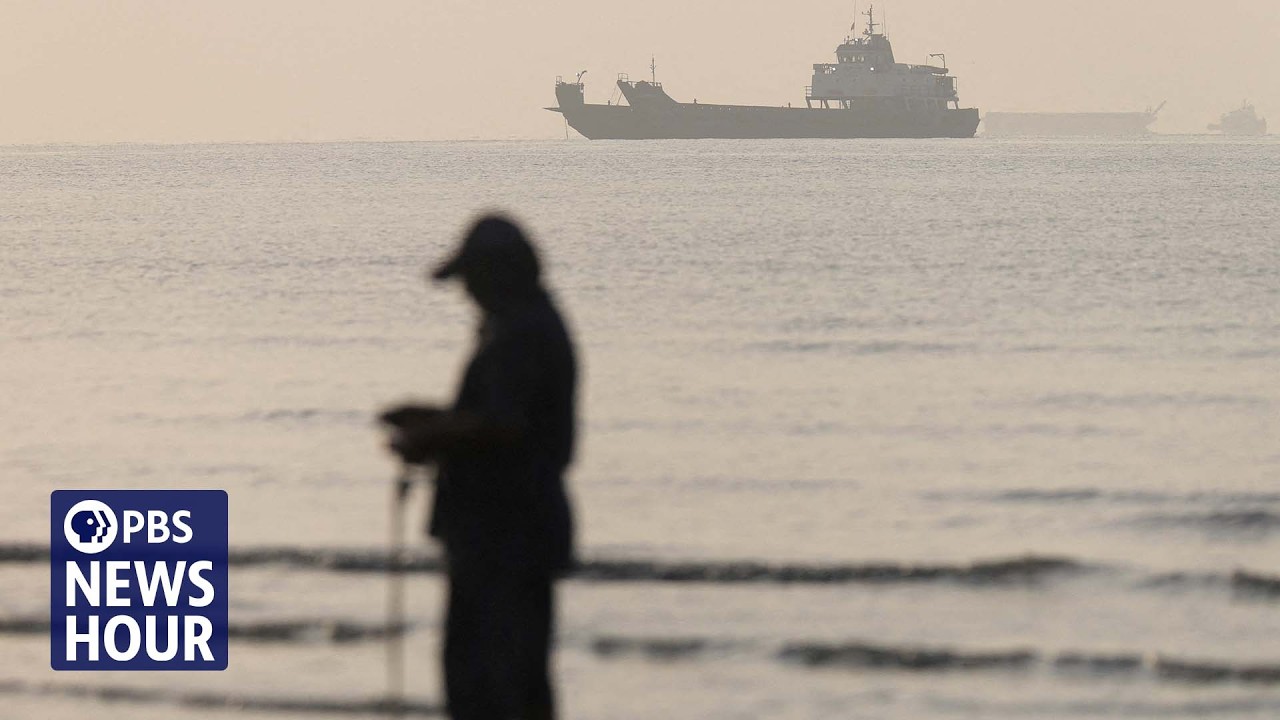
Práctica de shadowing: What may happen as oil supplies dwindle and Strait of Hormuz remains mostly closed
 Escucha la frase y luego dila en voz alta
Frase 1
Transcripción completa
- As U .S.-Iran talks show, little sign of progress, commercial traffic through the Strait of Hormuz remains sharply reduced, raising concerns about global energy markets and supply chains.Conforme las conversaciones entre Estados Unidos e Irán muestran poco progreso, el tráfico comercial por el Estrecho de Ormuz sigue siendo marcadamente reducido, generando preocupaciones sobre los mercados energéticos globales y las cadenas de suministro.0:00
- For more on what a prolonged disruption might mean, we're joined now by Daniel Juergen, vice chairman of S &P Global and one of the world's leading energy analysts.Para más información sobre lo que significaría una interrupción prolongada, nos acompaña Daniel Juergen, vicepresidente de S&P Global y uno de los principales analistas de energía del mundo.0:10
- Thanks for being here.Gracias por estar aquí.0:19
- Thank you.Gracias a ti.0:20
- You have said that markets have absorbed this shock better than many expected.Has dicho que los mercados han absorbido este shock mejor de lo que muchos esperaban.0:21
- What's the biggest reason why?¿Cuál es la razón más importante?0:25
- Well, basically the biggest reason why is inventories.Bueno, básicamente la razón más importante son los inventarios.0:26
- Inventories in the United States, remember now the U .S.Los inventarios en Estados Unidos, recuerda que ahora Estados Unidos...0:30
- is the world's largest oil producer and so we have that and the other surprise has been China, which also has built up huge inventories.es el productor de petróleo más grande del mundo y entonces tenemos eso, y la otra sorpresa ha sido China, que también ha acumulado enormes inventarios.0:33
- And I think those are the reasons that this shock has not been as extreme for the world as might have been expected on March 4th when Iran shut downY creo que esas son las razones por las que este shock no ha sido tan extremo para el mundo como se hubiera esperado el 4 de marzo cuando Irán cerró0:42
- the Strait of Hormuz.el Estrecho de Ormuz.0:51
- When those inventories deplete, how quickly could we see prices spike even higher?Cuando esos inventarios se agoten, ¿qué tan rápidamente podríamos ver subidas aún mayores de precios?0:52
Mostrar las 69 frases Mostrar menos frases
- Well, right now I'd say the view is that as we get into July, if there's not some relief, is when you'll start to see the prices reverse from whereBueno, ahora mismo diría que la vista es que conforme entramos en julio, si no hay algún alivio, es cuando empezarás a ver que los precios se revierten de donde0:57
- they are.están.1:04
- I should say it's in Asia it's an energy crisis now.Debo decir que en Asia es una crisis energética ahora.1:05
- I mean, they're really feeling it because they were so dependent on the supplies from the Strait of Hormuz.Quiero decir, realmente lo están sintiendo porque eran tan dependientes de los suministros del Estrecho de Ormuz.1:09
- So they're having rationing shortages, they don't have fertilizer, they don't have diesel for farming.Así que tienen racionamiento y escasez, no tienen fertilizante, no tienen diésel para la agricultura.1:14
- In the United States we're seeing it at the gasoline pump and in Europe it's actually about jet fuel right now.En Estados Unidos lo estamos viendo en la bomba de gasolina y en Europa es realmente sobre combustible de aviación ahora.1:20
- Well, that's right.Bueno, eso es correcto.1:26
- I mean, the consequences extend far beyond oil.Quiero decir, las consecuencias se extienden mucho más allá del petróleo.1:27
- What's the most overlooked impact of this disruption?¿Cuál es el impacto más pasado por alto de esta interrupción?1:29
- What are the other knock -on effects that were not yet fully grasping?¿Cuáles son los otros efectos secundarios que aún no estamos comprendiendo completamente?1:33
- I think the number one is fertilizer because the gulf was the source of one -third of the world's traded fertilizer and this is hit during planting season in manyCreo que el número uno es el fertilizante porque el golfo fue la fuente de un tercio del fertilizante comercializado en el mundo y esto golpea durante la temporada de siembra en muchos1:38
- parts of the world.partes del mundo.1:46
- It's either driven up prices or it simply isn't there.O ha subido los precios o simplemente no está disponible.1:47
- So I'd put that as number one.Así que lo pondría como el número uno.1:50
- And here in the U .S., how close are we to a 1970s style energy crisis?Y aquí en Estados Unidos, ¿qué tan cerca estamos de una crisis energética de los años setenta?1:52
- I don't think we're that close to it because we are the world's largest producer and so forth.No creo que estemos tan cerca de eso porque somos el productor más grande del mundo y así sucesivamente.1:57
- And I think lessons have been learned that part of the problems of the energy crisis in the 1970s were self -inflicted by government policies that actually created shortages whereY creo que se han aprendido lecciones que parte de los problemas de la crisis energética en los años setenta fueron auto-infligidos por políticas gubernamentales que realmente crearon escasez donde2:03
- there weren't necessarily shortages.no necesariamente había escasez.2:12
- Lessons learned.Lecciones aprendidas.2:14
- I mean, has the fact that America is now this major energy producer, as you point out, has that fundamentally changed the country's vulnerability to global conflicts?Quiero decir, ¿el hecho de que América sea ahora este gran productor de energía, como señalas, ha cambiado fundamentalmente la vulnerabilidad del país a los conflictos globales?2:15
- I think it's not changed it because at the end of the day it's one global oil market but it's given us insulation and it's made the United States suchCreo que no ha cambiado porque al final del día es un mercado de petróleo global pero nos ha dado aislamiento y ha hecho que Estados Unidos sea tan2:25
- a dominant player that we were not before.un jugador dominante que no éramos antes.2:33
- So that's such a dramatic change from previous crises.Entonces es un cambio tan dramático de las crisis anteriores.2:36
- As we've covered on this program, a swift reopening of the straight does not necessarily mean a swift return to normal.Como hemos cubierto en este programa, una reapertura rápida del estrecho no necesariamente significa un regreso rápido a la normalidad.2:39
- At day 100, how much longer do you estimate recovery would take if the straight reopened tomorrow?En el día 100, ¿cuánto más tiempo crees que tomaría la recuperación si el estrecho reabriera mañana?2:46
- Well, I think you use the right word.Bueno, creo que usas la palabra correcta.2:52
- It's not going to be a swift recovery.No va a ser una recuperación rápida.2:54
- We estimate at SSMP that it would take as much as six months to get back to 80 % of where we were before.Estimamos en SSMP que tomaría hasta seis meses para volver al 80% de donde estábamos antes.2:56
- You've got to get tankers out of the gulf.Tienes que sacar tanques del golfo.3:03
- You've got to get new tankers in.Tienes que meter nuevos tanques.3:05
- And we think a lot of extensive damage and you have to begin production again.Y creemos que hay muchos daños extensos y tienes que comenzar la producción nuevamente.3:07
- So it isn't like you do a light switch and we're back to normal.Así que no es como si encendieras un interruptor de luz y volviéramos a la normalidad.3:12
- What are you watching for as this progresses?¿Qué estás vigilando conforme esto progresa?3:16
- I'm watching what happens with inventories is I think the number one thing.Lo que estoy vigilando es lo que sucede con los inventarios, creo que es lo número uno.3:18
- And obviously, what is the state of the negotiation?Y obvio, ¿cuál es el estado de la negociación?3:22
- Is there a deal or not a deal?¿Hay un acuerdo o no hay un acuerdo?3:24
- And it keeps coming into focus and then going out again.Y sigue viniendo en foco y luego volviendo a salir.3:26
- And Iran is really determined, I think, not to give up control of the straight.E Irán está realmente decidido, creo, a no renunciar al control del estrecho.3:29
- They want to turn what was an open free navigation international waterway into an Iranian canal.Quieren convertir lo que era una vía fluvial internacional de navegación libre abierta en un canal iraniano.3:35
- And that's not acceptable to the air producers.Y eso no es aceptable para los productores de petróleo.3:43
- It's really not acceptable for the world economy.Realmente no es aceptable para la economía mundial.3:46
- You mentioned that the lessons were learned after the 1970s with failed government policy.Mencionaste que las lecciones se aprendieron después de los años setenta con políticas gubernamentales fallidas.3:49
- When you look at a state like California that has gas prices right now on average of $6 and up, you could argue that California's interventions have put it inCuando miras un estado como California que tiene precios de gasolina ahora en promedio de $6 y más, podrías argumentar que las intervenciones de California lo han puesto en3:54
- a worse position than other states.una posición peor que otros estados.4:02
- Is that a preview of what heavy handed policy responses could look like globally?¿Es eso un adelanto de lo que podrían parecer las respuestas políticas contundentes globalmente?4:04
- I think you said it very clearly.Creo que lo dijiste muy claramente.4:11
- Exactly because they put such pressure on their refining system.Exactamente porque pusieron tanta presión en su sistema de refinación.4:14
- They've forced down production in the state.Han obligado a reducir la producción en el estado.4:17
- And so what are they doing?Entonces, ¿qué es lo que están haciendo?4:20
- They're importing gasoline from Korea that's made out of oil from the Middle East.Están importando gasolina de Corea que se fabrica a partir de petróleo del Medio Oriente.4:21
- And they've created their own form of dependence.Y han creado su propia forma de dependencia.4:26
- So California of all the parts of the country is the part of the country that is actually most integrated into the global oil market.Entonces California, de todas las partes del país, es la parte que realmente está más integrada en el mercado global de petróleo.4:29
- Daniel Jurgen.Daniel Jurgen.4:37
- Always learned so much when you're here.Siempre aprendes mucho cuando estás aquí.4:38
- Thanks as always.Gracias como siempre.4:40
- Thank you.Gracias.4:41
- Thank you.Gracias.5:23
Medido en este clip
- Ritmo
- 199 palabras por minuto — más rápido que el 61% del catálogo
- Nivel MCER
- B2
- Palabras que conviene saber
- waterway, interventions, refining, globally, progresses, dependence