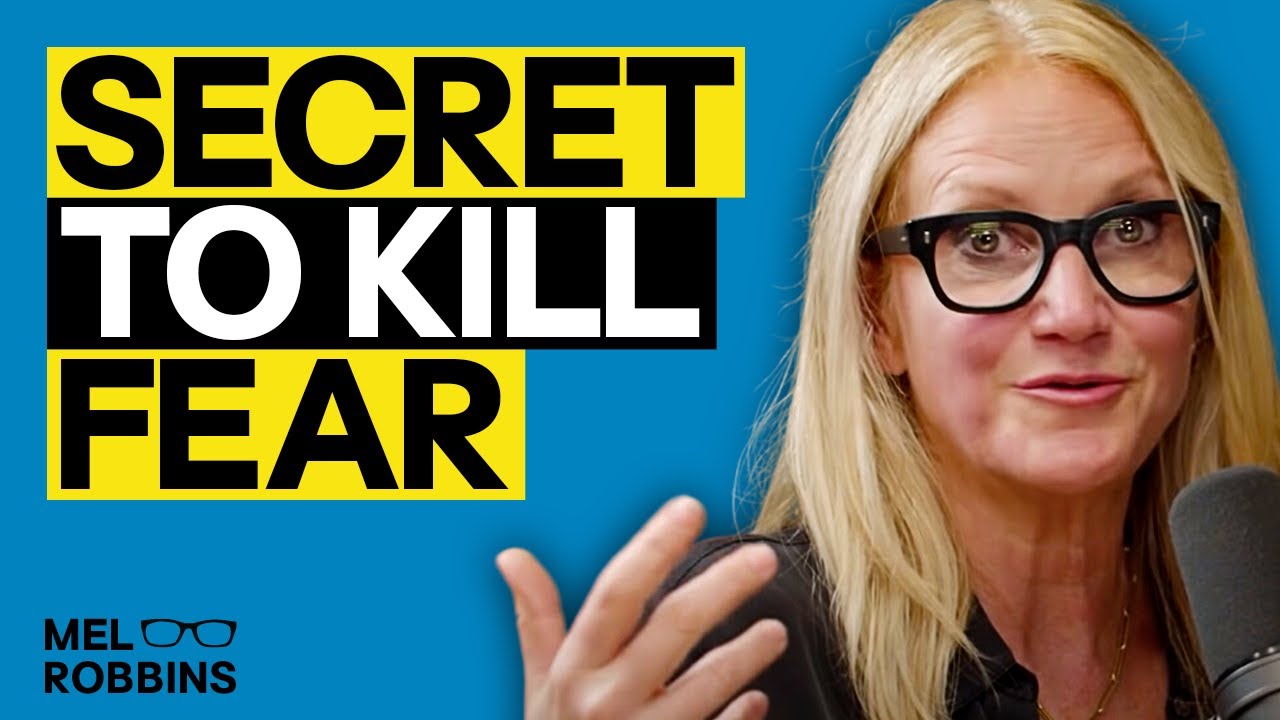
Práctica de shadowing: The Secret to Stopping Fear and Anxiety (That Actually Works) | Mel Robbins
 Escucha la frase y luego dila en voz alta
Frase 1
Transcripción completa
- You know, I've heard a lot of experts say that fear isn't real.Mira, he escuchado a muchos expertos decir que el miedo no es real.0:04
- That is such a bunch of baloney.Eso es pura tontería.0:11
- Fear is so real.El miedo es muy real.0:13
- In fact, there are probably things that you're afraid of doing right now in your life, in your relationships, at work.De hecho, probablemente hay cosas que te da miedo hacer ahora mismo en tu vida, en tus relaciones, en el trabajo.0:16
- The fact that you're afraid, that's robbing you of all of the experiences that you want to have in your life.El hecho de que tengas miedo, te está robando todas las experiencias que quieres tener en tu vida.0:23
- I mean, if you're afraid to fly, that's going to limit your ability to travel and see the world or go visit friends.Es decir, si te da miedo volar, eso va a limitar tu capacidad para viajar y ver el mundo o ir a visitar amigos.0:31
- If you're afraid of public speaking, that's going to really limit your ability to express yourself and share your ideas.Si te da miedo hablar en público, eso realmente va a limitar tu capacidad para expresarte y compartir tus ideas.0:38
- If you're afraid of talking to your boss or asking for a raise, that directly impacts how much money you make.Si te da miedo hablar con tu jefe o pedir un aumento, eso impacta directamente cuánto dinero ganas.0:45
- Or what if you are dreaming of starting a business or you've already started a new business but you're afraid to talk to people and you're afraid to share yourO qué pasa si estás soñando con empezar un negocio o ya has empezado un negocio nuevo pero te da miedo hablar con la gente y tienes miedo de compartir tu0:51
- business with people.negocio con la gente.1:00
- I mean, fear is something that stops us all.Es decir, el miedo es algo que nos detiene a todos.1:02
- And that's why I'm here to talk to you because it doesn't have to.Y es por eso que estoy aquí para hablar contigo porque no tiene que ser así.1:05
Mostrar las 163 frases Mostrar menos frases
- Fear is real, but I am going to share a secret weapon that I have used for years to beat every single fear that used to stop me.El miedo es real, pero voy a compartir un arma secreta que he usado durante años para vencer cada miedo que solía detenerme.1:10
- Now, first, before we get into this secret weapon, I just want to cover a few facts about fear, what it is, what it isn't, and some things that youAhora, primero, antes de entrar en este arma secreta, solo quiero cubrir algunos hechos sobre el miedo, qué es, qué no es, y algunas cosas que1:21
- may not know about fear.es posible que no sepas sobre el miedo.1:29
- So first thing, fear is a physical state in your body that is exactly the same as excitement.Entonces primero, el miedo es un estado físico en tu cuerpo que es exactamente igual que la emoción.1:32
- Let me say that again.Déjame decir eso de nuevo.1:41
- Fear and excitement are the exact same physical state.El miedo y la emoción son exactamente el mismo estado físico.1:42
- Your heart races, you might sweat a little bit, you might feel tightening in your chest, you might feel a pit in your stomach, you have a surge of cortisol.Tu corazón late rápido, es posible que sudes un poco, es posible que sientas tensión en tu pecho, es posible que sientas un vacío en tu estómago, tienes un pico de cortisol.1:47
- It's basically the way that your body goes into a hyper -aware state because it's readying for action.Es básicamente la forma en que tu cuerpo entra en un estado de hipervigilancia porque se está preparando para la acción.1:56
- Now, what's the difference between fear and excitement?Ahora, ¿cuál es la diferencia entre el miedo y la emoción?2:03
- Really simple.Muy simple.2:06
- The only difference between fear and excitement is what your brain is doing as your body is all agitated.La única diferencia entre el miedo y la emoción es lo que tu cerebro está haciendo mientras tu cuerpo está todo agitado.2:08
- If you're excited, your brain's going, oh, wow, this is going to be so cool to ride this roller coaster.Si estás emocionado, tu cerebro está diciendo, oh wow, va a ser muy genial subirse a esta montaña rusa.2:15
- If you're afraid, your brain's going, oh, no way, there's no way I'm doing that, this is dangerous, get out of there, don't do that, it's saying something different.Si tienes miedo, tu cerebro está diciendo, oh no, de ninguna manera, no voy a hacer eso, esto es peligroso, sal de ahí, no hagas eso, está diciendo algo diferente.2:22
- So what's critical about understanding this is that we're going to use the fact that your mind is either working for you for excitement or against you with fear toAsí que lo que es crítico sobre entender esto es que vamos a usar el hecho de que tu mente está trabajando para ti hacia la emoción o en tu contra con el miedo para2:34
- your advantage.tu ventaja.2:45
- And I'll tell you about it in just a minute how you're going to do that.Y te voy a decir en un momento cómo vas a hacer eso.2:46
- Second thing I want you to understand is that you may have heard the advice, feel the fear and do it anyway.La segunda cosa que quiero que entiendas es que es posible que hayas escuchado el consejo, siente el miedo y hazlo de todas formas.2:48
- You may have heard the advice, oh, just try to calm down, think positive thoughts.Es posible que hayas escuchado el consejo, oh, solo intenta calmarte, piensa en pensamientos positivos.2:55
- It doesn't work, does it?No funciona, ¿verdad?3:00
- And there's a reason why it doesn't work.Y hay una razón por la que no funciona.3:02
- So let's go back to fact number one.Así que volvamos al hecho número uno.3:04
- When you're afraid, your body's in a state of arousal and agitation and your heart is racing and you're all like amped up and you're hyper aware of what's goingCuando tienes miedo, tu cuerpo está en un estado de excitación y agitación y tu corazón late rápido y estás todo activado y estás hiperconsciente de lo que está sucediendo3:06
- on and you're freaking out a little bit.y te estás asustando un poco.3:14
- What is it like when you're calm?¿Cómo es cuando estás tranquilo?3:17
- You just kind of chill, right?Solo te relajas, ¿verdad?3:22
- You got like this low arousal state.Tienes como este estado de baja activación.3:24
- Very, very difficult to go from a state of agitation of being all jacked up and excited and weirded out to a kind of state.Muy, muy difícil pasar de un estado de agitación de estar todo energizado y emocionado y asustado a un estado tranquilo.3:28
- It doesn't work.No funciona.3:38
- It's like trying to stop a train by throwing a boulder on the tracks.Es como intentar detener un tren lanzando una piedra en las vías.3:39
- It's going to make the train jump off the tracks.Va a hacer que el tren se salga de las vías.3:42
- It's going to cause a disaster.Va a causar un desastre.3:45
- In fact, they've proven in research that when you try to ignore your fears, it actually makes them worse.De hecho, han demostrado en investigaciones que cuando intentas ignorar tus miedos, en realidad los empeoras.3:46
- And they've also proven in research that positive thinking alone also can make your fears worse.Y también han demostrado en investigaciones que el pensamiento positivo solo también puede empeorar tus miedos.3:51
- So what do you do?Entonces, ¿qué haces?3:57
- What do you do when you're about to go talk to your boss and you feel afraid?¿Qué haces cuando estás a punto de ir a hablar con tu jefe y sientes miedo?3:59
- What do you do when you have to get on a plane and you're actually terrified of flying?¿Qué haces cuando tienes que subir a un avión y realmente tienes terror de volar?4:03
- What do you do if you got to give a presentation and you are afraid of public speaking?¿Qué haces si tienes que dar una presentación y tienes miedo de hablar en público?4:07
- Here's what you're going to do.Esto es lo que vas a hacer.4:12
- You're going to use a strategy, the same one that I use, that has helped me beat every single fear and turned me into somebody that is terrific when itVas a usar una estrategia, la misma que yo uso, que me ha ayudado a vencer cada miedo y me ha convertido en alguien que es excelente cuando4:13
- comes to a high stress situation.se trata de una situación de alto estrés.4:23
- This is how you do it.Así es como lo haces.4:25
- You're going to use my five second rule in combination with what I call an anchor thought.Vas a usar mi regla de cinco segundos en combinación con lo que llamo un pensamiento ancla.4:27
- And that is going to reframe what your mind is doing so that your mind goes from feeling agitation and making you afraid to reframing it from agitation to excitement.Y eso va a reenmarcar lo que tu mente está haciendo para que tu mente pase de sentir agitación y asustarte a reenmarcar de la agitación a la emoción.4:33
- It works like magic.Funciona como magia.4:46
- Now I have used this technique for years, literally for years.Ahora he usado esta técnica durante años, literalmente años.4:48
- And one of the ways that I want to introduce you to it is I want to take you backstage.Y una de las formas en que quiero presentarte es que quiero llevarte detrás del escenario.4:52
- I want to take you backstage to a speech that I delivered this year.Quiero llevarte detrás del escenario a un discurso que di este año.4:58
- And what you're going to see is you're going to see me behind the major set.Y lo que vas a ver es que vas a verme detrás del escenario principal.5:02
- I'm about to walk out.Estoy a punto de salir.5:08
- You can kind of hear the crowd roaring.Puedes escuchar a la multitud rugiendo.5:09
- My introductory video is playing.Mi video introductorio está reproduciéndose.5:11
- My body is in a state of arousal.Mi cuerpo está en un estado de excitación.5:13
- I am literally my heart is racing, my arms are sweating.Literalmente mi corazón está acelerado, mis brazos están sudando.5:15
- Like you're going to see this.Como van a ver esto.5:18
- I'm going to tell you about it.Te voy a contar de esto.5:19
- And you're going to watch me use this same technique I'm going to teach you to reframe my nerves into excitement.Y van a verme usar esta misma técnica que te voy a enseñar para reencuadrar mis nervios en emoción.5:20
- Check this out.Mira esto.5:29
- All right, I'm about to go on stage.Está bien, estoy a punto de subir al escenario.5:30
- There are 7 ,000 people out there and it's so exciting because what they don't know is they're about to learn the five second rule and their lives will neverHay siete mil personas ahí afuera y es tan emocionante porque lo que no saben es que están a punto de aprender la regla de los cinco segundos y sus vidas nunca5:32
- be the same again.volverán a ser las mismas.5:41
- Now, I got to tell you, my heart is racing.Ahora, tengo que decirte, mi corazón está acelerado.5:42
- My armpits are sweating.Mis axilas están sudando.5:45
- I have the exact same physiological feeling as when I'm afraid, but I'm not afraid.Tengo exactamente la misma sensación fisiológica que cuando tengo miedo, pero no tengo miedo.5:47
- I'm excited.Estoy emocionado.5:52
- Excitement and fear is the exact same thing in your body.La emoción y el miedo es exactamente lo mismo en tu cuerpo.5:54
- It's just what your brain calls it.Es solo lo que tu cerebro lo llama.5:58
- Here's a trick that's proven by science that I use every time I speak.Aquí hay un truco que está comprobado por la ciencia que uso cada vez que hablo.6:00
- When I start to sweat, when I start to have butterflies, when I start to have my heart race, I say, I'm excited.Cuando empiezo a sudar, cuando empiezo a tener mariposas, cuando empiezo a sentir mi corazón acelerado, digo, estoy emocionado.6:04
- I'm excited to get out there.Estoy emocionado de ir allá.6:11
- I'm excited to talk to these people.Estoy emocionado de hablar con esta gente.6:12
- I'm excited to share the five second rule.Estoy emocionado de compartir la regla de los cinco segundos.6:14
- And what that does is it sends a message to my brain that tells my brain why my body's all agitated and excited.Y lo que eso hace es envía un mensaje a mi cerebro que le dice por qué mi cuerpo está agitado y emocionado.6:16
- And that way, I don't feel afraid.Y de esa manera, no me siento asustado.6:25
- Remember, excitement and fear, exact same thing in your body.Recuerda, emoción y miedo, exactamente lo mismo en tu cuerpo.6:29
- The only difference is what your brain calls it.La única diferencia es lo que tu cerebro lo llama.6:33
- Go get them.Vamos, adelante.6:38
- Now I want to give you one more example just to make sure that you really get how you can use this.Ahora quiero darte un ejemplo más solo para asegurarme que realmente entiendas cómo puedes usar esto.6:39
- So a lot of you have written to me about your fear of flying.Así que muchos de ustedes me han escrito sobre su miedo a volar.6:44
- And I can really relate to that fear because I used to have the exact same fear.Y realmente puedo entender ese miedo porque solía tener exactamente el mismo miedo.6:47
- But I use this same strategy to conquer it.Pero uso esta misma estrategia para conquistarlo.6:52
- Here's how you're going to do it.Así es como lo vas a hacer.6:56
- So first things first, if you've got to do something that really makes you nervous or that you're afraid to do, before you're about to do it, come up withEntonces, lo primero es lo primero, si tienes que hacer algo que realmente te pone nervioso o que tienes miedo de hacer, antes de que estés a punto de hacerlo, se te ocurra6:58
- an anchor thought.un pensamiento de anclaje.7:05
- What's an anchor thought?¿Qué es un pensamiento de anclaje?7:06
- Well, an anchor thought is something that's going to anchor you so that you don't escalate any situation into a full blown panic attack or into a situation where youBueno, un pensamiento de anclaje es algo que va a anclarte para que no escales ninguna situación en un ataque de pánico completo o en una situación donde7:07
- screw things up.arruines las cosas.7:20
- It's a way for you to anchor yourself so you maintain control over what you're thinking and how you behave.Es una forma de anclarte a ti mismo para que mantengas el control sobre lo que estás pensando y cómo te comportas.7:21
- So here's an example with flying.Así que aquí hay un ejemplo con volar.7:27
- It's important when you're creating an anchor thought to pick something that is in the proper context of what you're afraid to do.Es importante cuando estés creando un pensamiento de anclaje elegir algo que esté en el contexto apropiado de lo que tienes miedo de hacer.7:29
- So for flying, pick an anchor thought that has to do with the trip that you're taking.Así que para volar, elige un pensamiento de anclaje que tenga que ver con el viaje que estás haciendo.7:38
- So if I'm boarding a plane to fly back home to Michigan, an anchor thought might be a picture in my mind of my mom and I walking on theAsí que si estoy abordando un avión para volver a casa a Michigan, un pensamiento de anclaje podría ser una imagen en mi mente de mi mamá y yo caminando en las7:43
- shores of Lake Michigan where I grew up.orillas del Lago Michigan donde crecí.7:52
- That's a thought that makes me happy.Es un pensamiento que me hace feliz.7:54
- It makes me excited.Me emociona.7:56
- And it's also related to the trip that I'm taking.Y también está relacionado con el viaje que estoy haciendo.7:57
- If you have a conversation that you need to have with your boss, pick an anchor thought about how you feel after having that conversation.Si tienes una conversación que necesitas tener con tu jefe, elige un pensamiento de anclaje sobre cómo te sientes después de tener esa conversación.8:00
- Maybe it's you picking up the phone and calling somebody that you love and saying, oh my gosh, it went so well.Tal vez sea que estés levantando el teléfono y llamando a alguien que amas y diciendo, ay Dios mío, fue muy bien.8:09
- Or you walking out of the meeting and feeling like, yeah, I survived that conversation.O que estés saliendo de la reunión y sintiendo como, sí, sobreviví esa conversación.8:15
- I feel pretty good about myself.Me siento muy bien conmigo mismo.8:20
- So now that you have your anchor thought, you're ready to beat the fear.Así que ahora que tienes tu pensamiento de anclaje, estás listo para vencer el miedo.8:22
- How you're going to do it is this.La forma en que lo vas a hacer es esta.8:27
- So let's go back to the example of the plane.Así que volvamos al ejemplo del avión.8:28
- I'm on the plane and flying to Michigan.Estoy en el avión volando a Michigan.8:31
- We hit turbulence.Nos golpea la turbulencia.8:32
- My body's going to start getting agitated.Mi cuerpo va a empezar a agitarse.8:34
- I'm starting to get nervous.Estoy empezando a ponerme nervioso.8:36
- My heart starts to race.Mi corazón comienza a acelerarse.8:38
- One of two things can happen.Una de dos cosas puede suceder.8:39
- I can't control how my body might feel, but I can always, always control what I'm thinking about and I can always control how I act.No puedo controlar cómo mi cuerpo podría sentirse, pero siempre, siempre puedo controlar en qué estoy pensando y siempre puedo controlar cómo actúo.8:41
- And so can you.Y tú también puedes.8:50
- So when I'm on a plane and the turbulence hits, 5, 4, 3, 2, 1, that's step one.Así que cuando estoy en un avión y llega la turbulencia, 5, 4, 3, 2, 1, ese es el paso uno.8:52
- And it's essential.Y es esencial.8:57
- And the reason why using the five second rule, 5, 4, 3, 2, 1 is essential is because that is how you switch the gears in your mind, you awakenY la razón por la que usar la regla de cinco segundos, 5, 4, 3, 2, 1 es esencial es porque así es como cambias de marcha en tu mente, despiertas8:58
- your prefrontal cortex, and you trigger your brain that you're now in control of your thoughts.tu corteza prefrontal, y activas tu cerebro para que sepa que ahora estás en control de tus pensamientos.9:08
- You've interrupted the fear.Has interrumpido el miedo.9:13
- You've settled your thoughts and now your brain is ready for that anchor thought.Has calmado tus pensamientos y ahora tu cerebro está listo para ese pensamiento ancla.9:15
- So then what I do after I go 5, 4, 3, 2, 1 is I insert the anchor thought that I've already come up with before the flight.Así que después de hacer 5, 4, 3, 2, 1, inserto el pensamiento ancla que ya había preparado antes del vuelo.9:20
- I start thinking about walking on the beach and being with my mom and my dad.Empiezo a pensar en caminar en la playa y estar con mi mamá y mi papá.9:27
- And I start telling myself, I'm so excited to walk on the shores of Lake Michigan.Y empiezo a decirme, estoy muy emocionado de caminar en las orillas del Lago Míchigan.9:34
- I'm so excited to see my parents.Estoy muy emocionado de ver a mis padres.9:40
- Now something remarkable is going to happen in your brain.Ahora algo extraordinario va a ocurrir en tu cerebro.9:43
- Because you've interrupted the fear and because you've used the five second rule to assert control and awaken your prefrontal cortex, and because you have an image that contextually makesPorque has interrumpido el miedo y porque has usado la regla de cinco segundos para afirmar control y despertar tu corteza prefrontal, y porque tienes una imagen que contextuamente tiene9:46
- sense to your brain because you're flying to Michigan, you know what your brain does?sentido para tu cerebro porque te diriges a Míchigan, ¿sabes qué hace tu cerebro?9:56
- Your brain goes, huh, now I was excited to go to Michigan.Tu cerebro se dice, ah, ahora sí estoy emocionado de ir a Míchigan.10:00
- Because my body is in a state, remember the first fact, fear and excitement, exact same thing.Porque mi cuerpo está en un estado, recuerda el primer hecho, miedo y emoción, exactamente lo mismo.10:05
- What's the difference between fear and excitement?¿Cuál es la diferencia entre miedo y emoción?10:11
- What your brain is saying?¿Qué está diciendo tu cerebro?10:12
- Using the five second rule and an anchor thought, you can actually switch the gears in your mind and reframe the thoughts of fear into thoughts of excitement.Usando la regla de cinco segundos y un pensamiento ancla, realmente puedes cambiar de marcha en tu mente y transformar los pensamientos de miedo en pensamientos de emoción.10:14
- And because you have a vision that makes sense based on what you're doing, your brain buys it.Y porque tienes una visión que tiene sentido basada en lo que estás haciendo, tu cerebro la acepta.10:23
- You just tricked your brain.Acabas de engañar a tu cerebro.10:30
- Now Dana used this technique.Ahora Dana utilizó esta técnica.10:32
- She says she's never been so calm when she's been flying.Ella dice que nunca ha estado tan tranquila cuando ha estado volando.10:34
- And Sarah used it too.Y Sarah también la utilizó.10:38
- Now Sarah wrote to us, she was petrified of flying but utilizing the five second rule and five, four, three, two, one with an anchor thought, check out this photoAhora Sarah nos escribió, tenía mucho miedo de volar pero utilizando la regla de cinco segundos y cinco, cuatro, tres, dos, uno con un pensamiento ancla, mira esta foto10:40
- of her on a helicopter tour in Hawaii.de ella en un tour en helicóptero en Hawái.10:48
- Not only was the tour amazing, but here's what's really amazing.No solo fue increíble el tour, sino que aquí es lo que es realmente sorprendente.10:52
- If fear stops you, this will change your life.Si el miedo te detiene, esto cambiará tu vida.10:55
- And for those of you that are afraid of public speaking, check out this photo of Carol.Y para aquellos de ustedes que tienen miedo de hablar en público, mira esta foto de Carol.11:00
- She also had a fear of public speaking.Ella también tenía miedo de hablar en público.11:05
- And by using this technique that I've just explained to you, five second rule, anchor thought, reframe your thoughts from fear to excitement, something incredible happened.Y al usar esta técnica que acabo de explicarte, regla de cinco segundos, pensamiento ancla, transformar tus pensamientos de miedo a emoción, sucedió algo increíble.11:08
- She was able to beat her fear and give a speech to her nursing colleagues.Ella pudo vencer su miedo y dar un discurso ante sus colegas de enfermería.11:19
- And that was something that was a life goal and also something she checked off her bucket list.Y eso fue algo que era un objetivo de vida y también algo que tacho de su lista de deseos.11:24
- Fear is real.El miedo es real.11:29
- You can't control the feelings that are going to rise up in your body when you're on a plane or when you're talking to your boss or when you seeNo puedes controlar los sentimientos que van a surgir en tu cuerpo cuando estás en un avión o cuando hablas con tu jefe o cuando ves11:32
- somebody that's attractive and you really want to go over and talk to that person.a alguien que es atractivo y realmente quieres ir y hablar con esa persona.11:40
- But you can always control what you think and you can always make a decision about the actions you're going to take.Pero siempre puedes controlar lo que piensas y siempre puedes tomar una decisión sobre las acciones que vas a tomar.11:45
- So the next time you feel afraid, five, four, three, two, one, go to that anchor thought, tell yourself you're excited and that my friend is the power of howAsí que la próxima vez que sientas miedo, cinco, cuatro, tres, dos, uno, ve a ese pensamiento ancla, dite que estás emocionado y eso mi amigo es el poder de cómo11:54
- you beat fear in five seconds flat.vences el miedo en cinco segundos exactos.12:05
- Don't forget I'm here to help you however I can.No olvides que estoy aquí para ayudarte de la manera que pueda.12:08
- Make sure you celebrate your successes on social media using the hashtag five second rule, tag me and if you ever have a question or you need advice, you canAsegúrate de celebrar tus éxitos en redes sociales usando el hashtag regla de cinco segundos, etiquétame y si alguna vez tienes una pregunta o necesitas consejo, puedes12:11
- always reach us at hello at melrobbins .com.siempre comunicarte con nosotros en hello en melrobbins punto com.12:19
Medido en este clip
- Ritmo
- 198 palabras por minuto — más rápido que el 59% del catálogo
- Nivel MCER
- B2
- Palabras que conviene saber
- prefrontal, introductory, weirded, utilizing, amped, arousal