Shadowing practice: Should knowledge be free? | Marvin Liyanage @marvinliyanage
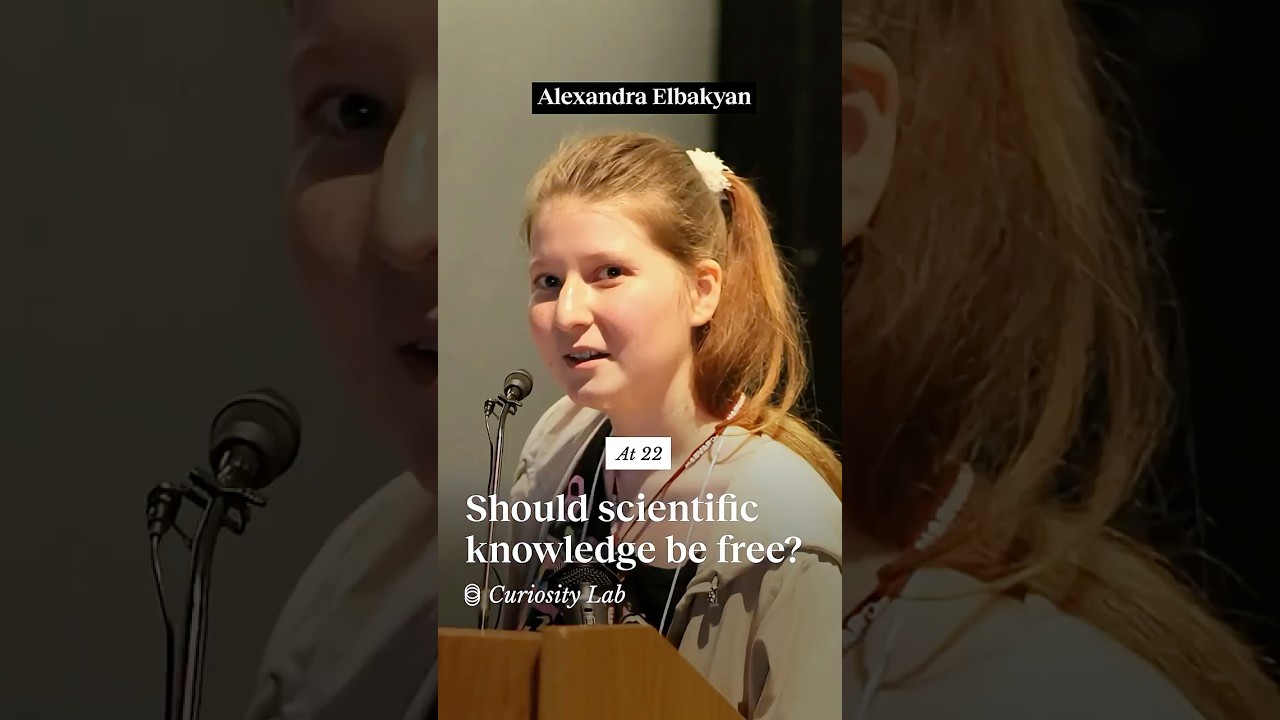 Listen to the line, then say it out loud
Full transcript
- At 22, she steals 88 million science papers, puts them on the internet for free, and now we've got half of the scientific researchers in the world using her pirating0:00
- website.0:09
- Everyone agrees that this was illegal, but it poses this interesting philosophical question, which is, should scientific knowledge be free?0:10
- If you find out tomorrow that your kid got a rare form of cancer, and you wanna try to learn everything you can about it, you're gonna pay more than0:17
- $30 per research paper for studies that your tax is already funded, and they didn't pay peer reviewers, the peer reviewers worked as volunteers.0:23
- All right, the journals have to pay editors, and there's fact checking that happens.0:32
- Scientific publishing is a $20 billion industry.0:36
- One of the biggest publishers, Elsevier, has a 38 % profit margin.0:39
- That's bigger than Apple, Amazon, or Google.0:43
- I think we have to ask ourselves if we wanna limit science to the experts and institutions that can pay for this journal access.0:45
A fast paced B2 science lecture for english listening practice
This clip is a Big Think talk about scientific publishing, delivered by an American speaker at 195 words per minute, faster than most of the catalogue. It sits at B2, so the ideas arrive quickly while the vocabulary stays close to everyday English. That combination makes it solid material for english listening practice: you have to track an argument in real time, not just catch isolated words.
The scene itself is an argument, not a scripted dialogue. The speaker opens with a researcher who pirated millions of science papers, then turns that story into a question about who should be allowed to read scientific research. Ten lines carry the whole arc, from the crime to the money behind academic publishing, so there is a real shift in topic to follow rather than one idea repeated.
How to pronounce english words like wanna and gonna in this lecture
The talk is dense with information, but three lines carry the speech features worth your attention if you want to speak english fluently at this speed.
- The line "she steals 88 million science papers" opens the clip and sets the pace: the numbers land on stressed beats, and the speaker does not slow down for them the way a classroom recording would.
- In "you wanna try to learn everything you can about it" the want to becomes wanna, said fast enough that the two words blur into one beat.
- The same sentence closes with "you're gonna pay more than", where gonna is squeezed even shorter, a useful pair for hearing how these two reductions behave next to each other.
- "One of the biggest publishers, Elsevier, has a 38 % profit margin." carries the rarer vocabulary in this clip, publishers and margin, spoken plainly with no extra stress to help you pick them out.
Shadowing english speaking practice b2: work through this lecture line by line
Ten lines is short enough to repeat the whole clip several times in one sitting for real english speaking practice. Work in this order.
- Listen to line 1, "she steals 88 million science papers", once with no text, then check what you actually heard against the line.
- Slow line 4 down and shadow "you wanna try to learn everything you can about it" a few times before moving on, so the wanna reduction sits in your mouth rather than your eyes.
- Do the same with "you're gonna pay more than" right after it. Practising the two reductions back to back is what turns a rule you read into a habit you speak.
- Shadow line 8, "One of the biggest publishers, Elsevier, has a 38 % profit margin.", at full speed once the words are familiar, since that is where the pace and the rare vocabulary meet.
- Finish on line 10, "I think we have to ask ourselves if we wanna limit science to the experts and institutions that can pay for this journal access.", the clip's closing question, and try to deliver it with the same weight the speaker gives it.