Shadowing practice: I quit social media for 30 days
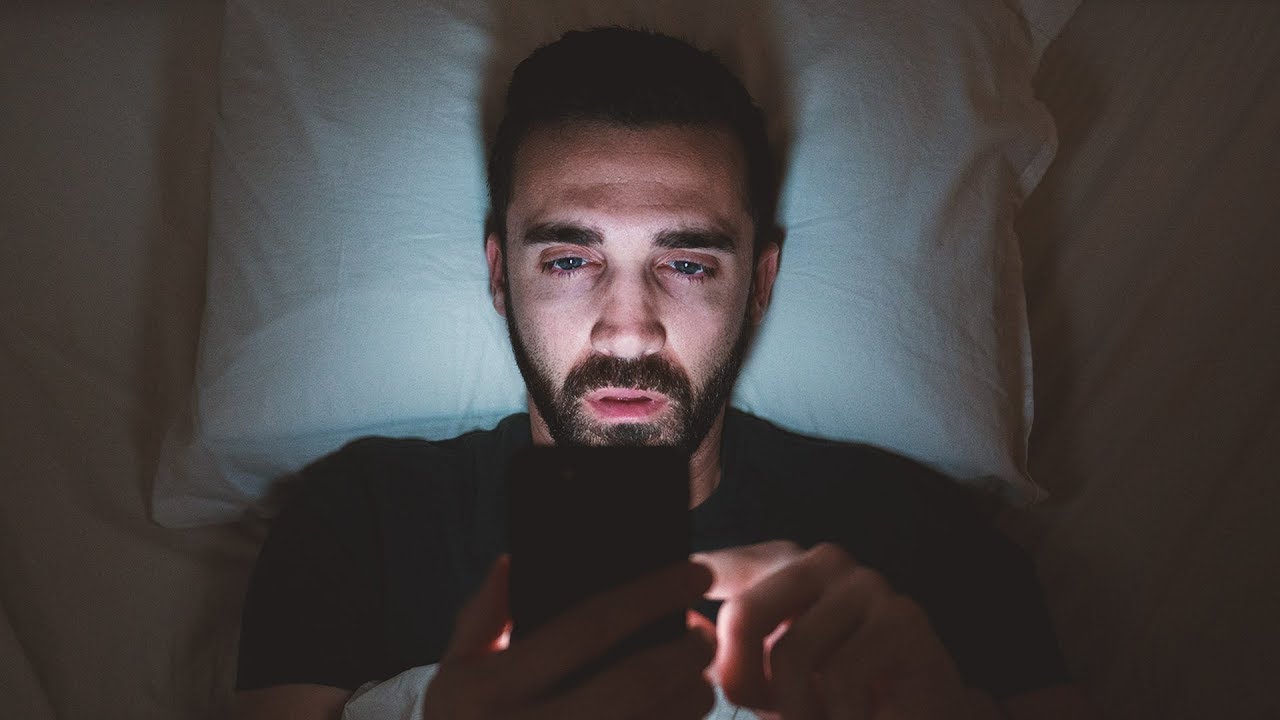 Listen to the line, then say it out loud
Full transcript
- American millennials spend more than three and a half hours on their phone every day.0:00
- A majority of that time is spent on social media.0:04
- My question, what benefits could you receive from stepping away from social media?0:07
- Would you be more productive, more focused?0:12
- In what ways might your life change?0:14
- And as someone who produces content and depends on an audience for a living, I wanted to know, do you need it to grow and support your business?0:17
- So I quit social media for 30 days to find out.0:25
- The first few days were the most challenging.0:30
- I knew without taking extreme measures, I would slip back into my old routines and check my phone frequently throughout the day.0:33
- So I deleted all social media apps from my phone.0:40
- I logged out of all accounts on my computer and cleared my history to build up some friction.0:43
- I was gonna do that anyway.0:47
Show all 114 lines Show fewer lines
- But that wasn't enough.0:49
- Like many people, I had hardwired into my brain this compulsive checking.0:50
- But it wasn't the content that I was addicted to.0:56
- It wasn't the likes, comments and DMs.0:59
- It was the anticipation of what could be.1:02
- Maybe that potential client messaged you back.1:06
- Maybe one of your posts went viral.1:08
- Or maybe the rock tweeted at you.1:10
- The rock.1:11
- The rock tweeted at me.1:12
- Okay, that one actually did happen.1:13
- But it's almost always nothing.1:15
- So I knew I had to create some distance.1:17
- I committed to leaving my phone in the bedroom while I worked.1:19
- And when I could, I kept it at home while I left the house.1:22
- You know the classic triple pat?1:25
- The moment right before you leave your house and you check your phone, wallet and keys.1:28
- Phone, wallet, keys.1:32
- I turned it into the double pat.1:34
- Just my wallet and keys.1:36
- After a week, I stopped flinching from my phone and it no longer felt weird to leave home without it.1:37
- There are a number of reasons why you might want to quit social media.1:45
- The side effects are a little bit different for each of us.1:49
- But I've got three main points that I think many of us fall into.1:51
- Some people find that apps like Instagram put them into a comparison mode.1:55
- By constantly seeing what other people have, you instinctively want it as well.2:00
- While others are addicted to the feedback and attention, one study showed that many people would prefer a mild electric shock rather than sit alone in a room for 152:04
- minutes.2:13
- Your phone can make you feel connected, less alone, and it preoccupies your racing mind.2:14
- And because of that, it's a massive time killer that can distract you from your work and hinder productivity.2:19
- So when I started this 30 -day social media detox, I actually never intended to stop posting.2:25
- Originally, for me, the negative side effects seemed to only be boiled down to comparing myself to others and wasting time through distractions and browsing.2:32
- And I wanted to see if I could get the benefits of using my platforms like Instagram to connect with my audience without actually using them.2:44
- So posting through a third -party app.2:52
- But was that just me rationalizing my addiction?2:55
- Did I actually think that by stepping completely away from social media, my entire life would fall apart and people would stop watching my videos?2:59
- Did I think that I had to keep up by posting every day or else Instagram would banish me to the land of bad algorithms?3:06
- It was probably a mix of both, but here's what ended up happening.3:15
- In the first two weeks, I shared a few photos and tweets.3:19
- But after I disrupted the feedback loop, I lost my drive to keep up and stop sharing.3:22
- I did continue to post videos to YouTube, which I use as a platform, similar to a blog.3:27
- It doesn't have the same addictive effect as social media for me.3:33
- Or does it?3:37
- For the first week, I'd grab my phone without even thinking, unlock it, and start to swipe through screens looking for something to preoccupy my wandering mind.3:40
- Then I'd snap back to reality and realize I had deleted all my social apps.3:48
- I started to spend much less time on my phone, averaging 23 minutes of screen time per day.3:54
- Compare that to the previous month where I spent 98 minutes a day on my phone.3:59
- Have you ever given the excuse, I don't have enough time to do blank?4:06
- I know that I've definitely done it in the past.4:11
- Whether you want to start reading more, go to the gym or start a business, a lot of times we think we just simply don't have enough time to do4:13
- it.4:21
- When in fact, maybe it's our priorities that aren't really in check.4:22
- Maybe we need to think about where we're spending our time to begin with, like social media.4:27
- Once you start to identify the things that you value in your life, the things you really want to bring into your life, you have to get rid of those4:33
- distractions.4:41
- And for me at least, it's become social media.4:43
- And as for my business, did things slow down?4:46
- Halfway through my 30 day detox, I saw the largest spike in subscribers on YouTube that I'd ever seen, like by far.4:49
- I had never even come close to seeing this kind of response from my videos.4:57
- If you were wondering, this is when I hit YouTube's trending page as a creator on the rise, and this massive drop is when YouTube deleted a bunch of bot5:01
- accounts.5:10
- I gained over 124 ,000 subscribers over the 30 day detox.5:10
- The source of the traffic, a video on my YouTube channel called A Day in the Life of a Minimalist that quickly climbed to 3 million views in 10 days.5:16
- And as far as revenue goes, I got the biggest increase in Patreon supporters since starting it in August.5:25
- Now, I know what you're thinking.5:31
- Matt, could you give us some more info about this Patreon account?5:33
- Like I'm dying to know what you provide the Patreon supporters.5:36
- So I'll do that in about 30 seconds or so.5:40
- My Patreon account is one of the ways that I'm able to keep this YouTube channel 100 % advertisement free.5:43
- And in exchange, I create exclusive content that I don't release anywhere else, covering lifestyle design, how I make my videos, and my personal vlog.5:49
- In fact, today I released a video breaking down how I was able to grow my audience here on YouTube, as well as provide advice and tips for those creators5:57
- who are looking to break through the noise.6:06
- You can get it all at patreon .com.6:09
- But of course, if you don't have the money to contribute right now, do not feel pressured.6:12
- The fact that you watch my videos is enough for me.6:16
- So in the same month that I quit social media, I saw exponential growth in my subscribers.6:20
- It's most likely a coincidence, as I would have released that video anyway, but it did make me think.6:25
- Why was I spending so much time on social media when the heart of what I do is making films?6:30
- Seth Godin wrote an article this month called, Social media is a symptom, not a tactic.6:36
- In it, he writes, The Mona Lisa has a huge social media presence.6:41
- Her picture is everywhere, but she doesn't tweet.6:46
- She's big on social media because she's an icon, but she's not an icon because she's big on social media.6:50
- The narrative of social media grooming is a seductive one, but it's as much of a dead end as spending an extra hour picking out which tie to wear before6:56
- giving a speech.7:04
- With the additional hour every day, I was able to be a little bit more productive, which meant that I could get ahead with my work and I could either7:07
- spend that on creating more content, more videos, or I could just take some time off and spend it with my family, which is what I did when I went7:15
- back home to visit them for about a week.7:24
- My nephew Oliver thought my drone was the greatest thing ever.7:26
- The lesson?7:30
- Productivity isn't always about increased output.7:31
- Another lesson?7:36
- Don't give Oliver the drone.7:37
- There's a sense of clarity that you get when you take a step away from the compulsive checking.7:39
- It's really hard to explain.7:46
- It's really impossible to quantify, but I can tell you that I simply felt better by being away from it.7:47
- And it became much harder for me to see the benefits of social media to begin with.7:54
- The urge to get back on Instagram and apps like it is mostly fueled by the fear of missing out.8:01
- For some reason, we've convinced ourselves that it's important, that it's necessary.8:07
- But once I got connected again, I realized one simple truth.8:13
- I didn't miss a thing.8:17
- Now looking ahead to my next 30 days, as a solo creator and someone with a finite number of hours in the day, I'm not so sure I want to8:17
- spend them the way I used to.8:26
American accent training with a fast paced English speaking practice clip
This clip comes from Matt D'Avella's video about quitting social media for 30 days, and it sits at B2. It runs at 209 words per minute, faster than 68% of the catalogue, so it is a good test of whether you can keep pace with a native speaker talking at a normal clip, not a slowed down teaching voice.
It is commentary: one person, direct to camera, explaining a personal experiment. He opens with the phone habits behind the experiment, then walks through why he deleted his apps and what he noticed in the first week. The tone stays conversational the whole way through, which makes it useful English speaking practice if your goal is sounding natural rather than reciting a script.
The language in this B2 commentary: reductions and rock tweets
Three lines here are worth slowing down on before you shadow this clip, because each one asks something different of your mouth and your ear.
- "I was gonna do that anyway." The only reduction in this recording, and it sits at the front of the sentence with no stress on it. Say the whole line fast and let "gonna" disappear the way it does here.
- "The moment right before you leave your house and you check your phone, wallet and keys." A long single breath group. Practise it as one unit, not word by word, and notice how "phone, wallet and keys" gets a small pause before each item.
- "The rock tweeted at me." Four words, and the stress lands hard on "me", which is what turns a flat fact into a punchline. Try to speak English fluently enough that the stress, not just the words, comes through.
How to shadow this line by line, from the triple pat to the comparison trap
Work this clip in order rather than jumping around. It builds an argument, and the lines make more sense once you have heard the ones before them.
- Start with "So I quit social media for 30 days to find out." It is the thesis of the whole clip, said slowly enough to be a safe first line for english shadowing practice.
- Move to the four lines about the triple pat, "phone, wallet, keys", down to "I turned it into the double pat." Say each phrase in the same rhythm he uses, since the joke depends on the repetition.
- Take "after a week, I stopped flinching from my phone and it no longer felt weird to leave home without it" as one long line and repeat it until you can say it without running out of breath.
- Finish the session on "the rock tweeted at me" and "okay, that one actually did happen", back to back, so you practise the shift from flat statement to reaction in one go.