Shadowing practice: How the inner child shapes your reactions | Nicole Lepera
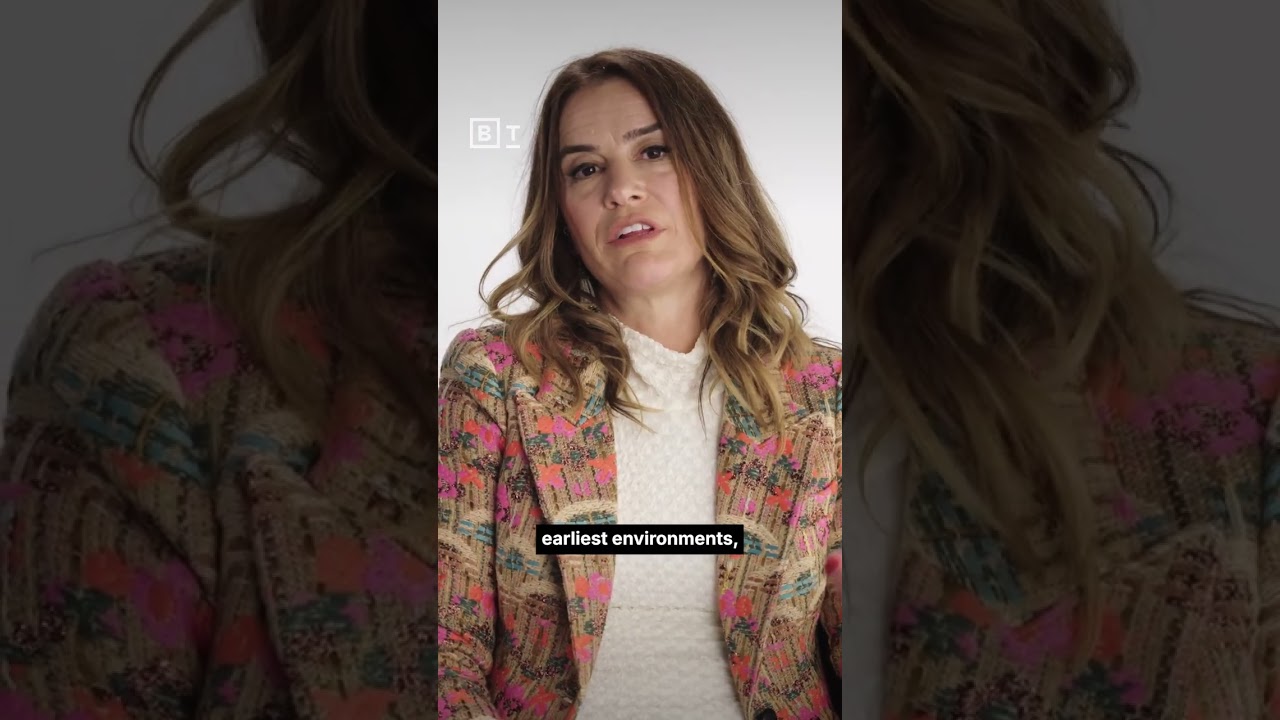 Listen to the line, then say it out loud
Full transcript
- So, inner child oftentimes is believed to be an abstract or a metaphysical type concept, but in reality, it's a body -based memory.0:00
- In childhood, before we had logic, before we had language, we had sensation and we had reflex.0:09
- In psychological terms, this is known as implicit emotional memory.0:15
- It's that body -based learning that, again, happened in our earliest environments, which is why so many of us can logically know we're safe.0:20
- Our partner's not leaving us, yet in those moments, our body, our emotional body takes over and we spiral into a belief that we're being rejected or that we're being0:30
- abandoned because our body speaks even quicker than our logical mind does, which is why for many of us, insight and awareness doesn't translate into changed action because we have0:42
- all of these implicit emotional memories, these scripts, in some ways that are running behind the scenes dictating how we feel and then what we do even when we logically0:54
- know better or know different.1:04
American accent training with a C1 psychology lecture
This clip is Nicole Lepera explaining, on Big Think, why the body reacts to old wounds faster than the logical mind can catch up. There is no back and forth here, one speaker builds a single argument across eight lines, which makes it a clean target for english listening practice: you are not chasing turn taking, you are tracking one voice through a chain of reasoning.
At 157 words per minute and a C1 level, this is not a beginner clip. The vocabulary runs abstract on purpose, words like implicit, metaphysical and dictating carry the argument, so this is closer to american accent training for someone already comfortable with everyday conversation who wants to handle real lecture speech, the kind you get in a psychology class or a serious podcast, not a simplified script.
The reasoning chain behind Lepera's lines
The interest in this clip is not slang, there are no reduced forms measured in it, it is how a trained speaker stacks clauses without losing the listener. Three lines show that clearly.
- "In childhood, before we had logic, before we had language, we had sensation and we had reflex." Three parallel clauses, each one landing on the same stress pattern, which is what gives spoken argument its rhythm. Practise the beat, not just the words.
- "In psychological terms, this is known as implicit emotional memory." A short definitional line dropped after a longer setup, said with a flatter pitch than the lines around it, the way a speaker marks a term worth remembering.
- "our body speaks even quicker than our logical mind does" sits inside a longer run on sentence and carries the emphasis of the whole clip. Notice where the stress falls: body and quicker, not logical.
How to shadow this lecture line by line
Work through this C1 clip in order rather than jumping around, the argument is cumulative and each line leans on the one before it. This is deliberate speaking practice, not passive listening, so say the words out loud each time.
- Start with line 2, "we had sensation and we had reflex," alone. It is short, the rhythm is even, and it sets the pattern for the parallel clauses that recur later.
- Move to line 3, "implicit emotional memory," and repeat it until the three stressed words come out cleanly, this term reappears near the end of the clip.
- Take line 6 as one unit and shadow the full run, "our body speaks even quicker than our logical mind does," matching where Lepera speeds up and where she lands the stress on quicker.
- Play the clip through once without pausing and read along silently, to feel how the eight lines connect as one argument rather than eight separate sentences.
- Score yourself line by line rather than on the whole clip, this recording is dense enough that scoring the full run at once hides which specific word is slowing you down.
- Repeat the same line five times before moving on. A line you can say cleanly on the fifth try does more for your speaking than moving through the transcript once.