Shadowing practice: How To Know Yourself
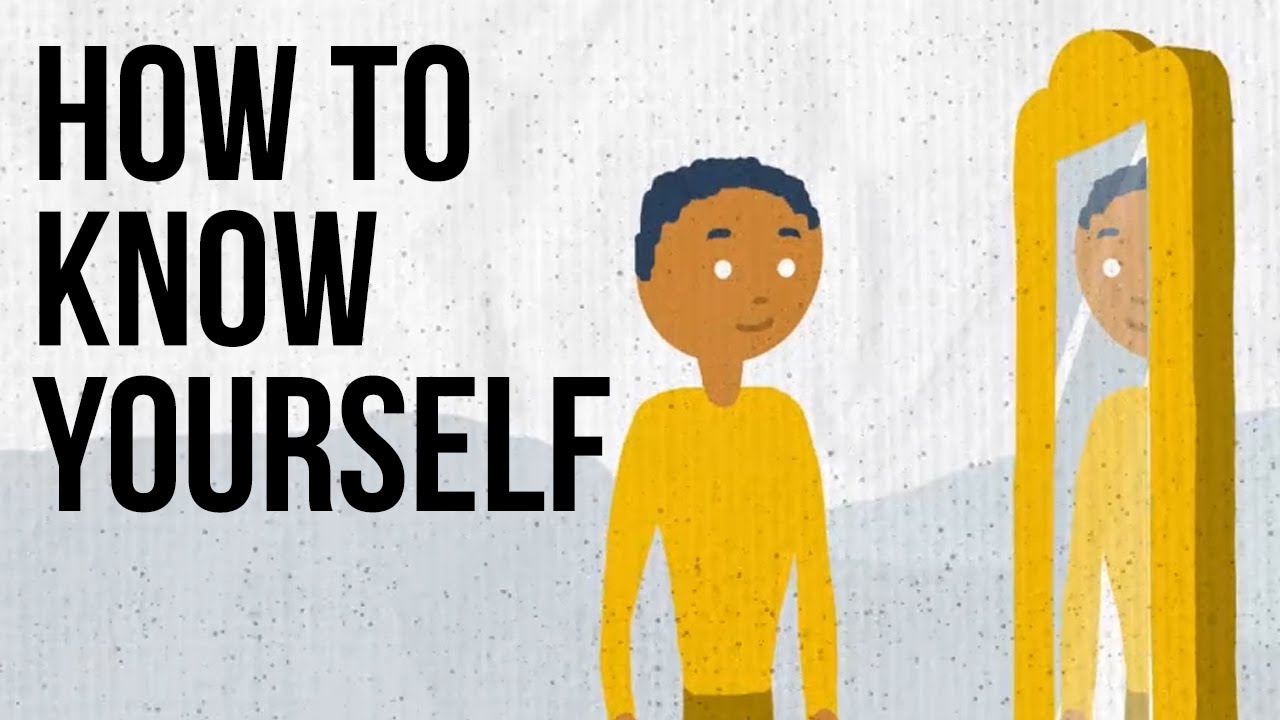 Listen to the line, then say it out loud
Full transcript
- Many of us are wondering the Earth, accomplished in many ways, capable of fulfilment at many points, but with a fundamental wound that stops us from becoming who we truly0:04
- might be.0:16
- We don't quite know who we are.0:17
- It isn't, of course, that we can't remember the basics of our biographies.0:22
- We're unsure around two things in particular.0:26
- Firstly, we don't have a stable sense of what we're worth.0:29
- And secondly, we don't have a secure hold on our own values or judgments.0:33
- Without knowing who we are, we tend to have particular trouble coping with either denigration or adulation.0:39
- If other people decide that we are worthless or bad, there will be nothing inside us to prevent us from swallowing their verdicts in their entirety.0:46
- However wrongheaded, extreme or unkind these might be.0:55
- We'll be helpless before the court of public opinion.0:59
- We'll always be asking other people what we deserve before seeking inside for an answer.1:02
Show all 48 lines Show fewer lines
- Lacking an independent verdict, we also stand to be unnaturally hungry for external praise.1:09
- The clapping of an audience will matter to us far more than would ever be wise.1:15
- We'll be prey to rushing towards whatever idea or activity the crowd happens to love.1:21
- We'll laugh at jokes that aren't funny, uncritically accept undeserving concepts that are in vogue, and neglect our truer talents for easy popular wins.1:27
- We'll trail public opinion slavishly, constantly checking the world's whims rather than consulting an inner barometer in order to know what we should want, feel and value.1:37
- We need to be kind on ourselves.1:49
- No one is born with an independent ability to know who they are.1:52
- We learn to have an identity because if we're blessed in our early years, someone else takes the trouble to study us with immense fairness, attention and kindness, and then1:55
- plays us back to us in a way that makes sense and that we can later emulate.2:07
- They give us the beginning of a true portrait of our identity, which we can then take on and enrich over the years and use as a defence against the2:14
- distorting verdicts from hurried or ill -intentioned others.2:22
- Knowing who one is is really the legacy of having been known properly by somebody else at the start.2:27
- This early identity building tends to unfold with apparently innocuous but life -saving small steps.2:35
- Oh, that must really have hurt, a parent might say, in response to an upset, thereby validating an infant's own feelings.2:42
- Or, it's okay not to feel happy on your birthday, the parent might say at another point, delicately upholding an infant's less typical response to certain events.2:50
- Ideally, the child isn't just known, he or she is also interpreted as likeable.3:01
- A good parent offers generous interpretations, they're on the side of the child and are always ready to put the best possible gloss on moments of ill -temper or of3:07
- failure, which forms the basis upon which resilient self -esteem can then later emerge.3:17
- Now, that's the ideal but it can, of course, go very wrong and often does.3:24
- A parent may offer mirroring that is out of sync with the reality of the child.3:30
- Look who's such a happy little boy or girl, a parent might insist when actually the opposite is clearly the case, thereby badly scrambling the child's ability to connect with3:35
- their own emotions.3:46
- Or, the parent might only lend the child a very harsh, punitive way of interpreting itself, repeatedly suggesting that the child is ill -intentioned or no good.3:48
- Or, the parent may simply not show very much interest in the child, focusing themselves elsewhere, so that the child grows up with a feeling that not only is it3:58
- not worth cherishing, but also because it hasn't been adequately seen and mirrored, that it doesn't even quite exist.4:07
- A feeling of unreality is the consequence of emotional neglect.4:15
- Realizing that we lack a stable identity is a sobering realization, but we can, with a fair wind, start to correct the problem at any point.4:20
- We need to seek out the help of a wise and kindly other person, perhaps a good psychotherapist, someone who can study as closely, mirror as properly, and then validate4:30
- what they see.4:40
- Through their eyes, we can learn to study, perhaps for the first time, how we really feel, and take seriously what we actually want.4:42
- We can, by being witnessed generously, more often learn to take our own sides, and feel increasingly solid inside, trusting ourselves more than we trust the crowd, feeling that we4:51
- might be able to say no, not always swaying in the wind, and feeling that we are in possession of some of the ultimate important truths about us.5:04
- Having come to know ourselves like this, we will be a little less hungry for praise, a little less worried by opposition, and a lot more original in our thinking.5:15
- We will have learned the vital art of both knowing and befriending who we really are.5:26
- Our Know Yourself cards can help us to better understand the deepest, most elusive aspects of ourselves.5:36
- Follow the link now to learn more.5:43
A British C1 narration on knowing yourself, at 165 words per minute
This clip comes from The School of Life, and it is narration, not dialogue: one voice building an argument about identity, self worth, and how a stable sense of self gets formed, or damaged, in childhood. The level is C1 and the pace is 165 words per minute, faster than most of the catalogue, so there is little room to catch your breath between clauses.
The accent is British, measured and even, which makes this a useful target for british english pronunciation practice if your listening has leaned American so far. Because it is a single speaker working through a written argument rather than two people trading turns, it also works well as english listening practice: you have to hold a long sentence in your head while the next clause is already arriving, as in the opening line about being accomplished in many ways but carrying a fundamental wound.
The language in this clip: long sentences built from parallel parts
No reduced forms turn up in this recording, so there is nothing to listen for there. What is worth your attention instead is structure: short flat statements set against long ones built from three or four parallel parts, all delivered at the same even pace. That rhythm is what makes lines here good material if your goal is to speak english fluently rather than just recognise words on a page.
- Line 6, "Firstly, we don't have a stable sense of what we're worth." A short, plain statement. Notice how the stress lands hard on the final word, worth.
- Line 9, "If other people decide that we are worthless or bad, there will be nothing inside us to prevent us from swallowing their verdicts in their entirety." One long conditional sentence with no pause built in; the challenge is keeping pace and breath from start to end.
- Line 16, "We'll laugh at jokes that aren't funny, uncritically accept undeserving concepts that are in vogue, and neglect our truer talents for easy popular wins." Three actions joined by commas and a final and: laugh, accept, neglect. Each one carries its own stress before the sentence moves on.
How to shadow this narration, line by line
Work sentence by sentence here rather than paragraph by paragraph; the sentences are long enough on their own. This is a solid clip for english speaking practice at an upper intermediate to advanced level, precisely because so few lines are short.
- Start with line 6, the shortest sentence in this stretch, to fix the narrator's rhythm before you take on anything longer.
- Take line 9 and read it once at half speed for meaning, then shadow it at the recording's own 165 words per minute so you feel where the pace actually sits.
- For line 16, say the three verbs alone first, laugh, accept, neglect, before shadowing the full sentence, so the stress pattern is set before speed is added.
- Loop lines 1 through 3 as one block: line 1 runs straight into line 2, and line 3 answers both, so splitting them breaks the logic.
- Once single lines feel comfortable, run lines 6 through 9 back to back. Carrying your own pace across a sentence boundary, not just inside one line, is the harder skill this clip trains.