Shadowing practice: How To Build Muscle And Lose Fat At The Same Time
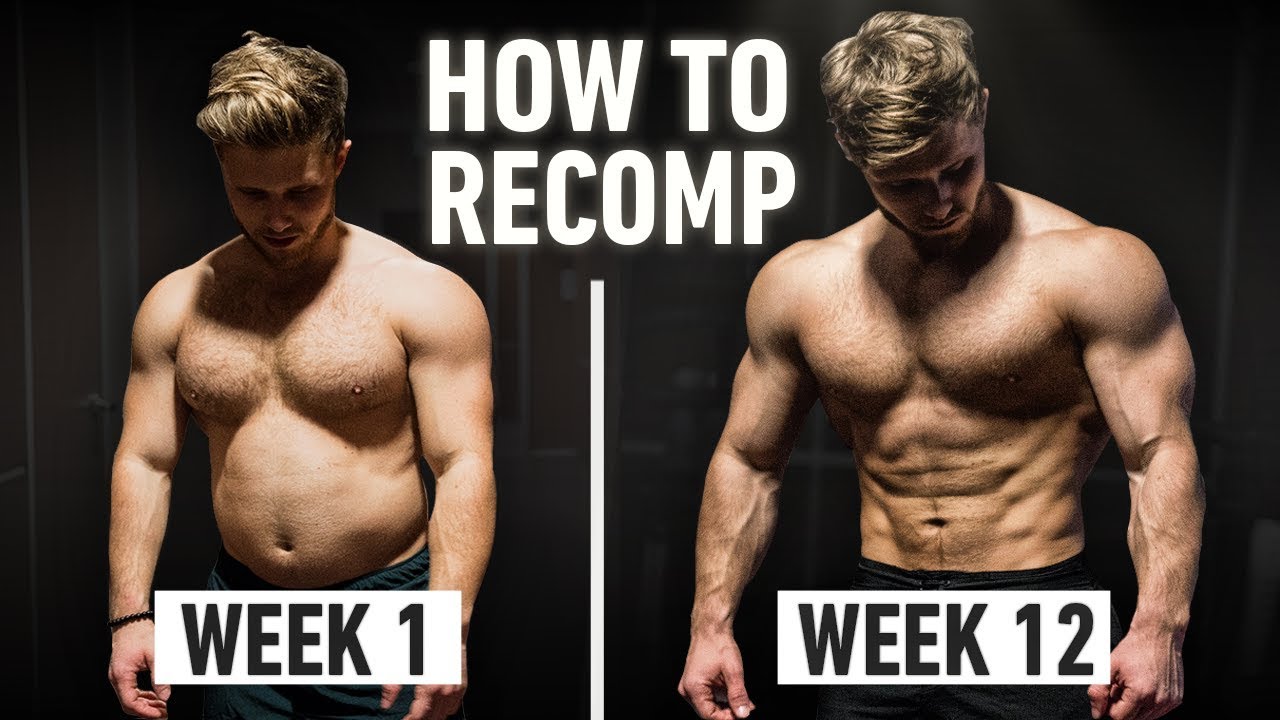 Listen to the line, then say it out loud
Full transcript
- How can you build muscle and lose fat at the same time?0:00
- A lot of people on the internet think the answer is simple.0:03
- You can't.0:05
- If you want to build muscle, you need to do a proper bulk, and if you want to lose fat, you need to do a proper cut.0:06
- I think this idea has made its way into the mainstream from old bodybuilding lore, where it was thought that you had to be in a massive caloric surplus to0:12
- build size and then trim down for competition.0:19
- But recent scientific evidence has challenged this idea.0:21
- For example, this 2013 study from Garth and colleagues found that even when they overfed subjects by 600 extra calories per day, they actually didn't gain significantly more muscle, but0:24
- did gain over three times the fat mass.0:34
- So nearly all the extra bulk came as fat.0:37
- Now I should say I don't actually have anything against cutting and bulking.0:39
- In the right circumstances, I think it makes perfect sense.0:42
Show all 133 lines Show fewer lines
- And many of you guys know last year I ran a pretty hefty bulk myself that I called bare mode, and I still think that if you want to gain0:45
- as much muscle and strength as possible, as fast as possible, then being in a bigger caloric surplus is the way to go.0:51
- However, this quicker muscle gain will come at the expense of more fat gain as well.0:58
- And many people simply don't want that, but just accept it as an inevitability.1:03
- But it doesn't have to be that way.1:07
- In fact, it's perfectly possible to build muscle without a large surplus, or even without any surplus at all, because fat tissue and muscle tissue are separate systems.1:08
- And I've broken down the math explaining why this is possible in another video that I'll link below.1:17
- Now many people will get on board with this and say, okay, building muscle while losing fat is possible, but not really practical, because it only applies in a handful1:21
- of more limited and obscure scenarios.1:29
- But I think these scenarios aren't as limited as they seem.1:32
- And I would say body recomposition is a realistic goal, not only for some people, but nearly all people.1:35
- So let's quickly cover the situations where I think recomposition makes the most sense.1:41
- First of all, new lifters.1:44
- Newbies can build muscle and lose fat at the same time quite easily, because as a new lifter, you're the most primed for muscle growth you'll ever be.1:46
- This means that calories can be pulled from stored body fat to fuel the muscle building process with just basic progressive resistance training and a reasonable diet.1:53
- Second, because overweight individuals have very large energy reserves stored in body fat, they can eat in a caloric deficit and still have plenty of stored energy to fuel the2:02
- muscle building process.2:10
- Thirdly, detrained individuals who got jacked before, but then stopped training due to injury or other commitments, are in a similar camp to the new trainee, where owing to the2:11
- very powerful muscle memory effect, they're able to rebuild a lot of muscle very quickly, making recomposition common.2:20
- And finally, using anabolic steroids allows most people to build a lot of muscle very quickly, allowing the body to tap into fat stores to fuel muscle building.2:26
- But at this point, I would say even if recomposition were limited to these four groups, walk into any commercial gym, and most people will fall into one of these2:35
- four categories.2:43
- For example, even if you've been in the gym for several years, you might still fall under the newbie category if you haven't been training nearly hard enough or smart2:44
- enough over the years.2:52
- I'd also add a fifth category to this list, the suboptimized trainee.2:53
- This would include anyone who's been going to the gym for a while, may even count themselves as an intermediate or advanced level lifter by training age, but deep down2:57
- hasn't really been putting in their best effort with their training or nutrition.3:04
- And according to my good friend and co -author, Chris Bearcat, he sees recomposition in his lab all the time, even in more advanced trainees.3:08
- So I literally see this every single semester.3:15
- Every training study we've ever ran, I've seen body recomposition occur.3:18
- Once we really start paying attention to some of the details to a higher extent, like nutrient timing and really optimizing their macronutrient intakes, we can see recomposition with some3:22
- of the best athletes ever.3:32
- This one subject in particular, he gained 20 pounds of lean mass in 10 weeks, and he actually lost like a pound of fat mass at the same time.3:33
- So he was a basketball player, pretty well trained when it comes to resistance training.3:41
- He was able to squat 1 .75 times his body weight.3:45
- So he set the criteria for the study and he just blew up.3:49
- He basically came in the lab looking like a normal basketball player and then he looked like Phil Heath playing basketball.3:52
- So I think there's really only a tiny subset of the population that recomposition wouldn't be practical for, truly advanced trainees already with perfectly optimized training and nutrition who are3:59
- near their genetic ceiling for muscle growth.4:09
- But in my opinion, this is the obscure scenario and it only occupies a tiny sliver of the total population looking to improve their physique.4:11
- Okay, so body recomposition is not only common, but practical.4:18
- Now, how do we do it?4:22
- Let's break it down into five simple steps.4:23
- First, you need to recognize that training is the driving force of body recomposition in any scenario.4:25
- You can have the most optimal diet in the world, eat over 9 ,000 grams of protein per day, and you still won't build much new muscle without a progressive4:30
- training stimulus.4:37
- In the book, we use the analogy of a car where we can think of our training as the engine and our nutrition as the gasoline to fuel performance.4:39
- Better the fuel, the better the performance.4:46
- However, without the engine, the car simply won't move regardless of the fuel's quality.4:48
- We can also think of sleep and stress management as the oil changes entire rotations required to keep things moving.4:52
- So when it comes to training, you want to focus on progressive overload, applying effort, and using proper technique.4:58
- And once you have the fundamentals in place, fine tune your volume to fit your advancement level.5:05
- Generally speaking, 10 to 20 sets per body part per week is a good ballpark for most people and most muscles.5:09
- Next, you need to decide on a primary goal.5:15
- Even though you may want to do both at the same time, it's important to establish which is more important to you.5:18
- For example, if you're currently on the leaner side, let's say 8 to 12 % body fat as a male or 18 to 22 % as a female, then your5:23
- primary goal should probably be to build muscle.5:31
- And if you're not so lean, so somewhere between 15 to 20 plus percent as a guy or 25 to 30 plus percent as a girl, then maybe your primary5:33
- goal should be to lose fat.5:41
- Once you've decided on your primary goal, next you want to center your caloric intake around maintenance calories, the number of calories you need to eat to maintain your weight.5:43
- If your primary goal is to build muscle, you should enter a slight caloric surplus adding 5 to 25 % to your maintenance intake.5:51
- If you're leaner, less advanced and more genetically gifted for building muscle, you can get away with a bigger surplus.5:58
- If your primary goal is to lose fat, you should enter a slight caloric deficit slashing 10 to 20 % off your maintenance intake.6:04
- The more fat you have to lose, the bigger the deficit should be.6:10
- And in the book, we outline other considerations such as if you're detrained, highly advanced, skinny fat, or significantly overweight.6:13
- Next, you need to set up your macro targets, starting with protein, the most important macro for recomposition.6:20
- In the book, we recommend a sliding model for protein intake based on lean body mass.6:26
- Where the leaner you are, the closer you should be to 1 .6 grams per pound of lean body mass, and the more body fat you have, the closer you6:31
- should be to 1 .2 grams per pound lean body mass.6:38
- Using myself as an example, I currently weigh 165 pounds at about 10 % body fat.6:41
- Using our sliding model, since I'm quite lean, I should be more toward the high end of intake.6:46
- I'll pick 1 .5.6:51
- Multiplying it out, that would give me a daily protein intake of 222 .8 grams per day, so I can round that up to 225, which is what I'm eating6:53
- at the moment.7:01
- And my last full day of eating video, I explained the benefits of going higher on protein than might be required just to build muscle.7:02
- So even though you could probably get away with less, I think eating a higher intake is both safe and advised for those looking for recomb.7:08
- From here, you want to determine your fat and carb intake.7:16
- Personally, I set my fat intake at a minimum of 20 % of caloric intake and then fill in the rest with carbs.7:18
- Okay, the fifth and final step to achieving body recomposition is to pay attention to the details.7:24
- Like I mentioned earlier, this step might not be required for beginners.7:29
- They can get recomb by just following the first four steps.7:33
- But as you get more advanced, recomb gets more difficult, so it's more important to optimize your approach.7:35
- We spend a lot of time in the book laying out these optimization strategies.7:41
- I'm going to focus on a few of them here.7:44
- The first is to sleep more.7:46
- I think sleep might be the single most underrated factor when it comes to transforming your physique.7:48
- Just consider this 2018 study from Wang and colleagues.7:52
- They split 36 subjects up into two groups that both entered a caloric deficit, except one group slept one hour less five nights per week.7:55
- They were also allowed to sleep one hour extra on the weekends to catch up.8:03
- As it turns out, after eight weeks of dieting, weight loss was the same in both groups, but the group that slept well lost 83 % of their weight from8:06
- fat, whereas the sleep restricted group lost 85 % of their weight as lean mass.8:14
- That is crazy.8:19
- Now, it's worth mentioning that these subjects weren't weight training, so lifting probably would have flattened out the results a bit, but I don't think it would have been enough8:20
- to offset that enormous difference that sleep made.8:28
- The next area we can look to optimize our approach is through peri workout nutrition or the timing of nutrients around the workout.8:31
- I already discussed some of the misconceptions around this topic in my latest full day of eating video, so I'll just link that video down below.8:37
- We can also turn to supplements to optimize, but it's worth noting that there aren't any recomp supplements that just cause recomposition on their own.8:43
- However, there are a few worth mentioning that can help.8:50
- In the book, we organize our supplements list into tiers.8:53
- At the top of the list in tier one, we have protein powder, creatine, and caffeine.8:56
- Protein powder is especially important for vegan lifters, and I recommend so -called vegan whey, a blend of rice and pea protein that offers a full spectrum of amino acids9:00
- and has a high loosing content.9:09
- Whey protein can be used at any time of day to help make meeting total daily protein goals easier, and consuming a casein source before bed might have merit as9:11
- well.9:19
- Creatine is by far the most well -studied supplement on the market, and given how cheap it is and how low its risk of side effects are, it's a pretty9:19
- obvious choice to supplement three to five grams of creatine monohydrate per day, and I'll link my creatine science explained video down below if you'd like more info on that.9:26
- Caffeine rounds out tier one of our supplements shortlist for increasing strength, prolonging time to fatigue, increasing acute fat oxidation, and more.9:34
- However, unlike creatine, caffeine is susceptible to tolerance, so it might be smart to reserve it for your heaviest or most demanding training sessions, or periodically cycle off it to9:42
- resensitize yourself to the effects.9:51
- And of course, we dive into many other optimization strategies across the 15 chapters in the new nutrition guide, including sample meal plans, pre and post workout meal examples, more9:53
- supplements, cardio strategies, and a lot more.10:02
- So if you guys are looking to take your nutrition up a notch, you can save 25 % off the ultimate guide to body recomposition at the first link in10:05
- the description box below for the launch, or you can head over to jeffnipper .com, go to the nutrition plans tab, and you can find it over there.10:12
- And after launch week, so next weekend, it'll be going up to full price.10:19
- So the manual has over 140 scientific references, an exact step by step guide for setting up your calories and macros, a list of foods to focus on, and even10:23
- a full chapter on training for recomb.10:31
- It also includes customer service.10:33
- So if you guys have any issues, there's a support email that you guys can contact.10:35
- So hit up the link over here next to my head.10:38
- If you guys are interested in checking it out, don't forget to leave me a thumbs up if you enjoyed the video, or if you found it helpful, subscribe if10:40
- you haven't already, and I'll see you guys all here in the next one.10:45
English listening practice with a fast, C1 fitness lecture
Jeff Nippard is arguing a specific point: that you can build muscle and lose fat at the same time, against the common gym belief that you cannot. He opens with the claim, states the objection, then brings in a 2013 study before working through the cases where it actually applies. That structure, claim, counter, evidence, is what makes this a lecture, not a chat, and it is why it sits at C1.
The recording moves at 222 words per minute, faster than 79% of the clips in the catalogue, and Nippard does not slow down for effect. He is american, and his diction stays clean even through terms like optimization, misconceptions and inevitability, which makes this clip solid material for american accent training as well as general english listening practice.
The language in Jeff Nippard's argument about body recomposition
Three lines carry the whole shape of the argument, and each is worth isolating before you shadow the paragraph around it.
- "How can you build muscle and lose fat at the same time?" The whole video sits under this question. Say it as a real question, with the pitch rising on "same time", not flattened the way a statement would be.
- "You can't." Two words, one full stop, no hedging. Nippard uses it to voice the opposing view before he dismantles it, so the delivery is flat and final, almost quoted rather than spoken.
- "because fat tissue and muscle tissue are separate systems." This is the technical payoff line. "Fat tissue" and "muscle tissue" get near identical stress, which is what lets the contrast between them land without extra emphasis words.
How to shadow this lecture line by line
Work this clip in order, since the argument only makes sense that way, and treat it as targeted english speaking practice rather than one long listen.
- Start with line 1, "How can you build muscle and lose fat at the same time?", and repeat it until the rising question intonation feels automatic, not just correct on paper.
- Play lines 3 and 4 back to back. Line 3 is the short, blunt "You can't." and line 4 spells out the belief behind it. Shadowing the contrast between a one line denial and a full sentence is good practice for pace control.
- Slow the player down for line 18 and isolate "because fat tissue and muscle tissue are separate systems." Say it at half speed first, then bring it back to Nippard's pace once the two stressed nouns feel even.
- Finish on line 23, where he states his actual position after all the setup. By this point you have shadowed the question, the objection and the mechanism, so this line should come out with real conviction, not just accurate pronunciation.
- Loop the whole 26 line opening once more at full speed. At 222 words per minute this stretch will not feel comfortable on the first pass, and that discomfort is exactly what tells you it is doing its job.