Práctica de shadowing: Daily Routine | A1 English | Talk About Your Day | English Podcast
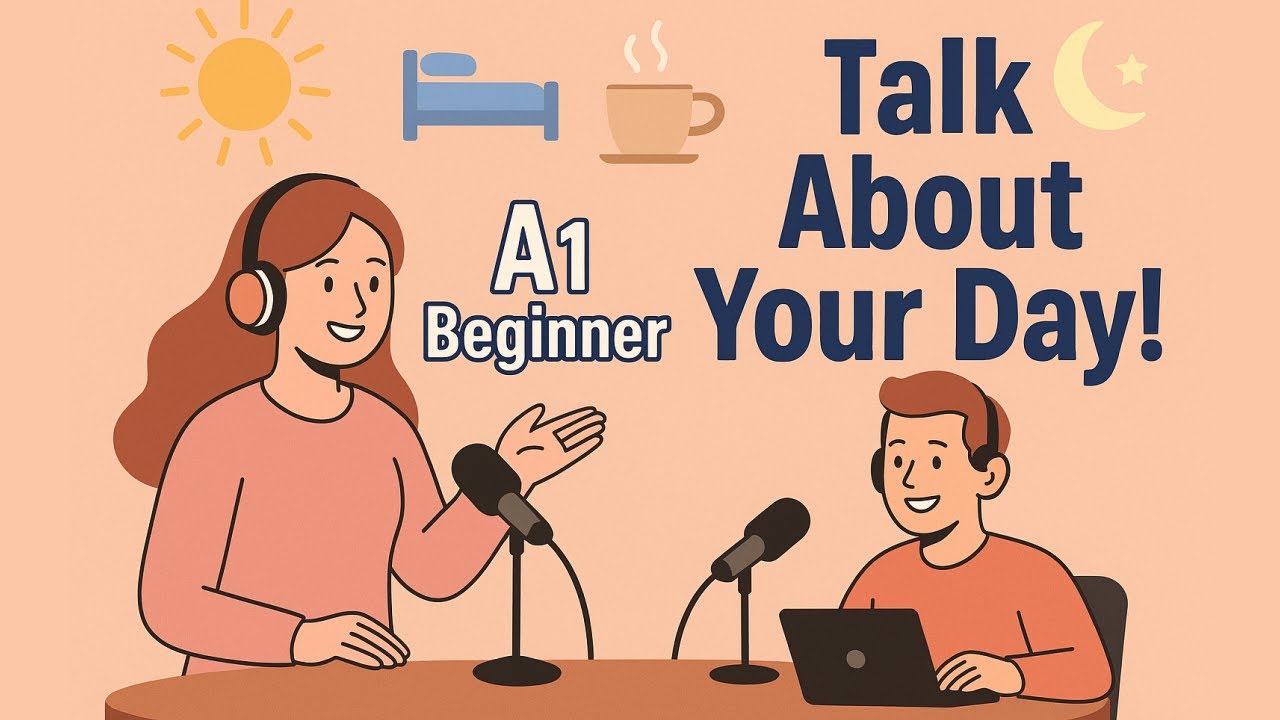 Escucha la frase y luego dila en voz alta
Frase 1
Transcripción completa
- Hello everyone and welcome back to Mr.Hola a todos y bienvenidos de nuevo a Mr.0:00
- English Channel.Canal de Inglés.0:03
- I'm Emily.Soy Emily.0:04
- Hi Emily.Hola Emily.0:06
- Hi everyone.Hola a todos.0:07
- It's great to be here again.Es genial estar aquí de nuevo.0:08
- It's wonderful to have you back, Paul.Es maravilloso tenerte de vuelta, Paul.0:11
- And to all our amazing listeners, thank you for tuning in.Y a todos nuestros increíbles oyentes, gracias por sintonizar.0:13
- Today, we have a super simple and useful topic for you beginners out there.Hoy tenemos un tema súper simple y útil para ustedes principiantes.0:18
- That's right, Emily.Así es, Emily.0:23
- We're going to talk about our day.Vamos a hablar sobre nuestro día.0:25
- You know, the things we do every day.Ya saben, las cosas que hacemos todos los días.0:28
Mostrar las 222 frases Mostrar menos frases
- It's a fantastic way to learn some basic verbs and vocabulary.Es una forma fantástica de aprender algunos verbos básicos y vocabulario.0:31
- Exactly.Exactamente.0:37
- Before we start, if you enjoy learning English with us, please remember to subscribe to our channel.Antes de empezar, si disfrutan aprendiendo inglés con nosotros, recuerden suscribirse a nuestro canal.0:39
- Share this episode with your friends who are also learning and give us a thumbs up.Compartan este episodio con sus amigos que también están aprendiendo y denle un pulgar hacia arriba.0:46
- It really helps us a lot.Realmente nos ayuda mucho.0:51
- Yes, please do.Sí, por favor.0:53
- We love hearing from you too.Nos encanta escuchar de ustedes también.0:56
- So feel free to leave a comment about your day or anything you're learning.Así que siéntanse libres de dejar un comentario sobre su día o cualquier cosa que estén aprendiendo.0:58
- Okay Paul, are you ready to talk about what we do during the day?Está bien Paul, ¿estás listo para hablar sobre lo que hacemos durante el día?1:03
- Absolutely.Absolutamente.1:08
- Emily, let's start with the morning.Emily, comencemos con la mañana.1:09
- What do you usually do in the morning?¿Qué haces generalmente por la mañana?1:12
- Well, the first thing I do is wake up.Bueno, lo primero que hago es despertarme.1:14
- I usually wake up around 7 o 'clock.Generalmente me despierto alrededor de las 7 en punto.1:18
- 7 o 'clock.Las 7 en punto.1:20
- That's a good time.Ese es un buen horario.1:22
- I sometimes wake up a little earlier, around 6 .30.A veces me despierto un poco más temprano, alrededor de las 6 y 30.1:24
- Wow, you're an early bird, Paul.Vaya, eres un madrugador, Paul.1:28
- After I wake up, I get out of bed.Después de despertarme, me levanto de la cama.1:31
- Me too.Yo también.1:34
- Get out of bed is a very important phrase.Levantarse de la cama es una frase muy importante.1:35
- That's right.Así es.1:38
- After that, I go to the bathroom.Después de eso, voy al baño.1:39
- I brush my teeth and wash my face.Me cepillo los dientes y me lavo la cara.1:42
- Brush my teeth and wash my face.Me cepillo los dientes y me lavo la cara.1:45
- These are also very common actions.Estas también son acciones muy comunes.1:48
- That's right.Así es.1:51
- After that, I go to the kitchen.Después de eso, voy a la cocina.1:52
- Ah, the kitchen.Ah, la cocina.1:55
- What do you do in the kitchen in the morning?¿Qué haces en la cocina por la mañana?1:57
- I usually make breakfast.Generalmente preparo el desayuno.2:00
- Make breakfast.Preparar el desayuno.2:03
- What do you usually have for breakfast, Emily?¿Qué generalmente desayunas, Emily?2:04
- I often have coffee and toast.A menudo tengo café y tostadas.2:07
- Sometimes I eat fruit too, like a banana or an apple.A veces también como fruta, como un plátano o una manzana.2:10
- Coffee and toast.Café y tostadas.2:15
- Simple and delicious.Simple y delicioso.2:16
- I usually have tea and some cereal.Generalmente tengo té y un poco de cereal.2:19
- Nice.Qué bien.2:22
- After breakfast, I get dressed.Después del desayuno, me visto.2:23
- Get dressed.Vestirse.2:26
- That means you put on your clothes.Eso significa que te pones tu ropa.2:27
- Exactly.Exactamente.2:30
- I choose my clothes for the day and put them on.Elijo mi ropa para el día y me la pongo.2:32
- And what do you do after you get dressed, Emily?¿Y qué haces después de vestirte, Emily?2:35
- Well, if I'm going out, I might put on my shoes and my coat.Bueno, si voy a salir, podría ponerme los zapatos y el abrigo.2:39
- Put on my shoes and put on my coat.Ponerme los zapatos y el abrigo.2:43
- Very good.Muy bien.2:47
- Then I usually leave the house.Entonces generalmente salgo de la casa.2:48
- Leave the house.Salgo de la casa.2:50
- Where do you usually go when you leave the house in the morning?¿A dónde generalmente vas cuando sales de la casa por la mañana?2:52
- I usually go to work.Generalmente voy al trabajo.2:56
- I work in an office.Trabajo en una oficina.2:58
- Go to work.Voy al trabajo.3:00
- I sometimes work from home.A veces trabajo desde casa.3:02
- But sometimes I also go to an office.Pero a veces también voy a una oficina.3:05
- That's interesting.Eso es interesante.3:08
- So, Paul, what do you do in the morning?Entonces, Paul, ¿qué haces por la mañana?3:10
- Can you tell us about your routine?¿Puedes contarnos sobre tu rutina?3:13
- Sure.Claro.3:15
- I wake up around 6 .30.Me despierto alrededor de las 6:30.3:16
- Then I get out of bed and go to the bathroom.Entonces me levanto de la cama y voy al baño.3:18
- I wash my face and brush my teeth.Me lavo la cara y me cepillo los dientes.3:21
- After that, I go to the kitchen and make tea and have cereal for breakfast.Después, voy a la cocina y hago té y como cereal para el desayuno.3:24
- Then I get dressed.Entonces me visto.3:29
- If I need to go to the office, I put on my shoes and maybe a jacket.Si necesito ir a la oficina, me pongo los zapatos y tal vez una chaqueta.3:31
- Then I leave the house and go to work.Entonces salgo de la casa y voy al trabajo.3:36
- That's a great morning routine, Paul.Esa es una gran rutina matinal, Paul.3:38
- We used a lot of important verbs there.Usamos muchos verbos importantes allí.3:41
- Wake up.Despertarse.3:44
- Get out of bed.Levantarse de la cama.3:45
- Go to the bathroom.Ir al baño.3:46
- Brush my teeth.Cepillarse los dientes.3:48
- Wash my face.Lavarse la cara.3:49
- Go to the kitchen.Ir a la cocina.3:50
- Make breakfast.Preparar el desayuno.3:52
- Have breakfast.Desayunar.3:54
- Get dressed.Vestirse.3:55
- Put on shoes.Ponerse zapatos.3:56
- Put on a coat.Ponerse un abrigo.3:57
- Leave the house.Salir de la casa.3:59
- Go to work.Ir al trabajo.4:00
- Yes, those are very useful verbs for beginners.Sí, esos son verbos muy útiles para principiantes.4:01
- Let's talk about what we do during the day, Emily.Hablemos sobre lo que hacemos durante el día, Emily.4:05
- What do you do at work?¿Qué haces en el trabajo?4:08
- At work, I usually sit at my desk and work on my computer.En el trabajo, generalmente me siento en mi escritorio y trabajo en mi computadora.4:10
- I answer emails and write reports.Respondo correos electrónicos y escribo reportes.4:15
- Sit at my desk, work on my computer, answer emails and write reports.Sentarme en mi escritorio, trabajar en mi computadora, responder correos electrónicos y escribir reportes.4:20
- These are all things many people do at work.Estas son cosas que muchas personas hacen en el trabajo.4:27
- That's right.Eso es correcto.4:31
- Sometimes I also have meetings with my colleagues.A veces también tengo reuniones con mis colegas.4:32
- Have meetings.Tener reuniones.4:35
- Meetings are when people get together to talk about work.Las reuniones son cuando las personas se reúnen para hablar sobre el trabajo.4:37
- Exactly.Exactamente.4:40
- What about you, Paul?¿Y tú, Paul?4:42
- What do you do during the day, especially if you work from home?¿Qué haces durante el día, especialmente si trabajas desde casa?4:43
- If I work from home, I also sit at my desk and use my computer.Si trabajo desde casa, también me siento en mi escritorio y uso mi computadora.4:48
- I might write articles or prepare lessons.Podría escribir artículos o preparar lecciones.4:52
- Sometimes I have online meetings.A veces tengo reuniones en línea.4:56
- Write articles, prepare lessons and online meetings.Escribir artículos, preparar lecciones y reuniones en línea.4:58
- Very useful.Muy útil.5:03
- Yes.Sí.5:05
- And then, usually around lunchtime, I have lunch.Y luego, generalmente alrededor de la hora del almuerzo, como almuerzo.5:06
- Have lunch.Comer almuerzo.5:12
- What do you usually eat for lunch, Paul?¿Qué generalmente comes para el almuerzo, Paul?5:13
- I often have a sandwich or a salad, something light.A menudo como un sándwich o una ensalada, algo ligero.5:16
- A sandwich.Un sándwich.5:20
- A salad.Una ensalada.5:22
- Sounds healthy.Suena saludable.5:23
- I sometimes bring my lunch from home or I go out to eat.A veces traigo mi almuerzo de casa o salgo a comer.5:24
- Go out to eat.Salir a comer.5:28
- That's nice.Qué bien.5:29
- After lunch, we usually go back to work.Después del almuerzo, generalmente volvemos al trabajo.5:31
- Yes, back to work until the end of the day.Sí, volvemos al trabajo hasta el final del día.5:33
- What happens after work, Paul?¿Qué pasa después del trabajo, Paul?5:36
- After work, I usually go home.Después del trabajo, generalmente me voy a casa.5:39
- Go home.Ir a casa.5:41
- That's a great feeling.Eso es una sensación fantástica.5:43
- What do you do when you get home?¿Qué haces cuando llegas a casa?5:44
- Well, sometimes I relax on the sofa and watch TV.Bueno, a veces me relajo en el sofá y veo televisión.5:48
- Relax on the sofa.Relajarse en el sofá.5:53
- Watch TV.Ver televisión.5:54
- That sounds nice and relaxing.Eso suena agradable y relajante.5:56
- It is.Lo es.5:58
- Sometimes I also cook dinner.A veces también cocino la cena.5:59
- Cook dinner.Cocinar la cena.6:02
- What do you like to cook?¿Qué te gusta cocinar?6:04
- I like to cook pasta or sometimes I make a simple soup.Me gusta cocinar pasta o a veces hago una sopa simple.6:06
- Pasta.Pasta.6:10
- Soup.Sopa.6:11
- Delicious.Delicioso.6:13
- I also like to cook dinner.A mí también me gusta cocinar la cena.6:14
- Sometimes I try new recipes.A veces pruebo nuevas recetas.6:16
- That's fun.Eso es divertido.6:19
- After dinner, what do you usually do, Emily?Después de la cena, ¿qué sueles hacer, Emily?6:20
- After dinner, I often wash the dishes.Después de la cena, a menudo lavo los platos.6:23
- Wash the dishes.Lavar los platos.6:28
- Not my favorite activity, but it has to be done.No es mi actividad favorita, pero tiene que hacerse.6:30
- Me neither.Yo tampoco.6:34
- Sometimes I read a book or talk to my family or friends.A veces leo un libro o hablo con mi familia o amigos.6:36
- Read a book.Leer un libro.6:41
- Talk to my family.Hablar con mi familia.6:42
- Talk to my friends.Hablar con mis amigos.6:44
- These are all great evening activities.Estas son todas actividades nocturnas fantásticas.6:45
- What about you, Paul?¿Y tú, Paul?6:49
- What do you do in the evening?¿Qué haces por la noche?6:50
- In the evening, I sometimes go for a walk.Por la noche, a veces salgo a caminar.6:52
- Go for a walk.Salir a caminar.6:56
- That's good exercise.Eso es buen ejercicio.6:57
- Yes, it is.Sí, lo es.6:59
- Or I might listen to music.O podría escuchar música.7:01
- Listen to music.Escuchar música.7:04
- What kind of music do you like?¿Qué tipo de música te gusta?7:05
- I like many kinds, but often I listen to something relaxing in the evening.Me gustan muchos tipos, pero a menudo escucho algo relajante por la noche.7:07
- That sounds lovely.Eso suena precioso.7:14
- Then, before going to bed, what do you do?Luego, antes de irte a la cama, ¿qué haces?7:16
- I usually brush my teeth again.Generalmente me cepillo los dientes de nuevo.7:18
- Brush my teeth.Cepillarme los dientes.7:23
- Good habit.Buen hábito.7:25
- Yes, it is.Sí, lo es.7:26
- And then I go to bed.Y luego me voy a la cama.7:28
- Go to bed.Ir a la cama.7:30
- What time do you usually go to bed, Paul?¿A qué hora generalmente te vas a la cama, Paul?7:31
- I try to go to bed around 10 .30 or 11 .00.Intento irme a la cama alrededor de las 10:30 u 11:00.7:34
- That's a good time.Esa es una buena hora.7:38
- I usually go to bed a little later around 11 .30.Generalmente me voy a la cama un poco más tarde alrededor de las 11:30.7:40
- So, to summarize our day, we talked about waking up, getting ready in the morning, going to work or working from home, having lunch, finishing work, going home, relaxing, havingEntonces, para resumir nuestro día, hablamos sobre levantarse, prepararse por la mañana, ir al trabajo o trabajar desde casa, almorzar, terminar el trabajo, ir a casa, relajarse, tener7:45
- dinner, and going to bed.cena, e ir a la cama.8:02
- Yes, Paul.Sí, Paul.8:04
- We covered so many useful everyday actions.Cubrimos muchísimas acciones cotidianas útiles.8:05
- Let's quickly review some of the key verbs we used.Revisemos rápidamente algunos de los verbos clave que usamos.8:08
- Wake up, get out of bed, brush teeth, wash face, make breakfast, have breakfast.Despertar, levantarse de la cama, cepillarse los dientes, lavarse la cara, hacer desayuno, desayunar.8:12
- Get dressed, put on shoes, put on a coat, leave the house, go to work, sit at my desk, work on my computer, answer emails, write reports, have meetings, writeVestirse, ponerse zapatos, ponerse un abrigo, salir de casa, ir al trabajo, sentarse en mi escritorio, trabajar en mi computadora, responder correos, escribir reportes, tener reuniones, escribir8:21
- articles, prepare lessons, have lunch, go home, relax, watch TV, cook dinner, wash the dishes, read a book, talk to family friends, go for a walk, listen to music, goartículos, preparar lecciones, almorzar, ir a casa, relajarse, ver televisión, preparar la cena, lavar los platos, leer un libro, hablar con amigos de la familia, dar un paseo, escuchar música, ir8:36
- to bed.a dormir.8:54
- That's a fantastic list, Emily.Esa es una lista fantástica, Emily.8:54
- These are all things that everyone does regularly.Estas son cosas que todos hacen regularmente.8:58
- So learning these phrases is super helpful for beginners.Entonces aprender estas frases es súper útil para principiantes.9:01
- Absolutely.Absolutamente.9:05
- And remember, you can use these phrases to talk about your own day.Y recuerden, ustedes pueden usar estas frases para hablar sobre su propio día.9:06
- Try to think about what you do from morning until night and say it in English.Traten de pensar en lo que hacen desde la mañana hasta la noche y díganlo en inglés.9:11
- That's great practice.Esa es una gran práctica.9:16
- You can even write it down.Incluso pueden escribirlo.9:18
- Writing can help you remember the words and phrases better.Escribir puede ayudarles a recordar las palabras y frases mejor.9:20
- Yes, that's a wonderful idea, Paul.Sí, esa es una idea maravillosa, Paul.9:24
- And don't worry if you don't know all the words yet.Y no se preocupen si aún no saben todas las palabras.9:27
- Just try your best and you'll learn more and more each day.Solo hagan su mejor esfuerzo y aprenderán cada vez más cada día.9:30
- Exactly.Exactamente.9:34
- Learning a new language takes time and practice.Aprender un nuevo idioma toma tiempo y práctica.9:36
- Be patient with yourself and celebrate your progress, no matter how small it seems.Sean pacientes consigo mismos y celebren su progreso, sin importar cuán pequeño parezca.9:40
- That's such good advice, Paul.Ese es un consejo tan bueno, Paul.9:46
- Well, I think we've covered a lot about our day today.Bueno, creo que hemos cubierto mucho sobre nuestro día hoy.9:48
- Hopefully, our listeners found this helpful.Esperemos que nuestros oyentes hayan encontrado esto útil.9:51
- I hope so too, Emily.Espero que sí también, Emily.9:54
- It was fun talking about our daily routines.Fue divertido hablar sobre nuestras rutinas diarias.9:57
- It was, Paul.Lo fue, Paul.10:00
- And to our listeners, thank you so much for joining us today on Mr.Y a nuestros oyentes, muchas gracias por acompañarnos hoy en el Sr.10:02
- English Channel.English Channel.10:06
- We really appreciate you being here.Realmente apreciamos que estén aquí.10:08
- Yes, thank you.Sí, gracias.10:10
- And if you enjoyed this episode and found it helpful, please don't forget to subscribe to our channel so you don't miss any future lessons.Y si disfrutaron este episodio y lo encontraron útil, por favor no olviden suscribirse a nuestro canal para que no se pierdan futuras lecciones.10:12
- That's right.Así es.10:22
- And please share this episode with anyone you know who is also learning English.Y por favor compartan este episodio con cualquier persona que conozcan que también esté aprendiendo inglés.10:23
- It would mean a lot to us.Significaría mucho para nosotros.10:28
- And we love to hear from you.Y nos encanta saber de ustedes.10:30
- So please leave a comment below telling us about your day in English or any other topics you'd like us to talk about in the future.Entonces por favor dejen un comentario abajo contándonos sobre su día en inglés o cualquier otro tema que les gustaría que abordáramos en el futuro.10:32
- Yes, we read your comments and appreciate your feedback.Sí, leemos sus comentarios y apreciamos su retroalimentación.10:41
- So until next time, keep practicing your English and have a wonderful day.Entonces hasta la próxima vez, sigan practicando su inglés y que tengan un día maravilloso.10:47
- Bye for now, everyone.Adiós por ahora, todos.10:52
- Goodbye.Adiós.10:54
Medido en este clip
- Ritmo
- 167 palabras por minuto — más rápido que el 32% del catálogo
- Nivel MCER
- A2
- Palabras que conviene saber
- verbs, summarize, beginners, subscribe, routines, topics