シャドーイング練習:Daily Routine | A1 English | Talk About Your Day | English Podcast
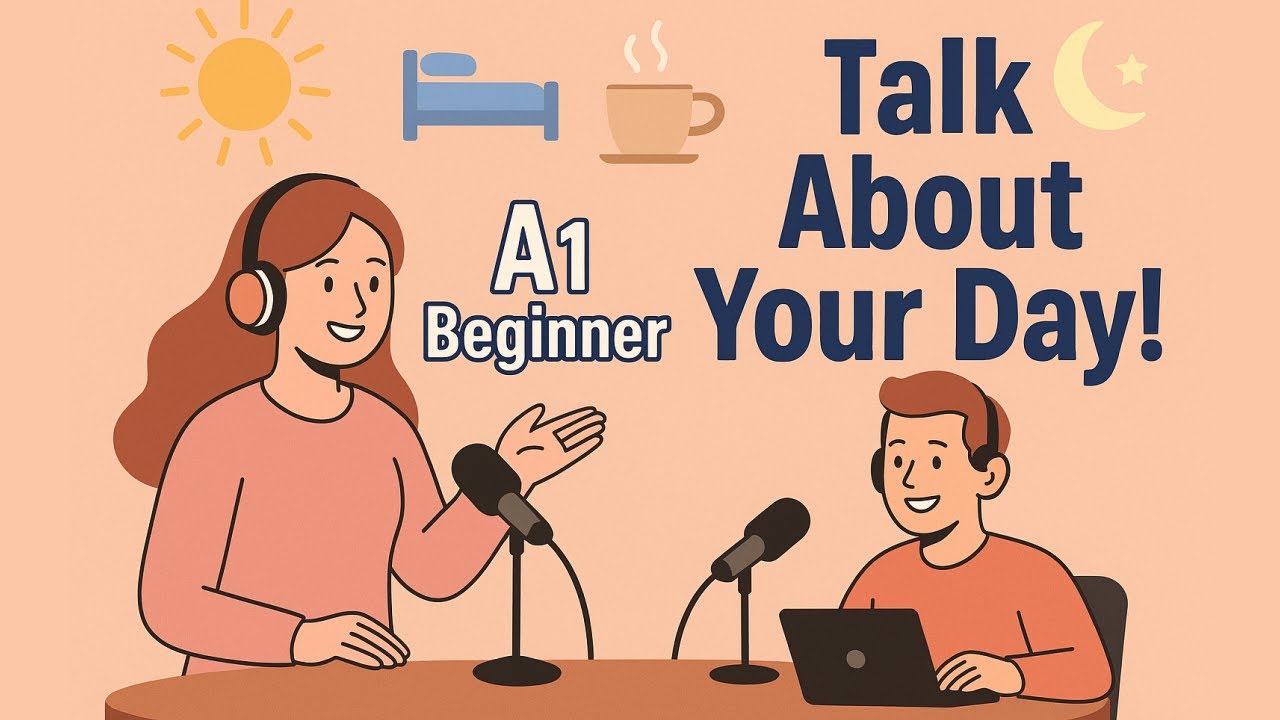 フレーズを聞いてから、声に出してみましょう
フレーズ 1
全文スクリプト
- Hello everyone and welcome back to Mr.こんにちは、みなさん。お帰りなさい。ミスター0:00
- English Channel.イングリッシュ・チャンネルへようこそ。0:03
- I'm Emily.私はエミリーです。0:04
- Hi Emily.こんにちは、エミリー。0:06
- Hi everyone.こんにちは、みなさん。0:07
- It's great to be here again.ここに戻ってくるのは本当に素晴らしいです。0:08
- It's wonderful to have you back, Paul.ポール、お帰りなさい。お会いできて本当に嬉しいです。0:11
- And to all our amazing listeners, thank you for tuning in.そして、素晴らしいリスナーの皆さん、聴いてくれてありがとうございます。0:13
- Today, we have a super simple and useful topic for you beginners out there.今日は、初心者の皆さんのための、シンプルで本当に役に立つトピックをお持ちしています。0:18
- That's right, Emily.その通り、エミリー。0:23
- We're going to talk about our day.私たちは私たちの1日について話します。0:25
- You know, the things we do every day.ご存知のように、毎日私たちが行うことです。0:28
222フレーズすべて表示 一部だけ表示
- It's a fantastic way to learn some basic verbs and vocabulary.基本的な動詞と語彙を学ぶための素晴らしい方法です。0:31
- Exactly.ちょうどその通り。0:37
- Before we start, if you enjoy learning English with us, please remember to subscribe to our channel.始める前に、もし私たちと一緒に英語の勉強が好きなら、チャンネル登録してください。0:39
- Share this episode with your friends who are also learning and give us a thumbs up.このエピソードを英語を勉強している友人と共有して、高評価をしてください。0:46
- It really helps us a lot.本当に私たちを助けてくれます。0:51
- Yes, please do.はい、お願いします。0:53
- We love hearing from you too.私たちもあなたからの声を聞くのが大好きです。0:56
- So feel free to leave a comment about your day or anything you're learning.だから、あなたの1日についてコメントを書いてください。学んでいることについて、何でも。0:58
- Okay Paul, are you ready to talk about what we do during the day?よし、ポール、昼間に私たちが何をするか話す準備はできていますか?1:03
- Absolutely.もちろんです。1:08
- Emily, let's start with the morning.エミリー、朝から始めましょう。1:09
- What do you usually do in the morning?朝は普通何をしていますか?1:12
- Well, the first thing I do is wake up.そうですね、最初にすることは起きることです。1:14
- I usually wake up around 7 o 'clock.私は普通朝の7時頃起きます。1:18
- 7 o 'clock.朝7時。1:20
- That's a good time.それは良い時間ですね。1:22
- I sometimes wake up a little earlier, around 6 .30.私は時々もっと早く、朝6時30分頃起きます。1:24
- Wow, you're an early bird, Paul.わぁ、ポール、あなたは朝型なんですね。1:28
- After I wake up, I get out of bed.起きた後、ベッドから出ます。1:31
- Me too.私も。1:34
- Get out of bed is a very important phrase.ベッドから出るというのは、とても重要な表現です。1:35
- That's right.その通り。1:38
- After that, I go to the bathroom.その後、バスルームに行きます。1:39
- I brush my teeth and wash my face.歯を磨いて、顔を洗います。1:42
- Brush my teeth and wash my face.歯を磨いて、顔を洗う。1:45
- These are also very common actions.これらも非常に一般的な行動です。1:48
- That's right.その通り。1:51
- After that, I go to the kitchen.その後、キッチンに行きます。1:52
- Ah, the kitchen.ああ、キッチンですね。1:55
- What do you do in the kitchen in the morning?朝、キッチンで何をしていますか?1:57
- I usually make breakfast.私は普通朝食を作ります。2:00
- Make breakfast.朝食を作る。2:03
- What do you usually have for breakfast, Emily?朝食は普通何を食べていますか、エミリー?2:04
- I often have coffee and toast.私はよくコーヒーとトーストを食べます。2:07
- Sometimes I eat fruit too, like a banana or an apple.時々、バナナやリンゴのような果物も食べます。2:10
- Coffee and toast.コーヒーとトースト。2:15
- Simple and delicious.シンプルで美味しい。2:16
- I usually have tea and some cereal.私は普通紅茶とシリアルを食べます。2:19
- Nice.いいですね。2:22
- After breakfast, I get dressed.朝食の後、着替えます。2:23
- Get dressed.着替える。2:26
- That means you put on your clothes.それはあなたが衣服を着ることを意味します。2:27
- Exactly.その通り。2:30
- I choose my clothes for the day and put them on.今日の衣服を選んで、着ます。2:32
- And what do you do after you get dressed, Emily?着替えた後、エミリー、何をしますか?2:35
- Well, if I'm going out, I might put on my shoes and my coat.えっと、もし外に出かけるなら、靴と上着を着るかもしれません。2:39
- Put on my shoes and put on my coat.靴を履いて、上着を着ます。2:43
- Very good.とても良い。2:47
- Then I usually leave the house.それから、普通、家を出ます。2:48
- Leave the house.家を出る。2:50
- Where do you usually go when you leave the house in the morning?朝、家を出た時、いつもどこに行きますか?2:52
- I usually go to work.普通、仕事に行きます。2:56
- I work in an office.オフィスで働いています。2:58
- Go to work.仕事に行く。3:00
- I sometimes work from home.時々、家で仕事をします。3:02
- But sometimes I also go to an office.でも、時々、オフィスにも行きます。3:05
- That's interesting.それは興味深いですね。3:08
- So, Paul, what do you do in the morning?では、ポール、朝は何をしていますか?3:10
- Can you tell us about your routine?あなたの日課について、教えてもらえますか?3:13
- Sure.もちろん。3:15
- I wake up around 6 .30.6時30分くらいに起きます。3:16
- Then I get out of bed and go to the bathroom.それから、ベッドから出て、バスルームに行きます。3:18
- I wash my face and brush my teeth.顔を洗って、歯を磨きます。3:21
- After that, I go to the kitchen and make tea and have cereal for breakfast.その後、台所に行って、紅茶を作って、朝食でシリアルを食べます。3:24
- Then I get dressed.それから、着替えます。3:29
- If I need to go to the office, I put on my shoes and maybe a jacket.オフィスに行く必要があれば、靴を履いて、ジャケットを着ます。3:31
- Then I leave the house and go to work.それから、家を出て、仕事に行きます。3:36
- That's a great morning routine, Paul.ポール、素晴らしい朝のルーティンですね。3:38
- We used a lot of important verbs there.そこでは、たくさん大事な動詞を使いました。3:41
- Wake up.起きる。3:44
- Get out of bed.ベッドから出る。3:45
- Go to the bathroom.バスルームに行く。3:46
- Brush my teeth.歯を磨く。3:48
- Wash my face.顔を洗う。3:49
- Go to the kitchen.台所に行く。3:50
- Make breakfast.朝食を作る。3:52
- Have breakfast.朝食を食べる。3:54
- Get dressed.着替える。3:55
- Put on shoes.靴を履く。3:56
- Put on a coat.コートを着る。3:57
- Leave the house.家を出る。3:59
- Go to work.仕事に行く。4:00
- Yes, those are very useful verbs for beginners.はい、初心者にとって非常に有用な動詞です。4:01
- Let's talk about what we do during the day, Emily.エミリー、昼間に何をするかについて話しましょう。4:05
- What do you do at work?仕事では何をしていますか?4:08
- At work, I usually sit at my desk and work on my computer.仕事では、普通、机に座ってコンピュータで作業をしています。4:10
- I answer emails and write reports.メールに返信して、レポートを書きます。4:15
- Sit at my desk, work on my computer, answer emails and write reports.机に座る、コンピュータで作業する、メールに返信する、レポートを書く。4:20
- These are all things many people do at work.これらはすべて多くの人が仕事でします。4:27
- That's right.そうですね。4:31
- Sometimes I also have meetings with my colleagues.時々、同僚と会議もあります。4:32
- Have meetings.会議を持つ。4:35
- Meetings are when people get together to talk about work.会議は人々が仕事について話すために集まる時です。4:37
- Exactly.そうです。4:40
- What about you, Paul?ポール、あなたはどうですか?4:42
- What do you do during the day, especially if you work from home?昼間は何をしていますか、特に家から仕事をする場合ですか?4:43
- If I work from home, I also sit at my desk and use my computer.家から仕事をしている場合、私も机に座ってコンピュータを使用します。4:48
- I might write articles or prepare lessons.記事を書いたり、レッスンを準備したりするかもしれません。4:52
- Sometimes I have online meetings.時々、オンライン会議があります。4:56
- Write articles, prepare lessons and online meetings.記事を書く、レッスンを準備する、オンライン会議。4:58
- Very useful.非常に有用です。5:03
- Yes.はい。5:05
- And then, usually around lunchtime, I have lunch.そして、普通、昼食時間くらいに、昼食を食べます。5:06
- Have lunch.昼食を食べる。5:12
- What do you usually eat for lunch, Paul?ポール、昼食は通常何を食べますか?5:13
- I often have a sandwich or a salad, something light.しばしばサンドイッチかサラダ、何か軽いものを食べます。5:16
- A sandwich.サンドイッチ。5:20
- A salad.サラダ。5:22
- Sounds healthy.健康的ですね5:23
- I sometimes bring my lunch from home or I go out to eat.時々お弁当を持ってきたり、外食したりします5:24
- Go out to eat.外食する5:28
- That's nice.いいですね5:29
- After lunch, we usually go back to work.昼食の後、通常は仕事に戻ります5:31
- Yes, back to work until the end of the day.はい、一日の終わりまで仕事です5:33
- What happens after work, Paul?仕事の後は何をしますか、ポール?5:36
- After work, I usually go home.仕事の後、通常は家に帰ります5:39
- Go home.家に帰る5:41
- That's a great feeling.素晴らしい気分ですね5:43
- What do you do when you get home?家に帰ったら何をしますか?5:44
- Well, sometimes I relax on the sofa and watch TV.そうですね、時々ソファでくつろいでテレビを見ます5:48
- Relax on the sofa.ソファでくつろぐ5:53
- Watch TV.テレビを見る5:54
- That sounds nice and relaxing.いいですね、くつろげますね5:56
- It is.そうです5:58
- Sometimes I also cook dinner.時々夕食も作ります5:59
- Cook dinner.夕食を作る6:02
- What do you like to cook?何を作るのが好きですか?6:04
- I like to cook pasta or sometimes I make a simple soup.パスタを作ったり、時々簡単なスープを作ったりするのが好きです6:06
- Pasta.パスタ6:10
- Soup.スープ6:11
- Delicious.美味しい6:13
- I also like to cook dinner.私も夕食を作るのが好きです6:14
- Sometimes I try new recipes.時々新しいレシピを試します6:16
- That's fun.楽しいですね6:19
- After dinner, what do you usually do, Emily?夕食の後、何をしますか、エミリー?6:20
- After dinner, I often wash the dishes.夕食の後、よくお皿を洗います6:23
- Wash the dishes.お皿を洗う6:28
- Not my favorite activity, but it has to be done.好きな活動ではありませんが、やらなければなりません6:30
- Me neither.私も6:34
- Sometimes I read a book or talk to my family or friends.時々本を読んだり、家族や友人と話したりします6:36
- Read a book.本を読む6:41
- Talk to my family.家族と話す6:42
- Talk to my friends.友人と話す6:44
- These are all great evening activities.これらはみな素晴らしい夜の活動です6:45
- What about you, Paul?あなたはどうですか、ポール?6:49
- What do you do in the evening?夜は何をしますか?6:50
- In the evening, I sometimes go for a walk.夜、時々散歩に行きます6:52
- Go for a walk.散歩に行く6:56
- That's good exercise.いい運動ですね6:57
- Yes, it is.そうです6:59
- Or I might listen to music.または音楽を聴くこともあります7:01
- Listen to music.音楽を聴く7:04
- What kind of music do you like?どんな音楽が好きですか?7:05
- I like many kinds, but often I listen to something relaxing in the evening.いろいろなジャンルが好きですが、夜はくつろげるものをよく聴きます7:07
- That sounds lovely.素敵ですね7:14
- Then, before going to bed, what do you do?その後、寝る前に何をしますか?7:16
- I usually brush my teeth again.通常は歯をもう一度磨きます7:18
- Brush my teeth.歯を磨く7:23
- Good habit.いい習慣ですね7:25
- Yes, it is.そうです7:26
- And then I go to bed.そして寝ます7:28
- Go to bed.寝る7:30
- What time do you usually go to bed, Paul?ポール、通常何時に寝ますか?7:31
- I try to go to bed around 10 .30 or 11 .00.10時30分か11時頃に寝るようにしています7:34
- That's a good time.いい時間ですね7:38
- I usually go to bed a little later around 11 .30.私は通常11時30分頃、もう少し遅く寝ます7:40
- So, to summarize our day, we talked about waking up, getting ready in the morning, going to work or working from home, having lunch, finishing work, going home, relaxing, havingでは、一日をまとめると、起床、朝の準備、仕事に行く、または自宅で仕事をする、昼食をとる、仕事を終わらせる、家に帰る、くつろぐ、そして7:45
- dinner, and going to bed.夕食と寝ることについて話しました8:02
- Yes, Paul.はい、ポール。8:04
- We covered so many useful everyday actions.毎日の役立つ行動をたくさん取り上げました。8:05
- Let's quickly review some of the key verbs we used.使った重要な動詞をいくつか素早く確認しましょう。8:08
- Wake up, get out of bed, brush teeth, wash face, make breakfast, have breakfast.起きる、ベッドから出る、歯を磨く、顔を洗う、朝食を作る、朝食を食べる。8:12
- Get dressed, put on shoes, put on a coat, leave the house, go to work, sit at my desk, work on my computer, answer emails, write reports, have meetings, write服を着る、靴を履く、コートを着る、家を出る、仕事に行く、机に座る、コンピューターで作業する、メールに返信する、報告書を書く、会議をする、書く8:21
- articles, prepare lessons, have lunch, go home, relax, watch TV, cook dinner, wash the dishes, read a book, talk to family friends, go for a walk, listen to music, go記事、レッスンを準備する、昼食を食べる、家に帰る、くつろぐ、テレビを見る、夜ご飯を作る、食器を洗う、本を読む、家族や友人と話す、散歩に行く、音楽を聴く、行く8:36
- to bed.寝る。8:54
- That's a fantastic list, Emily.それは素晴らしいリストですね、エミリー。8:54
- These are all things that everyone does regularly.これらはみんなが定期的にすることばかりです。8:58
- So learning these phrases is super helpful for beginners.だからこれらのフレーズを学ぶことは初心者にとって本当に役立ちます。9:01
- Absolutely.その通り。9:05
- And remember, you can use these phrases to talk about your own day.そして覚えておいてください。これらのフレーズを使って自分の一日について話すことができます。9:06
- Try to think about what you do from morning until night and say it in English.朝から夜まであなたが何をしているかを考えて、それを英語で言ってみてください。9:11
- That's great practice.それは素晴らしい練習です。9:16
- You can even write it down.書き留めることもできます。9:18
- Writing can help you remember the words and phrases better.書くことは単語やフレーズをよく覚えるのに役立ちます。9:20
- Yes, that's a wonderful idea, Paul.はい、それは素晴らしい考えですね、ポール。9:24
- And don't worry if you don't know all the words yet.そしてまだすべての単語を知らなくても心配しないでください。9:27
- Just try your best and you'll learn more and more each day.ただ最善を尽くしてください。毎日もっともっと学べます。9:30
- Exactly.その通り。9:34
- Learning a new language takes time and practice.新しい言語を学ぶには時間と練習が必要です。9:36
- Be patient with yourself and celebrate your progress, no matter how small it seems.自分に辛抱強く、どんなに小さく見えても進歩を祝いましょう。9:40
- That's such good advice, Paul.それは本当に良いアドバイスですね、ポール。9:46
- Well, I think we've covered a lot about our day today.さて、今日は一日についてたくさん取り上げたと思います。9:48
- Hopefully, our listeners found this helpful.願わくば、リスナーたちがこれが役立つと思ってくれればいいのですが。9:51
- I hope so too, Emily.僕もそう願ってますよ、エミリー。9:54
- It was fun talking about our daily routines.毎日のルーティンについて話すのは楽しかった。9:57
- It was, Paul.そうですね、ポール。10:00
- And to our listeners, thank you so much for joining us today on Mr.そしてリスナーの皆さん、今日はミスター10:02
- English Channel.英語チャンネルに参加してくれてありがとうございます。10:06
- We really appreciate you being here.皆さんがここにいてくれることを本当に感謝しています。10:08
- Yes, thank you.はい、ありがとうございます。10:10
- And if you enjoyed this episode and found it helpful, please don't forget to subscribe to our channel so you don't miss any future lessons.そしてこのエピソードを楽しんで役に立つと思ったら、チャンネル登録を忘れずに、今後のレッスンを見逃さないでください。10:12
- That's right.その通り。10:22
- And please share this episode with anyone you know who is also learning English.そして、英語を勉強している人だったら誰でもいいから、このエピソードをシェアしてください。10:23
- It would mean a lot to us.それは私たちにとって本当に大きな意味があります。10:28
- And we love to hear from you.そして私たちはあなたからの連絡を聞きたいです。10:30
- So please leave a comment below telling us about your day in English or any other topics you'd like us to talk about in the future.ですから、下にコメントを残して、英語での一日についてか、今後話してほしい他のトピックについて教えてください。10:32
- Yes, we read your comments and appreciate your feedback.はい、あなたのコメントを読んで、あなたのフィードバックに感謝しています。10:41
- So until next time, keep practicing your English and have a wonderful day.では次回まで、英語を練習し続けて、素晴らしい一日を過ごしてください。10:47
- Bye for now, everyone.では皆さん、また会いましょう。10:52
- Goodbye.さようなら。10:54
このクリップの計測値
- 話速
- 1分あたり167語 — カタログの32%より速い
- CEFRレベル
- A2
- 覚えておきたい単語
- verbs, summarize, beginners, subscribe, routines, topics