Практика английского по видео: How to Find Work You Love - Scott Dinsmore
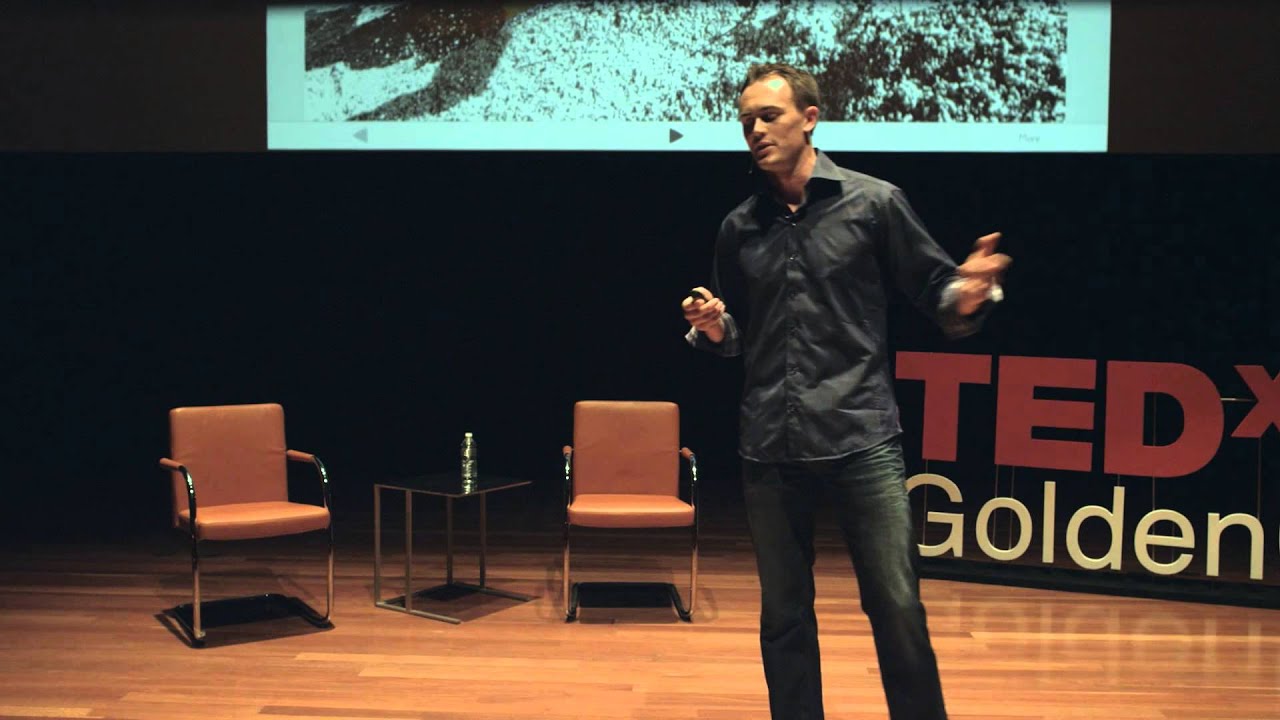 Послушай фразу и повтори вслух
Фраза 1
Полный текст видео
- Wow, what an honor.0:10
- I've always wondered what this would feel like.0:11
- So eight years ago, I got the worst career advice of my life.0:14
- I had a friend tell me, Scott, don't worry about how much you like the work you're doing right now.0:18
- It's all about just building your resume.0:22
- And I'd just come back from living in Spain for a while and I joined this Fortune 500 company.0:25
- I thought, this is fantastic.0:29
- I'm going to have this big impact on the world and all these ideas.0:30
- And within about two months, I noticed at about 10 a .m.0:34
- every morning, I had this strange urge to want to slam my head through the monitor of my computer.0:37
- I don't know if anyone's ever felt that.0:42
- And I noticed pretty soon after that that all the competitors in our space had already automated my job role.0:44
Показать все фразы (280) Свернуть
- This is about right about when I got this sage advice to build up my resume.0:51
- Well, as I'm trying to figure out what, as I'm trying to figure out what, you know, two -story window I'm going to jump out of and change things up,0:54
- I read some altogether different advice from Warren Buffett.1:03
- And he said, taking jobs to build up your resume is the same as saving up sex for old age.1:06
- And I heard that and that was all I needed.1:14
- Within two weeks, I was out of there and I left with one intention to find something that I could screw up.1:17
- That's how tough it was.1:22
- I just wanted to have some type of an impact.1:22
- It didn't matter what it was.1:24
- And I found out pretty quickly after that that I wasn't alone.1:26
- It turns out over 80 % of the people around don't enjoy their work.1:29
- I'm guessing this room is different, but that's the average that Deloitte has done with their studies.1:33
- And so I wanted to find out what is it that sets these people apart, the people who do the passionate world -changing work, they wake up inspired every day.1:37
- And then these people, the other 80 % who lead these lives of quiet desperation.1:45
- So I started to interview all these people doing this inspiring work.1:48
- And I read books and did case studies and 300 books all together on purpose and career and all this.1:52
- Totally just self -immersion.1:57
- Really for the selfless reason of I wanted to find the work that I couldn't not do.1:59
- What that was for me.2:05
- But as I was doing this, more and more people started to ask me, Scott, you're into this career thing.2:06
- I don't really like my job.2:10
- Can we sit down for lunch and say sure, but I would have to warn them because at this point my quit rate was also 80%.2:11
- Of the people I'd sit down with for lunch, 80 % would quit their job within two months.2:17
- And this is something, I was damn proud of this.2:22
- And it wasn't that I had, it wasn't that I had anything special magic, it was that I would ask one simple question.2:24
- It was why are you doing the work that you're doing?2:29
- And so often their answer would be, well, because somebody told me I'm supposed to.2:31
- And I realized that so many people around us are climbing their way up this ladder that someone tells them to climb and ends up being leaned up against the2:36
- wrong wall or no wall at all.2:43
- And so the more time I spent around these people and saw this problem, I thought, what if we could create a community, a place where people could feel like2:45
- they belonged and that it was okay to do things differently, to take the road less travel, where that was encouraged and inspire people to change.2:52
- And that later became what I now call Live Your Legend, which I'll explain in a little bit.3:01
- But as we've done this, as I've made these discoveries, I noticed a framework of really three simple things that all these different passionate world changers have in common, whether3:05
- you're like a Steve Jobs or if you're just, the person has the bakery down the street, but you're doing work that embodies who you are.3:13
- I want to share those three with you so we can use them as a lens for the rest of today and hopefully the rest of our life.3:20
- The first part of this three -step passionate work framework is becoming a self -expert and understanding yourself.3:25
- Because if you don't know what you're looking for, you're never going to find it.3:32
- And the thing is that no one's going to do this for us.3:36
- There's no major in university on passion and purpose and career.3:38
- I don't know how that's not a required double major, but don't even get me started on that.3:42
- I mean, you spend more time picking out a dorm room TV set than you do picking your major in your area of study.3:46
- But the point is it's on us to figure that out.3:52
- And we need a framework.3:55
- We need a way to navigate through this.3:56
- And so the first step of our compass is finding what our unique strengths are.3:58
- What are the things that we wake up loving to do no matter what, whether paid or not paid, the things that people thank us for?4:02
- And Strengths Finder 2 .0 is a book and also an online tool highly recommended for sorting out what it is that you're naturally good at.4:08
- And then next, what's our framework or our hierarchy from making decisions?4:15
- You know, is it the people that are, do we care about, you know, the people, our family, health, or achievement, success, all this different stuff?4:20
- We have to figure out what it is to make these decisions so we know what our soul is made of so that we don't go selling it to some4:26
- cause.4:32
- We don't give a shit about.4:33
- And then the next step is our experiences.4:35
- We have, all of us have these experiences.4:38
- We learn things every day, every minute about what we love, what we hate, what we're good at, what we're terrible at.4:40
- And if we don't spend time paying attention to that and assimilating that, that learning and applying it to the rest of our life, it's all for nothing.4:46
- It's like every week, actually every day, every week, every month, every year, I spend some time just reflecting on what went right, what went wrong, and what do I4:53
- want to repeat, what can I apply more to my life?5:00
- And even more so than that, as you see people, especially today, who inspire you, who are doing things where you say, oh God, what Jeff is doing, I want5:02
- to be like him.5:09
- Why are you saying that?5:11
- Open up a journal, write down what it is about them that inspires you.5:11
- It's not going to be everything about their life, but whatever it is, take note of that.5:14
- Because over time, we have this repository of things that we can use to apply to our life and have a more passionate existence and make a better impact.5:18
- Because when we start to do, put these things together, we can then define what it is success actually means to us.5:26
- And without these different parts of the compass, it's impossible.5:32
- We end up in this situation, we have that scripted life that everyone seems to be living, going up this ladder to nowhere.5:35
- It's kind of like in Wall Street too, if anyone saw that, the peon employee asked the big Wall Street banker CEO, hey man, what's your number?5:41
- Everyone's got a number, well if they make this amount of money, they'll leave it all.5:49
- He says, oh, simple, more.5:52
- He just smiles.5:56
- And it's the sad state of most of the people that haven't spent time understanding what actually matters to them.5:57
- We keep reaching for something that doesn't mean anything to us, but we're doing it because everyone said we're supposed to.6:01
- But once we have this framework together, we can start to identify the things that make us come alive.6:06
- Before this, a passion could come and hit you in the face, or maybe in your possible life work, and you might throw it to the side because you don't6:11
- have a way of identifying it.6:17
- But once you do, you can see something that's congruent with my strengths, my values, who I am as a person.6:19
- So I'm going to grab a hold of this, I'm going to do something with it, and I'm going to pursue it and try and make an impact with it.6:25
- And Liv Your Legend and the movement we built wouldn't exist if I didn't have this compass to identify, wow, this is something I want to pursue and make a6:31
- difference with.6:38
- So if we don't know what we're looking for, we're never going to find it.6:39
- But once we have this framework, this compass, then we can move on to what's next.6:42
- And that's not me up there.6:47
- But doing the impossible and pushing our limits.6:49
- Because there's two reasons why people don't do things.6:51
- One is because they tell themselves they can't do them, or the other is people around them tell them they can't do them.6:54
- Either way, we start to believe it, and either we give up or we never start in the first place.6:58
- The thing is, everything was impossible until somebody did it.7:02
- Every invention, every new thing in the world, people thought were crazy at first.7:05
- Roger Bannister in the four minute mile, it was a physical impossibility to break the four minute mile in a foot race.7:09
- And so Roger Bannister stood up and did it.7:15
- And then what happened?7:17
- Two months later, like 16 people broke the four minute mile.7:17
- The things that we have in our head that we think are impossible, often just milestones waiting to be accomplished.7:21
- And we can push those limits a bit.7:26
- And I think this starts with probably your physical body and physical fitness more than anything.7:27
- Because we can control that.7:31
- You know, if you show yourself, you don't think you can run a mile.7:33
- You show yourself you can run a mile or two, or even like a marathon or lose five pounds, whatever it is, you realize that can be transferred, that confidence,7:34
- compounds can be transferred into the rest of your world.7:42
- And I've actually gotten into the habit of this a little bit with my friends.7:45
- We had this little group, we kind of go on a physical adventures.7:48
- And recently I found myself in a kind of precarious spot.7:51
- I'm terrified of deep dark blue water.7:55
- I don't know if anyone's ever had that same fear ever since they watched Jaws one, two, three and four, like six times when I was a kid.7:57
- But anything above here, if it's murky, I can already feel it like right now.8:03
- I swear there's something in there.8:08
- Even it's Lake Tahoe, it's fresh water, totally unfounded fear, ridiculous, but it's there.8:10
- Anyway, three years ago, I find myself on this tugboat right down here in the San Francisco Bay.8:14
- It's a rainy, stormy, windy day.8:18
- And people are getting sick on the boat and I'm sitting there wearing a wetsuit.8:20
- And I'm looking out the window and pure terror and thinking I'm about to swim to my death.8:24
- I'm going to try and swim across the Golden Gate.8:29
- And my guess is some people in this room might have done that before.8:32
- And I'm sitting there and my buddy Jonathan would talk me into it.8:35
- He comes up to me and he could see the state I was in.8:38
- He comes up and says, Scott, hey man, he's like, what's the worst that can happen?8:40
- He's like, you're wearing a wetsuit, you're not going to sink.8:43
- He's like, and if you can't make it, just hop in one of the 20 kayaks.8:45
- Plus if there's a shark attack, why are they going to pick you over the 80 people that are in the water?8:48
- So thanks, that helps.8:52
- He's like, no, but really, just have fun with this.8:53
- He's like, good luck.8:55
- And he dives in, swims off.8:55
- Okay, it turns out the pep talk totally worked.8:58
- I just felt this total feeling of calm.9:00
- And I think it was because Jonathan was 13 years old.9:03
- And of the 80 people swimming that day, 65 of them between the ages of 9 and 13.9:08
- Think for a second how you would have approached your world differently.9:14
- But 9 years old, you found out you could swim a mile and a half in 56 degree water from Aguachalza, San Francisco.9:16
- What would you have said yes to?9:23
- What would you have not given up on?9:24
- What would you have tried?9:25
- You know, as I'm finishing this swim, I get to a aquatic park and I'm getting out of the water and of course half the kids already finished.9:27
- So they're cheering me on and they're all excited.9:32
- And I got a total popsicle head of anyone's ever swam in the bay.9:35
- And I'm trying to just thaw my face out.9:38
- I'm watching people finish.9:40
- And I see this one kid, something didn't look right.9:42
- He's just flailing like this.9:45
- And he's barely able to sip some air before he slammed his head back down.9:46
- And I noticed other parents were watching too.9:50
- And I swear they were thinking the same thing I was.9:52
- This is why you don't let 9 year old swim from Alcatraz.9:54
- And I mean, this was not fatigue.9:58
- And all of a sudden two parents run up, they grab him, and they put him on their shoulders and they're dragging him.10:00
- He's just dragging like this.10:04
- And I mean, totally limp.10:06
- And then all of a sudden they walk a few more feet and they plop him down in his wheelchair.10:08
- And he puts his fists up in the most insane show of victory I've ever seen.10:12
- I can still feel the warmth and the energy on this guy when he made this accomplishment.10:16
- I think I had seen him earlier that day in his wheelchair.10:20
- I had no idea he was going to swim.10:23
- I mean, where is he going to be in 20 years?10:25
- How many people told him he couldn't do that, that he would die if he tried that?10:28
- You prove people wrong, you prove yourself wrong, that you can make these little incremental pushes of what you believe is possible for yourself.10:31
- You don't have to be the fastest marathon in the world, just your own impossibilities to accomplish those.10:37
- And it starts with little bitty steps.10:41
- And the best way to do this is to surround yourself with passionate people.10:44
- The fastest way to do things you don't think can be done is to surround yourself with people already doing them.10:49
- There's this quote by Jim Rohn.10:53
- And it says, you are the average of the five people you spend most time with.10:56
- And there is no bigger life hack in the history of the world from getting where you are today to where you want to be.11:00
- Then the people you choose to put in your corner, they change everything.11:06
- And it's a proven fact.11:10
- In 1898, Norman Triplett did this study with a bunch of cyclists.11:12
- And you would measure their times around a track in a group and also individually.11:16
- And he found that every time the cyclist in a group would cycle faster.11:20
- And it's been repeated on all kinds of walks of life since then.11:23
- And it proves the same thing over and over again, that the people around you matter.11:26
- And the environment is everything.11:29
- But it's on you to control it because it can go both ways.11:31
- With these 80 % of people who don't like the work they do, that means most people around us, not in this room, but around everywhere else, are encouraging complacency11:33
- and keeping us from pursuing the things that matter to us.11:40
- So we have to manage those surroundings.11:43
- I found myself in this situation, a personal example maybe a year ago, a couple years ago, has anyone ever had a hobby or a passion they pour their heart11:45
- and soul into?11:55
- Unbelievable amount of time.11:56
- And they so badly want to call it a business.11:58
- But no one's paying attention and it doesn't make a dime.12:00
- Okay, I was there for four years trying to build this Live Your Legend movement to help people do work that they generally cared about and inspired them.12:04
- I was doing all I could and there were only really three people paying attention.12:11
- And they're all right there.12:15
- My mother, father, and my wife, Chelsea.12:16
- Thank you guys for the support.12:18
- But I, and this is how badly I wanted to, it grew by 0 % for four years.12:19
- And I was about to shut it down.12:26
- And right about then, I met, I moved to San Francisco and started to meet some pretty interesting people that had these crazy lifestyles of adventure of businesses and websites12:28
- and blogs that surrounded their passions and helped people in a meaningful way.12:37
- One of my friends, now he has a family of eight and he supports his whole family with a blog that he writes for twice a week.12:41
- They just come back from a month in Europe, all of them together.12:49
- This has blew my mind.12:51
- It's like, how does this even exist?12:52
- And I got unbelievably inspired by seeing this.12:54
- And instead of shutting it down, I decided, let's take it seriously.12:57
- I did everything I could to spend my time around, like every waking hour possible, trying to hang out with, hanging out and having beers and workouts, whatever it was.13:00
- And after four years of zero growth, within six months of hanging around these people, the community at Libby and Legend grew by ten times.13:08
- In another 12 months, it grew by 160 times.13:15
- And today, over 30 ,000 people from 158 countries use our career and connection tools on a monthly basis.13:19
- And those people have made up that community of passionate folks who inspire that possibility that I dreamed of for Libby and Legend so many years back.13:24
- The people change everything.13:34
- And this is why, you ask what was going on?13:36
- Well, for four years, I knew nobody in this space.13:39
- And I didn't even know it existed, that people could do this stuff and you could have movements like this.13:42
- And then all of a sudden, I'm over here in San Francisco and everyone around me is doing it.13:46
- It became normal.13:50
- So my thinking went from how could I possibly do this to how could I possibly not?13:51
- And right then, when that happens, that switch goes on in your head.13:57
- It ripples across your whole world.14:00
- And without even trying, your standards go from here to here.14:02
- You don't need to change your goals or anything.14:05
- You just need to change your surroundings.14:06
- That's it.14:08
- And that's why I love being around this whole group of people.14:09
- Why I go to every TED event I can and watch them on my iPad on the way to work, whatever it is, because this is the group of people14:13
- that inspires possibility.14:18
- We have a whole day to spend together and plenty more.14:20
- Some things up in terms of these three pillars.14:24
- They all have one thing in common, more than anything else.14:28
- They're 100 % in our control.14:31
- No one can tell you you can't learn about yourself.14:34
- No one can tell you you can't push your limits and learn your own impossible and push that.14:37
- No one can tell you you can't surround yourself with inspiring people or get away from the people who bring you down.14:41
- You can't control a recession.14:46
- You can't control getting fired or getting a car accident.14:48
- Most things are totally out of our hands.14:51
- These three things are totally on us.14:53
- And they can change our whole world if we decide to do something about it.14:57
- The thing is it's starting to happen on a widespread level.15:02
- I just read in Forbes, the US government reported for the first time in a month where more people had quit their jobs than had been laid off.15:05
- And they thought this was an anomaly, but then it's happened three months straight.15:13
- In a time where people claim it's kind of a tough environment, people are pretty much giving a middle finger to this scripted life.15:16
- The things that people say you're supposed to do in exchange for things that matter to them and do the things that inspire them.15:21
- And the thing is, people are waking up to this possibility that really the only thing that limits the possibility now is imagination.15:27
- That's not a cliche anymore.15:36
- Like, I don't care what it is that you're into, what passion, what hobby.15:37
- If you're into knitting, you can find someone who is killing it knitting.15:41
- And you can learn from them.15:44
- It's wild.15:46
- And that's what this whole day is about, to learn from the folks speaking and what we profile these people and live your legend every day.15:47
- Because it shows people, when ordinary people are doing the extraordinary, when you can be around that, it becomes normal.15:54
- And this isn't about being, you know, Gandhi or Steve Jobs doing something crazy.16:00
- It's just about doing something that matters to you and makes an impact that only you can make.16:04
- As we speak of Gandhi, he was a recovering lawyer.16:10
- As I've heard the term.16:14
- And he was called to a greater cause.16:16
- Something that mattered to him, he could not do.16:17
- And he has this quote that I absolutely live by.16:20
- First they ignore you, then they laugh at you, then they fight you, and then you win.16:22
- Everything was impossible until somebody did it.16:28
- You can either hang around the people who tell you it can't be done until you're stupid for trying, or surround yourself with the people who inspire possibility.16:31
- The people who were in this room.16:39
- Because I see it as our responsibility to show the world that what's seen as impossible can become that new normal.16:42
- And that's already starting to happen.16:50
- First to do the things that inspire us, so we can inspire other people to do the things that inspire them.16:52
- But we can't find that unless we know what we're looking for.16:58
- We have to do our work on ourself, be intentional about that, and make those discoveries.17:03
- Because I imagine a world where 80 % of people love the work they do.17:08
- What would that look like?17:11
- What would the innovation be like?17:13
- How would you treat the people around you?17:14
- Things would start to change.17:16
- And as we finish up, I have just one question to ask you guys, and I think it's the only question that matters.17:19
- It's what is the work you can't not do?17:25
- Discover that, live it, not just for you, but for everybody around you.17:29
- Because that is what starts to change the world.17:35
- What is the work you can't not do?17:38
- Thank you guys.17:41
Что измерено в этом ролике
- Темп
- 255 слов в минуту — быстрее, чем 96% каталога
- Уровень CEFR
- B1
- Слова, которые стоит знать
- milestones, workouts, complacency, cyclists, repository, tugboat