Práctica de shadowing: How To Start a Conversation in Australia and Practise Speaking English
 Escucha la frase y luego dila en voz alta
Frase 1
Transcripción completa
- Hey there, I'm Emma from mmmEnglish.Hola, soy Emma de mmmEnglish.0:01
- If you're new here, you may not know that I'm from Australia.Si eres nuevo aquí, puede que no sepas que soy de Australia.0:05
- So I thought it would be really fun to share a few tips with you about how to start a conversation in Australia with Australians.Así que pensé que sería muy divertido compartir algunos consejos contigo sobre cómo iniciar una conversación en Australia con australianos.0:10
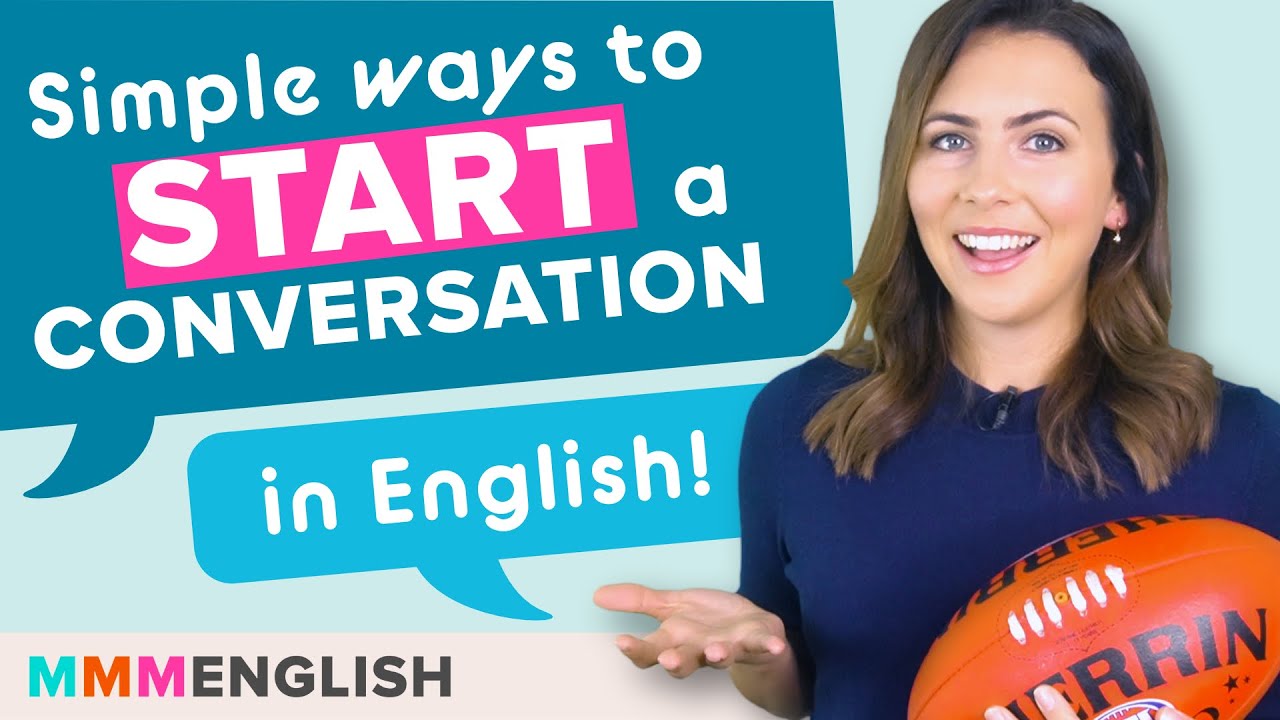
- Now I'm going to share a little more about Australian culture, like what is this?Ahora voy a compartir un poco más sobre la cultura australiana, como ¿qué es esto?0:18
- And I'm going to help you with some English conversation tips in some different settings, like in a pub where Australians love to go, in a taxi or an Uber,Y voy a ayudarte con algunos consejos de conversación en inglés en diferentes lugares, como en un pub donde a los australianos les encanta ir, en un taxi o en Uber,0:24
- at the supermarket, and also some advice to help you strike up a conversation when you're travelling.en el supermercado, y también algunos consejos para ayudarte a iniciar una conversación cuando estés viajando.0:34
- Remember to hit that subscribe button down there, turn on notifications so I can let you know when my new videos go live.Recuerda presionar ese botón de suscripción, activa las notificaciones para que pueda avisarte cuando mis nuevos videos se publiquen.0:42
- Are you ready?¿Estás listo?0:49
- Let's play!¡Vamos a jugar!0:50
- Even though I mentioned this video is about starting a conversation in Australia, you'll see that most of these conversation tips can work in any English speaking country.Aunque mencioné que este video se trata de iniciar una conversación en Australia, verás que la mayoría de estos consejos de conversación pueden funcionar en cualquier país de habla inglesa.0:56
- If you're talking to a Brit, an American, Canadian, South African, New Zealander, all of these tips will help you to strike up a conversation with native English speakers.Si hablas con un británico, un americano, canadiense, sudafricano, neozelandés, todos estos consejos te ayudarán a iniciar una conversación con hablantes nativos de inglés.1:06
- To be honest, these tips are really not about having long, in -depth conversations.Para ser honesta, estos consejos no se tratan realmente de tener conversaciones largas y profundas.1:19
Mostrar las 162 frases Mostrar menos frases
- There are suggestions to help you start conversations, and the more you practice starting conversations and having these little interactions with other people, the easier it will become.Hay sugerencias para ayudarte a iniciar conversaciones, y cuanto más practiques iniciando conversaciones y tengas estas pequeñas interacciones con otras personas, más fácil será.1:25
- So it's okay to start small.Así que está bien empezar en pequeño.1:37
- As long as you're friendly, then a brief interaction is all you need to start building experience and confidence to talk with people more in English.Mientras seas amable, una breve interacción es todo lo que necesitas para empezar a construir experiencia y confianza para hablar más con las personas en inglés.1:39
- Before we get into it, I really want to emphasise the importance of the greeting.Antes de empezar, realmente quiero enfatizar la importancia del saludo.1:50
- Always trying to be polite, friendly and positive, it's going to get your conversation off to a good start.Intentando siempre ser educado, amable y positivo, eso hará que tu conversación comience bien.1:55
- And most Australians are pretty relaxed and laid back, and that's really reflected in the way that we greet each other.Y la mayoría de los australianos son bastante relajados y despreocupados, y eso se refleja realmente en la forma en que nos saludamos.2:02
- Contrary to popular belief, not every Australian says, g'day, every time they greet someone.Contrario a la creencia popular, no todos los australianos dicen "g'day" cada vez que saludan a alguien.2:11
- Right?¿Verdad?2:18
- G'day.G'day.2:20
- G'day mate.G'day mate.2:20
- It's commonly used by men, and probably more often by older men.Es comúnmente usado por hombres, y probablemente más a menudo por hombres mayores.2:22
- And it's really a short version of good day.Y es realmente una versión corta de "good day".2:27
- So we're saying hello and have a good one, have a good day at the same time.Así que estamos diciendo hola y que tengas un buen día, todo al mismo tiempo.2:31
- So it's like a double greeting.Así que es como un doble saludo.2:38
- Now I want to give you a little demo so that you can practise.Ahora quiero darte una pequeña demostración para que puedas practicar.2:40
- This is a really difficult expression to get right.Esta es una expresión realmente difícil de hacer bien.2:43
- You know, most times anyone who's not Australian will mess this up.Sabes, la mayoría de las veces alguien que no es australiano lo arruinará.2:47
- G'day.G'day.2:52
- G'day.G'day.2:53
- That's it.Eso es.2:54
- G'day.G'day.2:55
- G'day.G'day.2:57
- G'day.G'day.2:59
- G'day.G'day.3:00
- G'day.G'day.3:01
- G'day.G'day.3:02
- It's just a really quick flap of the tongue on the top of your mouth.Es solo un movimiento muy rápido de la lengua en el techo de tu boca.3:03
- G'day.G'day.3:08
- G'day.G'day.3:09
- G'day.G'day.3:10
- You can also say, hey, how you going?También puedes decir, "hey, ¿cómo estás?"3:10
- How you going?¿Cómo estás?3:13
- Which basically just means how are you?Lo que básicamente solo significa ¿cómo estás?3:15
- How you going?¿Cómo estás?3:19
- Try it.Intenta.3:20
- How you going?¿Cómo estás?3:22
- If you've ever visited Australia or you live here, then you'll know that Australians usually spend a lot of time at the pub.Si alguna vez has visitado Australia o vives aquí, entonces sabrás que los australianos generalmente pasan mucho tiempo en el pub.3:25
- Now, the pub is a great place for you to strike up a conversation with an Australian.Ahora, el pub es un gran lugar para que inicies una conversación con un australiano.3:34
- People are usually really friendly and relaxed.Las personas generalmente son muy amables y relajadas.3:40
- They're in a good mood.Están de buen humor.3:43
- They're joking around.Están bromeando.3:44
- And you'll run into all different types of people.Y te encontrarás con todo tipo de personas.3:46
- So you'll learn a lot about Australian culture, about language, slang, mannerisms, all of these things.Así que aprenderás mucho sobre la cultura australiana, sobre el idioma, la jerga, los modales, todas estas cosas.3:48
- It's like a melting pot of Australian culture at the pub.Es como un crisol de la cultura australiana en el pub.3:57
- It's also where people are often watching sports.También es donde las personas a menudo ven deportes.4:01
- So if there's a sports game on, a really great way to strike up a conversation is to say, what's the score?Así que si hay un partido deportivo, una forma realmente excelente de iniciar una conversación es decir, ¿cuál es el marcador?4:04
- Or who's playing?¿O quién está jugando?4:13
- I want you to try it with me, okay?Quiero que lo intentes conmigo, ¿de acuerdo?4:16
- What's the score?¿Cuál es el resultado?4:18
- Who's playing?¿Quién está jugando?4:23
- Nice.Está bien.4:27
- Now, the most popular sport in Australia is unique to Australia.Ahora, el deporte más popular en Australia es único de Australia.4:28
- The AFL or the Australian Football League.La AFL o la Liga Australiana de Fútbol.4:34
- And it's like the Australian version of the English Premier League or the NFL or the NBA, right?Y es como la versión australiana de la Liga Premier Inglesa o la NFL o la NBA, ¿verdad?4:37
- We also have soccer and rugby and cricket and sports like that.También tenemos fútbol, rugby, cricket y deportes como esos.4:44
- But AFL is the most popular sport by far.Pero la AFL es el deporte más popular con diferencia.4:50
- Anyone who comes to Australia is completely perplexed by our game, right?Cualquiera que viene a Australia está completamente perplejo por nuestro juego, ¿verdad?4:54
- We have this weird shaped ball.Tenemos esta pelota de forma extraña.5:00
- There are four sticks at each end of the football field and everyone on the field is running around in really short shorts.Hay cuatro palos en cada extremo del campo de fútbol y todos en el campo están corriendo en pantalones cortos muy cortos.5:02
- It's going to take me like 10 whole minutes, maybe more to try and explain the game.Me va a tomar como 10 minutos completos, tal vez más para intentar explicar el juego.5:10
- So I've actually linked to another YouTube video.Así que en realidad he enlazado otro video de YouTube.5:16
- If you're interested to see it and to find out more, it's down in the description below.Si te interesa verlo y saber más, está en la descripción a continuación.5:19
- So if you want an easy way to start a conversation with someone in a pub or anywhere really, especially if there's a match on, then knowing a little bitEntonces, si quieres una forma fácil de empezar una conversación con alguien en un pub o en cualquier lugar realmente, especialmente si hay un partido en vivo, entonces saber un poco5:24
- about the game is going to help you.sobre el juego te va a ayudar.5:34
- Most taxi drivers love to have a chat.A la mayoría de los taxistas les encanta charlar.5:36
- So it's the perfect opportunity to practice your conversation skills in small talk.Entonces es la oportunidad perfecta para practicar tus habilidades de conversación en charlas informales.5:40
- Australia is a multicultural place.Australia es un lugar multicultural.5:45
- There are lots of different people who drive ubers and taxis, right?Hay muchas personas diferentes que conducen ubers y taxis, ¿verdad?5:47
- Many of them are people who've moved to Australia from elsewhere.Muchos de ellos son personas que se han mudado a Australia desde otros lugares.5:51
- And so they're probably similar to you or have a similar experience to you in some way.Y probablemente sean similares a ti o tengan una experiencia similar a la tuya de alguna manera.5:56
- Why is this important?¿Por qué es esto importante?6:04
- Because there's so much to share and to talk about.Porque hay mucho que compartir y de qué hablar.6:06
- You know, you have the opportunity to exchange experiences here.Sabes, tienes la oportunidad de intercambiar experiencias aquí.6:10
- So it's an easy way to get started with a conversation.Entonces es una forma fácil de empezar una conversación.6:14
- Now, I usually jump in an Uber rather than a taxi.Ahora, generalmente me subo a un Uber en lugar de un taxi.6:18
- So when I do that, my go -to questions are, Have you been an Uber driver for long?Entonces, cuando hago eso, mis preguntas habituales son, ¿Llevas mucho tiempo siendo conductor de Uber?6:21
- Try it.Intenta.6:28
- Have you been an Uber driver for long?¿Llevas mucho tiempo siendo conductor de Uber?6:29
- Do you enjoy doing it?¿Te gusta hacerlo?6:35
- Try it.Intenta.6:37
- Do you enjoy doing it?¿Te gusta hacerlo?6:39
- You must meet some really interesting people.Debes conocer a personas realmente interesantes.6:41
- Now, they might say they're doing it for some extra cash on the side while they're studying.Ahora, podrían decir que lo están haciendo por algo de dinero extra mientras estudian.6:46
- And then, what can you ask them?¿Y luego, qué les puedes preguntar?6:51
- Can ask them what they're studying, right?Puedes preguntarles qué están estudiando, ¿verdad?6:54
- So it gives you all of these amazing opportunities to just practice building confidence with these conversation skills.Así que te da todas estas oportunidades increíbles para simplemente practicar y ganar confianza con estas habilidades de conversación.6:57
- Really easy way to get started.Una forma realmente fácil de empezar.7:05
- If they have an accent, I might ask, Have you been living in Australia for long?Si tienen acento, podría preguntarles, ¿Llevan mucho tiempo viviendo en Australia?7:08
- Try it.Intenta.7:13
- Have you been living in Australia for long?¿Llevan mucho tiempo viviendo en Australia?7:18
- Do you like living here?¿Te gusta vivir aquí?7:25
- What's been the hardest part about moving to a new country?¿Cuál ha sido la parte más difícil de mudarse a un nuevo país?7:32
- Nice one.Bien hecho.7:42
- A super place to strike up a conversation is at the supermarket.Un lugar excelente para iniciar una conversación es en el supermercado.7:44
- So just imagine that you need some help looking for a product.Entonces, imagina que necesitas ayuda para buscar un producto.7:49
- Maybe for real, maybe you're just pretending so that you have the chance to talk to someone.Tal vez de verdad, tal vez solo estés fingiendo para que tengas la oportunidad de hablar con alguien.7:54
- But in this case, you can go and find a shop assistant and ask them to help you find that item, right?Pero en este caso, puedes ir y encontrar a un asistente de tienda y pedirle que te ayude a encontrar ese artículo, ¿verdad?7:59
- Simple.Simple.8:07
- Hi there.Hola.8:08
- Can you help me to find the Vegemite?¿Puedes ayudarme a encontrar el Vegemite?8:09
- Or whatever product you're looking for?¿O cualquier producto que estés buscando?8:12
- And as you're walking with them to find the product, then you might say something like, Oh, it's so hard trying to find your way around a new supermarket, right?Y mientras caminas con ellos para encontrar el producto, entonces podrías decir algo como, Oh, es tan difícil intentar encontrar tu camino en un nuevo supermercado, ¿verdad?8:14
- But that might prompt them to say, Oh, are you new to the area?Pero eso podría hacerles decir, Oh, ¿eres nuevo en el área?8:26
- But then you can continue the conversation by saying, Yeah, I'm actually from India.Pero luego puedes continuar la conversación diciendo, Sí, en realidad soy de India.8:32
- I've been here for a few months now.Llevo aquí unos meses.8:40
- Or you can just continue talking about the product that you're looking for.O simplemente puedes continuar hablando sobre el producto que estás buscando.8:42
- You might say, I'm from Italy.Podrías decir, Soy de Italia.8:46
- And interestingly, I really love Vegemite from the moment I first tried it.E interesantemente, realmente amo el Vegemite desde el momento en que lo probé por primera vez.8:49
- I know lots of non -native Australians don't really enjoy it, but I do.Sé que a muchos australianos no nativos no les gusta mucho, pero a mí sí.8:55
- When you're traveling in an English speaking country is the perfect opportunity to get as much speaking practice as you can, isn't it?Cuando viajas en un país de habla inglesa es la oportunidad perfecta para practicar lo máximo posible, ¿verdad?9:01
- You can ask questions when you're on your tours or ask for directions or recommendations.Puedes hacer preguntas cuando estés en tus tours, o pedir indicaciones o recomendaciones.9:09
- Just ask someone to take a photo of you.Solo pídele a alguien que te tome una foto.9:17
- Let's practice a little together.Practiquemos un poco juntos.9:20
- Okay?¿De acuerdo?9:22
- Sorry for interrupting.Disculpa por interrumpir.9:23
- Does this train go to the city?¿Este tren va a la ciudad?9:25
- Try it.Intenta.9:27
- Sorry for interrupting.Disculpa por interrumpir.9:29
- Does this train go to the city?¿Este tren va a la ciudad?9:32
- Excuse me, do you mind taking a photo of us?Disculpe, ¿le importaría tomarnos una foto?9:40
- Try it.Intenta.9:44
- Excuse me, do you mind taking a photo of us?Disculpe, ¿le importaría tomarnos una foto?9:46
- So saying excuse me or do you mind?Así que al decir disculpe o ¿le importa?9:55
- They're really polite ways of approaching or interrupting a stranger.Son formas muy educadas de acercarse o interrumpir a un desconocido.9:59
- Excuse me, I've only just arrived in Melbourne and I'm a little lost.Disculpe, acabo de llegar a Melbourne y estoy un poco perdido.10:04
- Can you tell me where the post office is?¿Puede decirme dónde está la oficina de correos?10:08
- Try it, okay?Intenta, ¿de acuerdo?10:13
- Excuse me, I've only just arrived in Melbourne and I'm a little lost.Disculpe, acabo de llegar a Melbourne y estoy un poco perdido.10:15
- Can you tell me where the post office is?¿Puede decirme dónde está la oficina de correos?10:21
- Adding that you've only just arrived helps the person to understand that you're new.Agregar que acabas de llegar ayuda a la persona a entender que eres nuevo.10:33
- They might even ask some other questions about where you're visiting from or how long you're staying or what your plans are.Incluso podrían hacer otras preguntas sobre de dónde vienes, cuánto tiempo te quedas o cuáles son tus planes.10:39
- So you're taking every opportunity to spark up a conversation.Entonces estás aprovechando cada oportunidad para iniciar una conversación.10:47
- Some of them will work and others won't.Algunos funcionarán y otros no.10:51
- You won't get much of a reaction.No obtendrás una gran reacción.10:55
- Who cares?¿Quién se preocupa?10:56
- The important thing is that you're having a go and that is one characteristic about Australians that you can definitely benefit from.Lo importante es que lo intentas, y esa es una característica de los australianos de la que definitivamente puedes beneficiarte.10:57
- We love seeing people have a go, you know, having a crack.Nos encanta ver a la gente intentar, ya sabes, atreverse.11:06
- So I hope that you enjoyed a little mini journey into how to start a conversation in Australia.Así que espero que hayas disfrutado este pequeño viaje sobre cómo iniciar una conversación en Australia.11:11
- And I really hope that you're able to come and visit us soon.Y realmente espero que puedas venir a visitarnos pronto.11:18
- The most important thing that you take away from this video is just to get started.Lo más importante que debes llevar de este video es simplemente comenzar.11:22
- Just by greeting someone, you're letting them know that you have the courage to be bold.Solo al saludar a alguien, les haces saber que tienes el coraje de ser audaz.11:28
- Along with being relaxed and positive and if you really enjoy sports, Australians love and they appreciate people who step out of their comfort zone.Junto con ser relajado y positivo, y si realmente disfrutas los deportes, a los australianos les encanta y aprecian a las personas que salen de su zona de confort.11:33
- You know, have a crack.Ya sabes, atrévete.11:45
- And don't think of every conversation as it has to be this endless hour long discussion.Y no pienses que cada conversación tiene que ser esta discusión interminable de una hora.11:46
- Just a quick exchange with a few people every day is enough to build your confidence over time.Solo un intercambio rápido con algunas personas cada día es suficiente para construir tu confianza con el tiempo.11:54
- And now that you know a little more about the land down under, I'm curious to find out, are you coming to visit?Y ahora que sabes un poco más sobre la tierra de abajo, estoy curioso por saber, ¿vas a venir a visitar?12:01
- Which city are you going to visit first?¿Cuál ciudad vas a visitar primero?12:09
- What's on your bucket list?¿Qué está en tu lista de deseos?12:12
- Let me know down in the comments and I'll see you next week.Déjame saber en los comentarios y te veo la próxima semana.12:13
- Bye for now.Hasta luego por ahora.12:19
Medido en este clip
- Ritmo
- 166 palabras por minuto — más rápido que el 31% del catálogo
- Nivel MCER
- B1
- Palabras que conviene saber
- emphasise, mannerisms, perplexed, interactions, subscribe, interestingly