Pratique du shadowing : Where did English come from - Claire Bowern
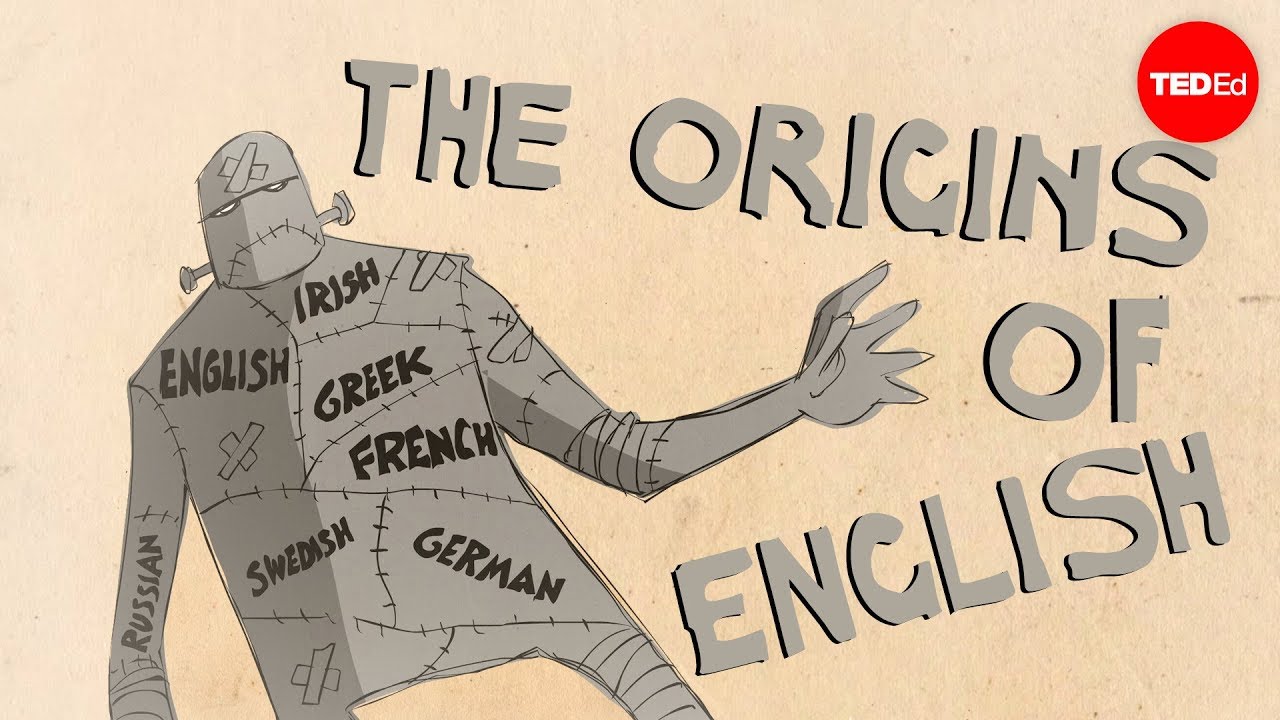 Écoute la phrase, puis dis-la à voix haute
Phrase 1
Transcription complète
- When we talk about English, we often think of it as a single language.0:05
- But what did the dialects spoken in dozens of countries around the world have in common with each other, or with the writings of Chaucer?0:10
- And how are any of them related to the strange words in Beowulf?0:18
- The answer is that, like most languages, English has evolved through generations of speakers, undergoing major changes over time.0:22
- By undoing these changes, we can trace the language from the present day back to its ancient roots.0:31
- While modern English shares many similar words with Latin -derived Romance languages, like French and Spanish, most of those words were not originally part of it.0:38
- Instead, they started coming into the language with the Norman invasion of England in 1066.0:47
- When the French -speaking Normans conquered England and became its ruling class, they brought their speech with them, adding a massive amount of French and Latin vocabulary to the English0:53
- language previously spoken there.1:05
- Today we call that language Old English.1:08
- This is the language of Beowulf.1:11
- It probably doesn't look very familiar, but it might be more recognizable if you know some German.1:13
Afficher les 35 phrases Afficher moins de phrases
- That's because Old English belongs to the Germanic language family, first brought to the British Isles in the 5th and 6th centuries by the Angles, Saxons, and Jutes.1:19
- The Germanic dialects they spoke would become known as Anglo -Saxon.1:31
- Viking invaders in the 8th to 11th centuries added more borrowings from Old Norse into the mix.1:35
- It may be hard to see the roots of modern English underneath all the words borrowed from French, Latin, Old Norse, and other languages.1:42
- But comparative linguistics can help us by focusing on grammatical structure, patterns of sound changes, and certain core vocabulary.1:51
- For example, after the 6th century, German words starting with P systematically shifted to a P -F sound, while their Old English counterparts kept the P unchanged.2:01
- In another split, words that have SK sounds in Swedish developed an SH sound in English.2:12
- There are still some English words with SK, like skirt and skull, but they're direct borrowings from Old Norse that came after the SK to SH shift.2:20
- These examples show us that just as the various Romance languages descended from Latin, English, Swedish, German, and many other languages descended from their own common ancestor, known as Proto2:32
- -Germanic, spoken around 500 BCE.2:45
- Because this historical language was never written down, we can only reconstruct it by comparing its descendants, which is possible thanks to the consistency of the changes.2:48
- We can even use the same process to go back one step further and trace the origins of Proto -Germanic to a language called Proto -Indo -European, spoken about 62:59
- ,000 years ago on the Pontic Step in modern -day Ukraine and Russia.3:10
- This is the reconstructed ancestor of the Indo -European family that includes nearly all languages historically spoken in Europe, as well as large parts of southern and western Asia.3:16
- And though it requires a bit more work, we can find the same systematic similarities or correspondences between related words in different Indo -European branches.3:28
- Comparing English with Latin, we see that English has T where Latin has D and F where Latin has P at the start of words.3:40
- Some of English's more distant relatives include Hindi, Persian, and the Celtic languages it displaced in what is now Britain.3:49
- Proto -Indo -European itself descended from an even more ancient language, but unfortunately, this is as far back as historical and archaeological evidence will allow us to go.3:57
- Many mysteries remain just out of reach, such as whether there might be a link between Indo -European and other major language families, and the nature of the languages spoken4:09
- in Europe prior to its arrival.4:19
- But the amazing fact remains that nearly three billion people around the world, many of whom cannot understand each other, are nevertheless speaking the same words shaped by 6 ,0004:22
- years of history.4:34
- Thank you.4:51
Mesuré dans ce clip
- Débit
- 156 mots par minute — plus rapide que 22% du catalogue
- Niveau CECRL
- C1
- Mots à connaître
- linguistics, dialects, germanic, counterparts, comparative, reconstructed