Práctica de shadowing: What a Band 9 IELTS Speaking Test Actually Sounds Like
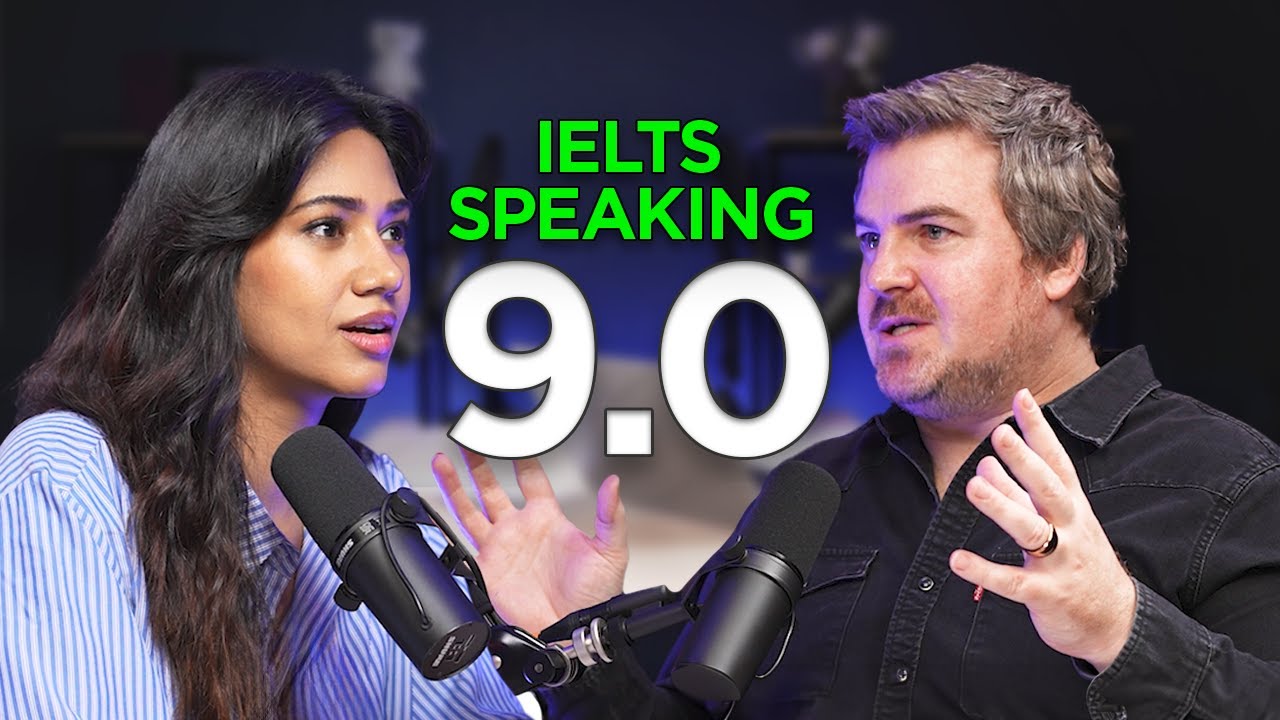 Escucha la frase y luego dila en voz alta
Frase 1
Transcripción completa
- We're going to start off by talking about art and photography.Vamos a empezar hablando sobre arte y fotografía.0:00
- Do you like art?¿Te gusta el arte?0:03
- Hmm, that's interesting.Hmm, eso es interesante.0:05
- Depends on what.Depende de qué.0:08
- I like cinema, for instance, movies, music, but I don't know too much about paintings or modern art.Me gusta el cine, por ejemplo, películas, música, pero no sé demasiado sobre pinturas o arte moderno.0:10
- I'm not too familiar with, so it depends on what kind of art.No estoy muy familiarizado con eso, así que depende de qué tipo de arte.0:21
- Do you like to take photographs?¿Te gusta tomar fotografías?0:24
- Yes.Sí.0:26
- I wouldn't say the photographs are good, but I do enjoy taking pictures.No diría que las fotografías son buenas, pero sí disfruto tomar fotos.0:28
- Yeah.Sí.0:33
- Do you prefer to take photos of yourself or other things?¿Prefieres tomar fotos de ti mismo o de otras cosas?0:33
- Of other things.De otras cosas.0:37
Mostrar las 268 frases Mostrar menos frases
- It's kind of hard to take pictures of yourself unless it's a selfie and that's limited.Es bastante difícil tomar fotos de ti mismo a menos que sea un selfie y eso es limitado.0:39
- So pictures of other things, mostly.Así que fotos de otras cosas, mayormente.0:45
- Now let's talk about animals.Ahora hablemos sobre animales.0:48
- Do you like animals?¿Te gustan los animales?0:51
- I love animals.Amo los animales.0:52
- Land animals, friendly, so to speak, animals, not insects and not anything from the ocean.Animales terrestres, amigables, por decirlo así, animales, no insectos ni nada del océano.0:54
- What is your favorite animal?¿Cuál es tu animal favorito?1:01
- Probably a dog.Probablemente un perro.1:03
- Dogs, for obvious reasons, you can keep them as pets.Perros, por razones obvias, puedes tenerlos como mascotas.1:05
- In terms of non -domesticated animals, probably jaguars.En cuanto a animales no domesticados, probablemente jaguares.1:09
- Do you have any animals in your home as pets?¿Tienes algunos animales en tu hogar como mascotas?1:14
- Yes.Sí.1:17
- I have two dogs.Tengo dos perros.1:18
- They're both from the shelter, the animal shelter.Ambos son del refugio, del refugio de animales.1:20
- They're rescues.Son rescatados.1:23
- I've always had pets.Siempre he tenido mascotas.1:25
- Our family really likes keeping animals around.A nuestra familia realmente le gusta tener animales alrededor.1:27
- Now let's talk about bags.Ahora hablemos sobre bolsas.1:30
- What type of bags do you like?¿Qué tipo de bolsas te gustan?1:32
- I prefer purses that are a little bit on the larger side just because I like to put everything of my life in my purse.Prefiero bolsas que sean un poco más grandes solo porque me gusta poner todo de mi vida en mi bolsa.1:34
- So it ends up weighing maybe 20 kilos.Así que termina pesando tal vez 20 kilos.1:48
- Yeah, larger bags, probably structured larger bags.Sí, bolsas más grandes, probablemente bolsas estructuradas más grandes.1:52
- How often do you carry a bag when you go out?¿Con qué frecuencia llevas una bolsa cuando sales?1:58
- Every day.Todos los días.2:01
- I think that's the case for most women.Creo que ese es el caso para la mayoría de las mujeres.2:01
- I think they carry a bag every, even if you go down to the grocery or the supermarket, you take your bag with you usually, right?Creo que llevan una bolsa, incluso si vas a la tienda de abarrotes o al supermercado, usualmente llevas tu bolsa contigo, ¿verdad?2:03
- What sort of bags do women like to buy?¿Qué tipo de bolsas les gusta comprar a las mujeres?2:12
- It depends.Depende.2:16
- It depends on your outfit.Depende de tu atuendo.2:19
- It depends on where you're going.Depende a dónde vayas.2:20
- For the day, if you're going to the office, you probably want something bigger that can fit your laptop, your phone, paperwork, everything that you might need during the day.Para el día, si vas a la oficina, probablemente quieras algo más grande que quepa tu laptop, tu teléfono, documentos, todo lo que podrías necesitar durante el día.2:23
- If it's nighttime, you'd want something smaller, like a clutch, something more sleek, elegant.Si es de noche, querrías algo más pequeño, como un clutch, algo más elegante.2:37
- So it depends.Así que depende.2:45
- If you're traveling, you'd want a much bigger bag that's able to fit.Si estás viajando, querrías una bolsa mucho más grande que pueda caber.2:46
- Not just you, but all of your family's stuff as well.No solo tú, sino también todas las cosas de tu familia.2:50
- So everything, women like all kinds of bags.Así que todo, a las mujeres les gustan todo tipo de bolsas.2:53
- That's why we have so many of them.Por eso tenemos tantas.2:56
- Now, let's talk about birthdays.Ahora, hablemos sobre cumpleaños.2:58
- What did you usually do on your birthday when you were a child?¿Qué solías hacer en tu cumpleaños cuando eras niño?3:01
- So when I was a kid, when I was a child in school, we had a uniform.Así que cuando era niño, cuando era un niño en la escuela, teníamos un uniforme.3:05
- Everybody wore a uniform to school.Todo el mundo llevaba uniforme a la escuela.3:11
- So when it was your birthday, it was the one day of the year that you were allowed to wear whatever you wanted.Así que cuando era tu cumpleaños, era el único día del año que se te permitía usar lo que querías.3:13
- So it was a big deal.Así que era algo importante.3:19
- I mean, at least I would pick out my outfit like two months in advance.Quiero decir, al menos elegiría mi atuendo como dos meses de anticipación.3:21
- It would be like a little dress, like a princessy frock, matching shoes, matching accessories for your hair.Sería como un vestidito, como un vestido de princesa, zapatos a juego, accesorios a juego para tu cabello.3:25
- And then you would take some kind of chocolate or candy to school.Y luego llevarías algún tipo de chocolate o dulce a la escuela.3:32
- And then you could take like a period off and go and give the candy out to other teachers and other kids in the school.Y luego podrías tomarte un período libre e ir y distribuir los dulces a otros maestros y otros niños en la escuela.3:37
- And we looked forward to it every year.Y todos esperábamos con entusiasmo cada año.3:45
- It was the highlight to get to not have to wear the uniform, to wear whatever you wanted and to basically be able to skip class and go out andFue lo mejor no tener que usar el uniforme, poder usar lo que quisiera y básicamente poder faltar a clase y salir y3:47
- hand out chocolates because it's your birthday.repartir chocolates porque es tu cumpleaños.3:57
- How do you normally celebrate your birthday now?¿Cómo celebras normalmente tu cumpleaños ahora?3:59
- Very differently.Muy diferente.4:03
- Everyone's allowed to wear whatever they want now, so it's kind of not does not have the same charm.Ahora a todos se les permite usar lo que quieran, así que ya no tiene el mismo encanto.4:04
- It depends.Depende.4:10
- I like to do a little dinner with my friends, something low key.Me gusta hacer una pequeña cena con mis amigos, algo sencillo.4:11
- I'm not a very big party person.No soy muy de fiestas grandes.4:17
- So dinner is usually good, followed by probably like a games night or a movie movie night at home or at the cinema, something low key.Así que la cena es generalmente buena, seguida de probablemente una noche de juegos o una noche de películas en casa o en el cine, algo sencillo.4:21
- Do you think it's important to give someone a card on their birthday?¿Crees que es importante regalarle una tarjeta a alguien en su cumpleaños?4:31
- Like a handwritten birthday card?¿Como una tarjeta de cumpleaños escrita a mano?4:35
- I think so, yes, because I'm quite sentimental.Creo que sí, porque soy bastante sentimental.4:40
- And emotional, so I prefer more emotional, sentimental gifts.Y emocional, así que prefiero regalos más emotivos y sentimentales.4:45
- So I think if someone takes the time to write something by hand for you, I think that I mean, I hold on to stuff like that.Así que creo que si alguien se toma el tiempo de escribir algo a mano para ti, creo que, quiero decir, me apego a cosas así.4:51
- So I think it's a very nice, thoughtful present to give someone on their birthday.Así que creo que es un regalo muy lindo y considerado para darle a alguien en su cumpleaños.5:00
- The first time I met a new friend, so I'm going to go way back.La primera vez que conocí a un nuevo amigo, así que voy a retroceder mucho.5:06
- It was my first day of school, kindergarten.Fue mi primer día de escuela, preescolar.5:09
- And I met a girl named Amanpreet Kaur.Y conocí a una niña llamada Amanpreet Kaur.5:13
- She, we were about, I think we just turned four years old.Ella, nosotros teníamos aproximadamente, creo que acabábamos de cumplir cuatro años.5:17
- We met, obviously, in kindergarten, first day of school.Nos conocimos, obviamente, en preescolar, primer día de escuela.5:22
- What I liked about her when I first saw her, I mean, we were sitting together with the teacher made us sit next to each other.Lo que me gustó de ella cuando la vi por primera vez, quiero decir, estábamos sentados juntos porque la maestra nos hizo sentarnos uno al lado del otro.5:29
- And she had this long hair and it was like sectioned into two parts and it was just braided all the way down.Y tenía este cabello largo y estaba dividido en dos partes y estaba trenzado todo el camino hacia abajo.5:36
- And she had the cutest face I've ever seen.Y tenía la cara más linda que haya visto.5:46
- She had this little fluffy marshmallow like face.Tenía esta carita esponjosa como un bombón.5:49
- I guess that's all it takes when you're a kid to want to be friends with somebody.Supongo que eso es todo lo que se necesita cuando eres niño para querer ser amigo de alguien.5:53
- And then I tried to, so there's like this little thing that kids do where they put their thumb out to show other kids that I want to be yourY luego intenté, hay como una pequeña cosa que los niños hacen donde ponen el pulgar hacia afuera para mostrar a otros niños que quiero ser tu5:58
- friend.amigo.6:07
- And then if you don't want to be friends with them, you do this.Y si no quieres ser amigo de ellos, haces esto.6:09
- It's like a silly little thing.Es como una pequeña cosa tonta.6:11
- So I did this to her.Así que hice esto con ella.6:13
- I put my thumb out to say, hey, do you want to be friends?Puse mi pulgar hacia afuera para decir, oye, ¿quieres ser mi amiga?6:15
- And she was like this and I was heartbroken.Y ella hizo esto y me partió el corazón.6:18
- I was like, how can she know who want to be my friend?Pensé, ¿cómo puede ella saber que quiero ser su amiga?6:22
- And then I saw her again the next day and the day the next day after that and the day after that.Y luego la vi al día siguiente y el día después de eso y el día después de eso.6:27
- And then eventually we ended up becoming best friends.Y eventualmente terminamos siendo mejores amigas.6:33
- She did it back to me, obviously, at some point.Ella me lo hizo a mí también, obviamente, en algún momento.6:37
- She was my first best friend that I ever had in life.Fue mi primera mejor amiga que tuve en la vida.6:39
- She was from Punjab, which is a part of India.Era de Punjab, que es una parte de India.6:44
- And her mom used to make the most amazing.Y su mamá solía hacer lo más increíble.6:49
- It's called paratha.Se llama paratha.6:52
- It's like this stuffed bread.Es como este pan relleno.6:54
- It's like they put potato and spices into like into a flat bread.Es como si pusieran papa y especias en un pan plano.6:57
- And my mom used to make something called sira, which is sweet, Samadlina situation.Y mi mamá solía hacer algo llamado sira, que es dulce, una situación de Samadlina.7:03
- That's the end of the two minutes.Ese es el final de los dos minutos.7:10
- OK, we've been talking about a friend that you met.OK, hemos estado hablando de un amigo que conociste.7:12
- And we're going to now talk about friends at school.Y ahora vamos a hablar de amigos en la escuela.7:16
- How important is it for children to have lots of friends at school?¿Qué tan importante es que los niños tengan muchos amigos en la escuela?7:20
- To thank you for watching this video, I want to give you a free course that has helped thousands of students improve their IELTS speaking score.Para agradecerte por ver este video, quiero darte un curso gratuito que ha ayudado a miles de estudiantes a mejorar su puntuación de IELTS speaking.7:24
- What it's going to do is take you through every single part of the test and give you strategies for part one, part two and part three and also allowLo que va a hacer es llevarte a través de cada parte de la prueba y darte estrategias para la parte uno, parte dos y parte tres y también te permitirá7:32
- you to practice at home for free and get feedback.practicar en casa de forma gratuita y recibir retroalimentación.7:41
- To sign up for that for free, all you have to do is just click the link in the description.Para registrarte de forma gratuita, todo lo que tienes que hacer es hacer clic en el enlace en la descripción.7:45
- Thanks very much.Muchas gracias.7:49
- And let's get back to the video.Y volvamos al video.7:50
- It depends, I would say.Depende, diría yo.7:52
- I would perhaps think that quality is more important than quantity.Creo que quizás la calidad es más importante que la cantidad.7:54
- So I wouldn't say that the objective should be to make as many friends as you can or to be popular as much as the objective should be to buildAsí que no diría que el objetivo sea hacer tantos amigos como puedas o ser popular, sino que el objetivo debería ser construir7:59
- meaningful friendships with people.amistades significativas con personas.8:10
- That could be one person that could be five people, that could be ten people.Eso podría ser una persona, podrían ser cinco personas, podrían ser diez personas.8:12
- Situational, I would say.Depende de la situación, diría yo.8:17
- Yeah, so it's not so much how many friends you have as it's not as important to have a lot of friends as it might be to have people thatSí, así que no se trata tanto de cuántos amigos tienes, ya que no es tan importante tener muchos amigos como lo es tener personas en las que8:19
- you can trust, that you can kind of take with you in life for a longer term.en quienes confías, a los que puedes llevar contigo en la vida por un tiempo más largo.8:32
- Do you think it is wrong for parents to choose which friends their children have?¿Crees que está mal que los padres elijan los amigos de sus hijos?8:38
- Again, that's a tricky one.Nuevamente, esa es una pregunta difícil.8:43
- Now, when I answer these questions, I'm thinking back to real life situations.Ahora, cuando respondo estas preguntas, pienso en situaciones de la vida real.8:47
- And in some cases, I have seen parents interfering and trying to make those decisions for their children where they were right to do so because the child was inY en algunos casos, he visto a padres interfiriendo e intentando tomar esas decisiones por sus hijos cuando fue correcto hacerlo porque el niño estaba en8:53
- bad company and they were too naive or too...malas amistades y eran demasiado ingenuos o demasiado...9:05
- I mean, I guess they were just too naive to see that that situation was not right for them, but their parent obviously was able to identify that my child'sQuiero decir, supongo que simplemente eran demasiado ingenuos para ver que esa situación no era adecuada para ellos, pero sus padres obviamente podían identificar que mi hijo está9:12
- in bad company.en malas amistades.9:21
- So in those cases, I would say that your parents are able to read a dangerous situation better.Entonces en esos casos, diría que tus padres pueden leer una situación peligrosa mejor.9:22
- But there's also the flip side where everybody kind of does make bad decisions.Pero también está el otro lado donde todos de alguna manera toman malas decisiones.9:28
- Your parents made bad decisions, you made bad decisions.Tus padres tomaron malas decisiones, tú tomaste malas decisiones.9:35
- And the way that you learn from them is to have a negative experience and then find your way out of it.Y la forma en que aprendes de ellas es teniendo una experiencia negativa y luego encontrar tu camino fuera de ella.9:37
- So I would say that I can see certain situations, whether it's bad relationships, bad friendships, when you're younger, not relationships when you're younger, friendships when you're younger.Entonces diría que puedo ver ciertas situaciones, ya sea relaciones malas, amistades malas, cuando eres más joven, no relaciones cuando eres más joven, amistades cuando eres más joven.9:46
- Sometimes it's necessary to have that experience so that you know firsthand how to deal with that situation.A veces es necesario tener esa experiencia para que sepas de primera mano cómo lidiar con esa situación.9:58
- And you may not be able to get that experience if your parents always shield you from every single thing that can go wrong.Y es posible que no puedas tener esa experiencia si tus padres siempre te protegen de cada cosa que puede salir mal.10:06
- So I can kind of see...Así que puedo ver de alguna manera...10:13
- Depends on the situation, I would say.Depende de la situación, diría yo.10:16
- Now let's talk about making new friends.Ahora hablemos sobre hacer nuevos amigos.10:18
- Can you think of any disadvantages of making new friends online?¿Puedes pensar en alguna desventaja de hacer nuevos amigos en línea?10:21
- Disadvantages of making new friends online?¿Desventajas de hacer nuevos amigos en línea?10:25
- I think there's more disadvantages to making new friends.Creo que hay más desventajas en hacer nuevos amigos.10:27
- I mean, there was a show recently that came out on Netflix called Tender Swindler.Quiero decir, hubo un programa recientemente que salió en Netflix llamado Tender Swindler.10:33
- The thing is with most of what we see online isn't real, whether it's social media or even news for that matter.Lo que pasa es que la mayoría de lo que vemos en línea no es real, ya sea redes sociales o incluso noticias en ese caso.10:38
- Everything is kind of edited and monitored to present a certain kind of image.Todo está editado de alguna manera y supervisado para presentar cierto tipo de imagen.10:49
- So if you meet somebody online and you know nothing about them, they can really present any version of reality or a completely curated, sometimes dishonest form of their realityEntonces si conoces a alguien en línea y no sabes nada de ellos, pueden presentar cualquier versión de la realidad o una forma completamente curada, a veces deshonesta de su realidad10:56
- to you.para ti.11:14
- So it's a very dangerous game to play.Entonces es un juego muy peligroso jugar.11:16
- Friendships or relationships?¿Amistades o relaciones?11:19
- Both.Ambas.11:21
- Friendships.Amistades.11:22
- Friendships.Amistades.11:23
- Yeah, it's...Sí, es...11:24
- Somebody you know nothing about is a very...Alguien sobre quién no sabes nada es muy...11:27
- Everything can go wrong there, right?Todo puede salir mal ahí, ¿no?11:29
- Would you say it is harder for people to make new friends as they get older?¿Dirías que es más difícil para las personas hacer nuevos amigos a medida que envejecen?11:33
- Yes.Sí.11:38
- I think it becomes harder for people to make friends as they get older.Creo que se vuelve más difícil para las personas hacer amigos a medida que envejecen.11:39
- I think adults are perhaps a little bit more structured.Creo que los adultos tal vez son un poco más estructurados.11:46
- I mean, the older that you get, the more set you get in your ways, your routine, where you work, your family, your gym.Quiero decir, cuanto más viejo eres, más fijo estás en tus costumbres, tu rutina, dónde trabajas, tu familia, tu gimnasio.11:55
- Children, for children it becomes...Niños, para los niños se vuelve...12:04
- Like if you put two kids in a room and three seconds they're talking to each other, without any restrictions, they're talking about all of their family secrets and everything,Como si pones dos niños en una habitación y en tres segundos están hablando entre ellos, sin ninguna restricción, están hablando de todos sus secretos familiares y todo,12:08
- you know, they're comfortable.sabes, están cómodos.12:16
- But with adults, obviously, people tend to be more filtered when they interact with other adults.Pero con adultos, obviamente, las personas tienden a ser más filtradas cuando interactúan con otros adultos.12:18
- Also, I think if you've been friends from the time that you were a child with somebody, you've lived through so many life events together that that kind of bondAdemás, creo que si has sido amigo de alguien desde que eras niño, has vivido muchos eventos de la vida juntos que ese tipo de vínculo12:27
- is hard to build with someone that you meet in your mid -30s, because you've just lost so much time that you're learning something, you're learning about them from scratch,es difícil de construir con alguien que conoces en tus treinta y tantos años, porque simplemente has perdido mucho tiempo aprendiendo algo, estás aprendiendo de ellos desde cero,12:36
- where they went to school, about their family, about their relationships, about their siblings.dónde fueron a la escuela, sobre su familia, sobre sus relaciones, sobre sus hermanos.12:47
- So, yeah, I think it's a...Entonces, sí, creo que es...12:53
- It's not impossible.No es imposible.12:55
- You can make a lot of incredible friendships later in life, but it's probably harder to come by than if you were a kid in play school.Puedes hacer muchas amistades increíbles más adelante en la vida, pero probablemente sea más difícil de lograr que si fueras un niño en preescolar.12:56
- So, what I'm going to do now is give you feedback on each part, because each part is a little bit different.Entonces, lo que voy a hacer ahora es darte retroalimentación en cada parte, porque cada parte es un poco diferente.13:07
- Give you some tips on how to perform as well or even better next time.Te daré algunos consejos sobre cómo desempeñarte tan bien o incluso mejor la próxima vez.13:13
- And then there are four marking criteria, fluency and coherence, grammar, pronunciation, and vocabulary.Y luego hay cuatro criterios de calificación, fluidez y coherencia, gramática, pronunciación y vocabulario.13:20
- And I will give you a band for each of those and tell you what band.Y te daré una banda para cada uno de esos y te diré qué banda.13:28
- The top is band nine.El top es banda nueve.13:33
- So, let's see if you can get right at the top.Entonces, veamos si puedes llegar al top.13:35
- So, thank you for making it this far in the video.Entonces, gracias por llegar tan lejos en el video.13:37
- I want to give you 10 % off our VIP course.Quiero darte el 10% de descuento en nuestro curso VIP.13:40
- IELTS VIP course is the most successful IELTS course in the world.El curso VIP de IELTS es el curso de IELTS más exitoso del mundo.13:43
- That is a fact, because we have more band seven, eight, and nine success stories than any other IELTS course in the entire world.Eso es un hecho, porque tenemos más historias de éxito de banda siete, ocho y nueve que cualquier otro curso de IELTS en todo el mundo.13:47
- We do that by simplifying the whole IELTS process, supporting you with some of the best IELTS teachers in the world, and being with you every step of the wayLo hacemos simplificando todo el proceso de IELTS, apoyándote con algunos de los mejores maestros de IELTS del mundo, y estando contigo en cada paso del camino13:55
- until you get the score that you need.hasta que obtengas la puntuación que necesitas.14:04
- All you have to do is just look down in the description, just click that, and you can sign up.Todo lo que tienes que hacer es mirar hacia abajo en la descripción, solo haz clic en eso y puedes registrarte.14:05
- If you have any questions about the VIP course, always feel free to get a touch with us.Si tienes alguna pregunta sobre el curso VIP, siéntete libre de ponerte en contacto con nosotros.14:10
- We answer 100 % of the questions that we get.Respondemos al 100% de las preguntas que recibimos.14:15
- Hope that you become a VIP.Espero que te conviertas en VIP.14:18
- If not, enjoy the rest of this free video.Si no, disfruta el resto de este video gratuito.14:19
- So, part one is just normal, everyday questions, and you answer those very, very naturally.Entonces, la parte uno son solo preguntas normales y cotidianas, y tú las respondes de manera muy, muy natural.14:22
- Again, it was like talking to a friend or a colleague, and the length of your answers was also quite good.De nuevo, fue como hablar con un amigo o un colega, y la duración de tus respuestas también fue bastante buena.14:29
- This is not a criticism, and it's just kind of who you are as a person.Esto no es una crítica, es solo cómo eres como persona.14:34
- You're a very friendly, chatty person who wants the other person to interact.Eres una persona muy amable y conversadora que quiere que la otra persona interactúe.14:39
- So, you're offered like girls like buying bags, right?Entonces, te ofrecen opciones como a las chicas que les encantan comprar bolsas, ¿verdad?14:43
- That is fine in normal conversation.Eso está bien en una conversación normal.14:46
- If you were to do the test for real, the examiner could be quite stone faced, because they're doing their job.Si hicieras la prueba de verdad, el examinador podría ser bastante inexpresivo, porque están haciendo su trabajo.14:48
- They're not being unfriendly.No están siendo desagradables.14:54
- They just have a job to do, and they're trying to think about your grammar, and your vocabulary, and your pronunciation, and your fluency, and there's a lot going onSolo tienen un trabajo que hacer, e intentan pensar en tu gramática, tu vocabulario, tu pronunciación y tu fluidez, y hay mucho pasando14:56
- there.allí.15:03
- And for them, they cannot start to interact with you.Y para ellos, no pueden empezar a interactuar contigo.15:03
- And on test day, you might not get a very friendly examiner like me.Y el día de la prueba, podrías no tener un examinador tan amable como yo.15:08
- I don't know whether I was friendly or not.No sé si fui amable o no.15:14
- But they might be like, you know, don't do that.Pero podrían ser como, ya sabes, no hagas eso.15:16
- Or some of them could be having a bad day, and they just don't ask questions.O algunos de ellos podrían estar teniendo un mal día, y simplemente no hacen preguntas.15:19
- I have experienced with, not myself, but other students have said, when they did that, they thought the examiner was criticizing them or being rude.He experimentado, no yo mismo, pero otros estudiantes han dicho que cuando hicieron eso, pensaron que el examinador los estaba criticando o siendo grosero.15:25
- They took that to heart and thought, oh my God, I failed my test.Se lo tomaron en serio y pensaron, Dios mío, fallé mi examen.15:35
- And they went from doing very, very well to everything fell apart.Y pasaron de hacerlo muy, muy bien a que todo se desmoronara.15:39
- Because if you feel nervous, if you're uncomfortable with someone, then it really affects your fluency.Porque si te sientes nervioso, si te sientes incómodo con alguien, realmente afecta tu fluidez.15:44
- You can clam up.Puedes cerrarte en banda.15:50
- You don't want to really show your language and who you are.No quieres realmente mostrar tu idioma y quién eres.15:51
- You don't want to, because one of the great advantages or great strength that you have is you're very open about who you are as a person.No quieres hacerlo, porque una de las grandes ventajas o fortalezas que tienes es que eres muy abierto sobre quién eres como persona.15:55
- And that's great because it allows you to speak in a very fluent way.Y eso es excelente porque te permite hablar de manera muy fluida.16:07
- If you go and do the test for real, probably don't interact with the examiner as much.Si vas y haces la prueba de verdad, probablemente no interactúes tanto con el examinador.16:11
- Part two, you did a great job because you just picked a real event, a real person from your life.Parte dos, hiciste un gran trabajo porque simplemente elegiste un evento real, una persona real de tu vida.16:17
- And it's much easier to talk about that.Y es mucho más fácil hablar de eso.16:22
- Some students try to pick something high level or impressive to impress the examiner.Algunos estudiantes intentan elegir algo de alto nivel o impresionante para impresionar al examinador.16:24
- There's no such thing.No existe tal cosa.16:30
- The best thing to do is pick something from your real life because that's easy to talk about.Lo mejor que puedes hacer es elegir algo de tu vida real porque es fácil de hablar.16:32
- Part three, you did very, very well because you really extended your answers.Parte tres, lo hiciste muy, muy bien porque realmente extendiste tus respuestas.16:36
- Again, you use real situations from your own life.De nuevo, usas situaciones reales de tu propia vida.16:41
- You don't have to do that, but it really did help you develop your answers.No tienes que hacer eso, pero realmente te ayudó a desarrollar tus respuestas.16:44
- In terms of the scores, pronunciation is pretty much perfect.En términos de las puntuaciones, la pronunciación es casi perfecta.16:48
- The examiner will be thinking about, can I understand every word this person is saying?El examinador estará pensando, ¿puedo entender cada palabra que esta persona está diciendo?16:52
- 100%, I can understand every syllable.100%, puedo entender cada sílaba.16:58
- Then the examiner will be thinking about high level pronunciation features, such as your intonation.Luego el examinador pensará en características de pronunciación de alto nivel, como tu entonación.17:00
- So our voices go up, our voices go down.Entonces nuestras voces suben, nuestras voces bajan.17:06
- You speak like a native English speaker in that respect.Hablas como un hablante nativo de inglés en ese sentido.17:08
- Sentence stress is when we emphasize certain words.El estrés de la oración es cuando enfatizamos ciertas palabras.17:12
- This is my phone, not your phone.Este es mi teléfono, no tu teléfono.17:16
- So you emphasize certain words at times.Entonces enfatizas ciertas palabras a veces.17:18
- Again, you do that 100 % naturally.De nuevo, lo haces al 100% de manera natural.17:20
- And then you use connected speech.Y luego usas el habla conectada.17:23
- The way native English speakers talk, we wouldn't say, I want to talk about my friend.La forma en que hablan los hablantes nativos de inglés, no diríamos, Quiero hablar sobre mi amigo.17:25
- You'd say, I want to talk about my friend.Dirías, Quiero hablar sobre mi amigo.17:31
- The flow of the language.El flujo del idioma.17:33
- So absolutely perfect.Entonces absolutamente perfecto.17:34
- No problems there.No hay problemas allí.17:36
- Coherence and fluency, coherence is did you answer the questions?Coherencia y fluidez, la coherencia es ¿respondiste las preguntas?17:37
- Did you develop them enough?¿Las desarrollaste lo suficiente?17:40
- You did that 100 % of the time.Lo hiciste el 100% del tiempo.17:42
- And then fluency is did you speak without any unnatural pausing?Y luego la fluidez es ¿hablaste sin pausas artificiales?17:44
- You did pause at times.Sí hiciste pausas a veces.17:49
- But the reason why you paused is important.Pero la razón por la que hiciste pausas es importante.17:52
- So in the last, I think it was the second last question, you were talking about adults and you were saying their lives are more structured.Así que en el último, creo que fue la penúltima pregunta, estabas hablando sobre los adultos y decías que sus vidas están más estructuradas.17:55
- So you weren't trying to think of the correct vocabulary because your English isn't good enough.Entonces no estabas intentando pensar en el vocabulario correcto porque tu inglés no es lo suficientemente bueno.18:03
- You were trying to just formulate your thoughts and come up with the appropriate, precise word, which you did.Estabas intentando simplemente formular tus pensamientos y encontrar la palabra apropiada y precisa, que lo hiciste.18:09
- So that demonstrates to the examiner that you have a very high level of vocabulary.Así que eso demuestra al examinador que tienes un nivel muy alto de vocabulario.18:15
- Because if you were, because you're trying to think of the current, what's the word?Porque si lo fueras, porque estás intentando pensar en lo actual, ¿cuál es la palabra?18:19
- So when people don't really know the language, then they would stop.Entonces cuando las personas realmente no conocen el idioma, se detendrían.18:24
- And also because you approach this not as a test, but more as a conversation.Y también porque abordas esto no como una prueba, sino más como una conversación.18:28
- And you are very open and talk about your life in a very open way.Y eres muy abierto y hablas sobre tu vida de una manera muy abierta.18:33
- That really helps with fluency.Eso realmente ayuda con la fluidez.18:38
- So again, top marks for fluency and coherence.Así que de nuevo, máximas calificaciones para fluidez y coherencia.18:40
- Grammar, I didn't hear a single grammar mistake.Gramática, no escuché ni un solo error gramatical.18:44
- The examiner will be thinking about the accuracy of your grammar.El examinador estará pensando en la precisión de tu gramática.18:46
- Did you make any mistakes and the range of your grammar?¿Cometiste errores y cuál fue el rango de tu gramática?18:50
- So if I talk to you about a birthday party in the past, did you use the appropriate past tenses?Así que si te hablo sobre una fiesta de cumpleaños en el pasado, ¿usaste los tiempos pasados apropiados?18:52
- And then I asked you about, well, what do you do today?Y luego te pregunté, bueno, ¿qué haces hoy?18:58
- Did you switch tenses?¿Cambiaste los tiempos?19:00
- Did you use the appropriate grammatical structures and tenses to talk about each situation?¿Usaste las estructuras gramaticales y tiempos apropiados para hablar de cada situación?19:02
- And again, you did that perfectly.Y de nuevo, lo hiciste perfectamente.19:07
- Vocabulary, very natural.Vocabulario, muy natural.19:10
- You use a nice mixture of just normal everyday words, which everybody uses.Usas una buena mezcla de solo palabras normales del día a día, que todos usan.19:12
- And you also use idiomatic language very, very well.Y también usas lenguaje idiomático muy, muy bien.19:18
- So as you can see, you're using very natural English.Así que como puedes ver, estás usando un inglés muy natural.19:21
- And overall, you would get a perfect bad line, which is very rare.Y en general, obtendrías una banda perfecta, que es muy rara.19:25
- Oh, wow.Oh, vaya.19:31
- Very, very rare.Muy, muy raro.19:31
- Okay.De acuerdo.19:33
- So, well done.Así que, bien hecho.19:34
- Thank you.Gracias.19:35
Medido en este clip
- Ritmo
- 181 palabras por minuto — más rápido que el 45% del catálogo
- Nivel MCER
- B1
- Palabras que conviene saber
- sectioned, pausing, jaguars, braided, disadvantages, formulate