Shadowing practice: In The Morning (adverbs of frequency) with Mark Kulek ESL
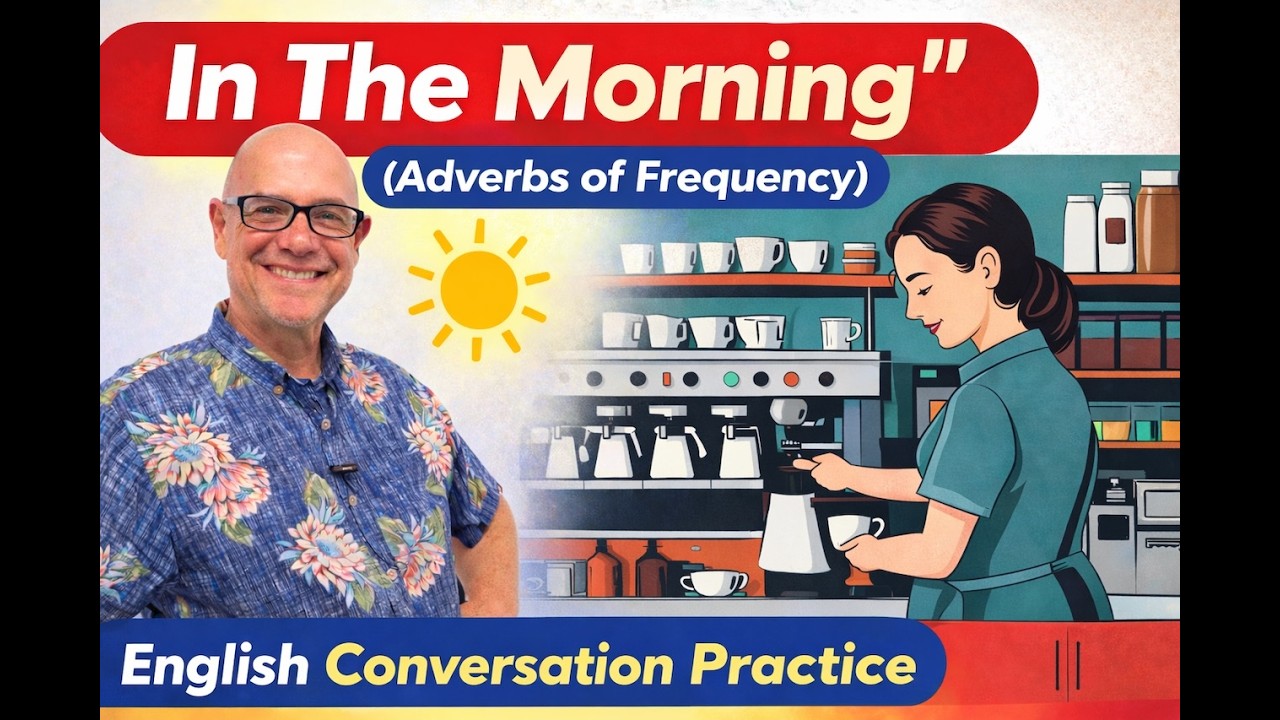 Listen to the line, then say it out loud
Full transcript
- Hi, this is Mark.0:00
- This is English Conversation Practice.0:01
- Hi, I'm Mark.0:04
- Let's practice what we do in the morning.0:06
- In the morning, I'm always very busy in the morning.0:10
- I usually get up at 6 .10 in the morning.0:17
- I always make the bed in the morning.0:27
- I sometimes go for a run in the morning.0:36
- I always take a shower in the morning.0:46
- I always brush my teeth in the morning.0:55
- I always make coffee in the morning.1:04
- I always make breakfast in the morning.1:13
Show all 42 lines Show fewer lines
- I always read the newspaper in the morning.1:22
- I always check my email in the morning.1:32
- I always leave for work at around 8 .30 in the morning.1:41
- Okay, now it's your turn.1:51
- What time do you get up in the morning?1:57
- Do you make the bed in the morning?2:10
- Do you go for a run in the morning?2:19
- Do you take a shower in the morning?2:28
- Do you brush your teeth in the morning?2:38
- Do you make coffee in the morning?2:47
- Do you read the newspaper in the morning?2:55
- Do you check your email in the morning?3:02
- What time do you leave for work in the morning?3:11
- Okay, that was in the morning.3:29
- Actions we do in the morning.3:33
- So that was fun.3:35
- I hope you had fun too.3:37
- So I will see you next time.3:39
- Take it easy.3:42
- Bye.3:43
- Thank you.3:43
- All those worksheets.3:44
- There are hundreds and hundreds of worksheets.3:46
- Support me on Patreon so I can support you here.3:48
- Okay.3:52
- Thanks so much.3:53
- I will see you next time.3:54
- Take it easy.3:55
- Bye.3:56
- Thank you.3:57
English speaking practice with an A2 morning routine (American accent)
Mark Kulek's video is built for english speaking practice at the earliest level. Mark states upfront that "This is English Conversation Practice," then walks through one morning routine twice, once as statements and once as questions. The pace sits at 152 words per minute and the CEFR level is A2, so sentences stay short and the same words return on purpose. The American accent is clear and unhurried, and the rare words are limited to email, brush and actions, so the load stays low enough to focus on how each sentence sounds rather than on new vocabulary.
What is actually happening is simple. Mark lists what he always, sometimes or usually does between waking up and leaving for work, then turns the same list into direct questions aimed at you. That two pass structure, statement then question on the same content, is what makes this particular clip worth repeating line by line instead of watching once.
The language in this clip: daily english conversation practice with adverbs of frequency
Three lines carry the whole grammar point and reward saying them out loud more than once.
- "I usually get up at 6 .10 in the morning." puts the frequency adverb usually right before the verb, and the time runs through as one unbroken phrase rather than pausing at the number.
- "I always brush my teeth in the morning." repeats the same always plus verb pattern as the lines around it, so once this one is smooth the rest are the same shape with a new verb swapped in, for example "I always make coffee in the morning."
- "Do you check your email in the morning?" flips the same routine into a question, and the rise in pitch lands on email, not on the word morning that closes almost every line in this clip.
How to shadow this line by line: an english shadowing practice plan for beginners
Work through this clip in the order it was built, not top to bottom.
- Start at line 5, "In the morning, I'm always very busy in the morning," said twice back to back, and repeat it until the double phrase stops feeling awkward in your own mouth.
- Move through lines 7 to 15 as one block, from "I always make the bed in the morning." to "I always leave for work at around 8 .30 in the morning." It is the same always or usually plus verb shape nine times, so shadow this line by line and slow down only where the verb changes, like "Do you go for a run in the morning?"
- Switch to the question block and say each one back at Mark, matching the rising pitch on the new word rather than the flat ending you used for the statements.
- Finish on "What time do you get up in the morning?" and answer it out loud in your own words. It is the one line in the clip built for you to speak freely, and it is the real test of whether the practice above improved your english speaking rather than just your memory of the script.